Marine Brands and Product Options
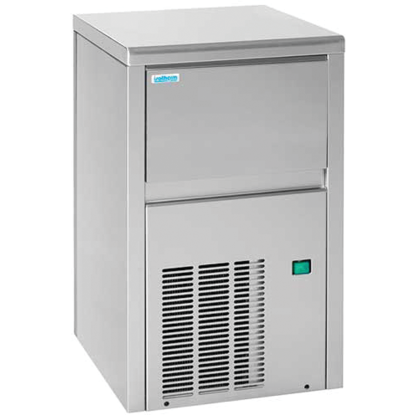
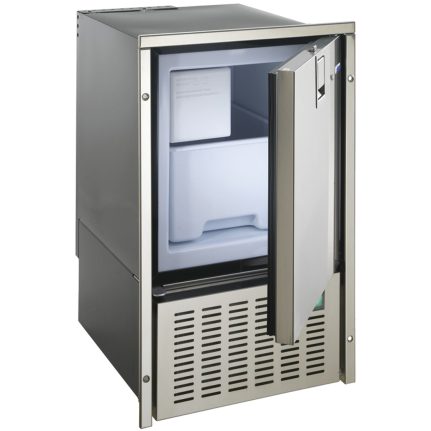
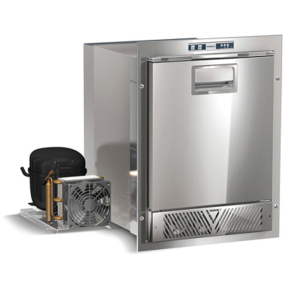
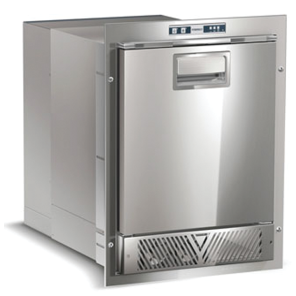
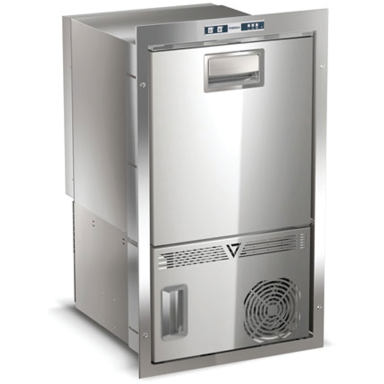
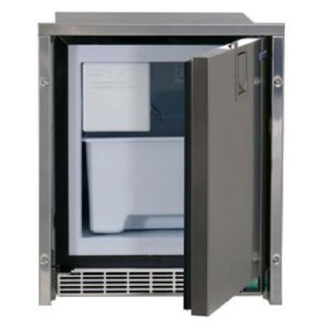
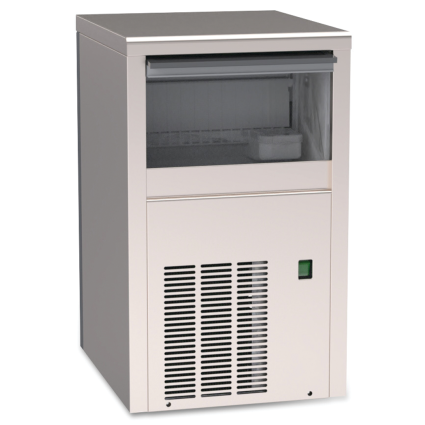
Fisheries Supply carries marine ice makers and parts from Raritan, Vitrifrigo, and Isotherm. Available products support boat-galley installations, onboard entertaining, food storage, and fishing applications.
Marine ice makers provide onboard ice for drinks, food storage, and cooling a fresh catch during fishing trips or weekend cruises. Fisheries Supply carries compact 115-volt marine ice machines for boat owners and marine technicians comparing installation formats, ice output, water-supply options, and replacement parts.
Fisheries Supply carries marine ice makers and parts from Raritan, Vitrifrigo, and Isotherm. Available products support boat-galley installations, onboard entertaining, food storage, and fishing applications.
Boat ice makers differ from household appliances because marine units are designed around limited installation space, vessel movement, humidity, and corrosion exposure.
| Feature | Benefit |
|---|---|
| Compact construction | Fits tight boat galleys and equipment spaces. |
| Marine materials | Corrosion-resistant construction may include stainless steel components for saltwater environments. |
| Consistent production | Supplies ice for beverages, provisions, or cooling a catch while underway or at the dock. |
| Multiple configurations | Under-counter and stand-alone formats accommodate different galley layouts. |
| Different ice styles | Output capacity and cube shape depend on the selected model. |
| Selection Factor | Available Considerations | What to Check |
|---|---|---|
| Electrical power | Fisheries Supply currently stocks 115-volt marine ice machines. Units operate on 115V AC power due to the electrical loads required for refrigeration compressors and harvest cycles. | Confirm the boat’s AC service, inverter capacity, and available circuit. |
| Installation format | Under-counter or stand-alone units | Measure the available galley or equipment-space opening before purchase. |
| Water supply | Plumbed water connections or an internal tank on selected models | Determine whether a freshwater line is available at the installation location. |
| Ice output | Daily production varies by model. | Compare capacity with crew size, trip length, beverage use, and fishing needs. |
| Ice shape | Crescent ice or dense top-hat-style cubes on referenced Isotherm models | Select a cube style suited to drinks, storage, or cooling applications. |
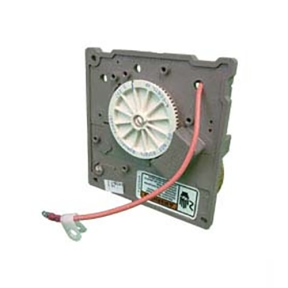
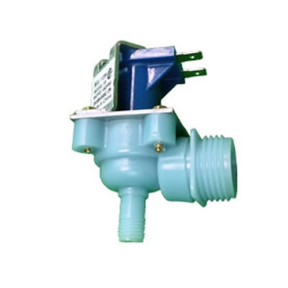
Routine maintenance and timely replacement of worn components can reduce downtime and extend marine ice maker service life. Common service parts include:
Fisheries Supply supports DIY boat owners and professional marine technicians with product-selection, installation, and troubleshooting guidance.
Daily marine ice maker output depends on the model and operating conditions. Some Isotherm units produce up to 22 pounds of crescent ice per day, while the Isotherm Clear Ice Maker can produce up to 40 pounds of dense top-hat-style cubes per day.
Yes, marine ice makers use corrosion-resistant construction for humid and saltwater environments. Selected Vitrifrigo models incorporate 316 stainless steel, while marine-specific units are designed around the vibration and moisture found aboard boats. Materials and construction details should be confirmed for the individual model.
No, not every marine ice maker requires a direct freshwater connection. Selected models, including units in the Vitrifrigo REFILL series, contain internal water tanks and can operate without an external water supply. Check tank capacity and filling requirements before selecting an installation location.
Fisheries Supply currently stocks marine ice machines that operate on 115-volt AC power. Power consumption varies by ice type: standard crescent ice makers generally draw around 120 to 180 watts during production, while high-output clear ice makers can draw over 300 watts during active freezing and harvest cycles. Confirm each model’s electrical rating and the boat’s available inverter or shore-power capacity before installation.
No, a marine ice maker is designed specifically for ice production and storage and is not a dual-function food freezer. On models equipped with advanced electronic controls, such as the Vitrifrigo OCX2 series, the panel allows users to pause ice production or switch to a standby maintenance mode. However, because ice storage bins lack the temperature calibration and airflow design required for food preservation, the cabinet should not be used for storing frozen provisions.
A boat ice maker needs routine inspection, cleaning, and replacement of worn service components. Water pumps, ice bins, and thermostats are common replacement parts. Follow the manufacturer’s maintenance instructions, investigate changes in ice output promptly, and confirm part compatibility with the exact brand and model.