Boat Safety with Marine Radar Reflectors
Marine radar reflectors are practical safety accessories for boats of all kind.
What to Know
- Improve radar visibility for non-metallic boats.
- Reduce collision risk in fog and traffic.
- Choose reflector style based on boat size and mounting.
- Install sailboat reflectors as high as practical.
Fisheries Supply offers a broad range of radar reflectors suited to both sailboats and powerboats. Each option is intended to improve radar visibility without adding unnecessary complexity or maintenance.
How Marine Radar Reflectors Work
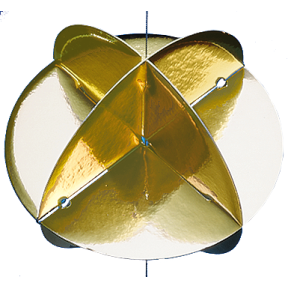
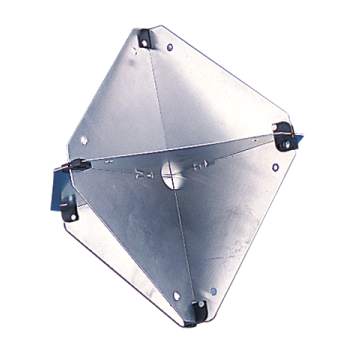
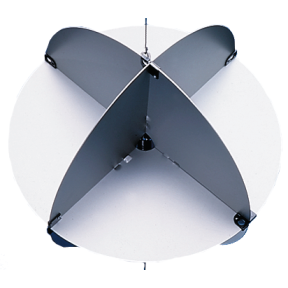
Radar reflectors use intersecting metal plates arranged in specific geometric patterns. These shapes are designed to return incoming radar signals back toward the source rather than scattering them.
By increasing a boat’s effective radar cross-section, a reflector makes the boat easier to detect on another boat’s radar display. This added visibility is particularly valuable in fog, rain, or high-traffic areas.
Types of Marine Radar Reflectors
Fisheries Supply carries several styles of radar reflectors to match different boat sizes and rigging arrangements. Common options include:
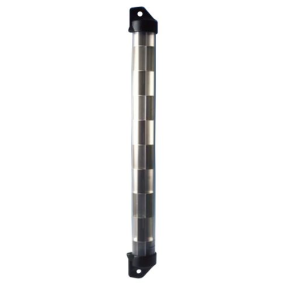
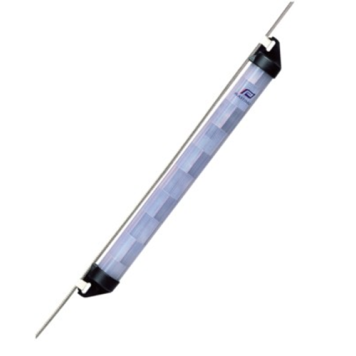
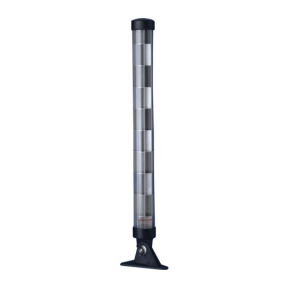
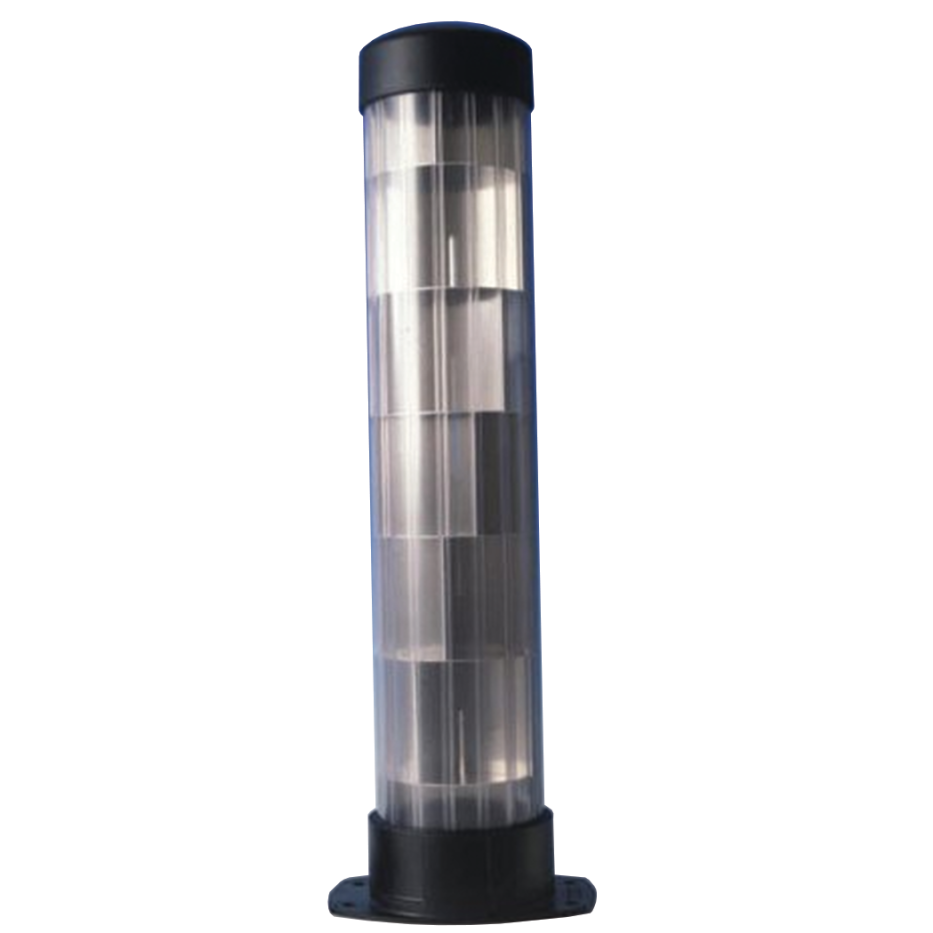
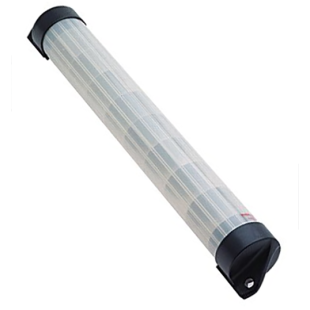
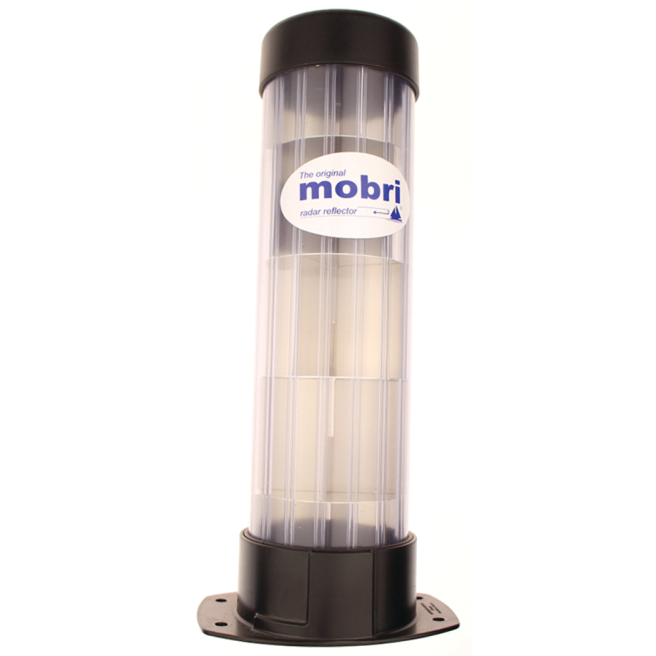
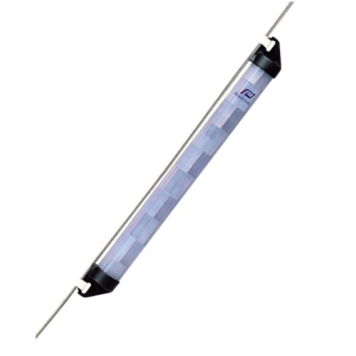
- Tube-style reflectors for compact, lightweight installations.
- Multi-plane reflectors designed for stronger radar returns.
- Hoistable reflectors that can be raised or stowed as needed.
Each style offers distinct advantages, allowing boaters to balance visibility, mounting location, and ease of use.
Choosing the Right Radar Reflector
Selecting an appropriate radar reflector depends on the boat and how it is used. Important considerations include boat type, available mounting points, and the level of radar visibility desired.
- Boat type, such as sailboat or powerboat.
- Mounting height and available rigging.
- Target radar cross-section.
- Weight and windage.
For sailboats, mounting the reflector as high as practical improves detection. Fiberglass and wooden boats, which do not naturally reflect radar well, often see the greatest benefit from adding a reflector.
Frequently Asked Questions
What is the purpose of a marine radar reflector?
Marine radar reflectors increase a boat’s radar visibility by reflecting incoming radar signals, making the boat easier to detect and helping reduce the risk of collision.
Why are radar reflectors especially important for fiberglass or wooden boats?
Fiberglass and wooden boats lack natural radar reflectivity, so a radar reflector significantly improves how these boats appear on radar screens.
What types of marine radar reflectors are available?
Common options include tube-style reflectors, multi-plane reflectors, and hoistable designs, each offering different benefits for size, strength of reflection, and ease of deployment.
What is the difference between passive and active radar reflectors?
Passive reflectors, like the Davis Echomaster, use metallic plates or surfaces to physically bounce radar signals back to the sender without a power source. Active radar reflectors, or Radar Target Enhancers (RTEs), are electronic devices that receive a signal, amplify it, and retransmit a much stronger version, significantly increasing the boat's apparent size on a radar screen.
What is the "catch rain" mounting position and why is it important?
The "catch rain" position refers to orienting an octahedral reflector so that one of its open "cups" faces upward. This specific orientation is recommended by experts and manufacturers because it provides the most consistent 360-degree radar cross-section, ensuring the vessel is detectable from all horizontal angles.
Where is the best place to install a radar reflector on a boat?
For maximum effectiveness, a radar reflector should be mounted as high as possible, such as on a mast, spreader, or dedicated pole. Increasing the height helps clear the curvature of the earth and potential obstructions like high waves or the boat's own superstructure, providing a better line-of-sight for incoming radar beams.
Are there specific regulations regarding radar reflectors for small vessels?
Many maritime authorities, including the US Coast Guard and various international bodies under SOLAS Chapter V, require or strongly recommend that vessels under 150 gross tons carry a radar reflector. This is especially critical for boats under 20 meters (65 feet) or those constructed from non-metallic materials to ensure they are "visible" to commercial traffic navigating by radar.