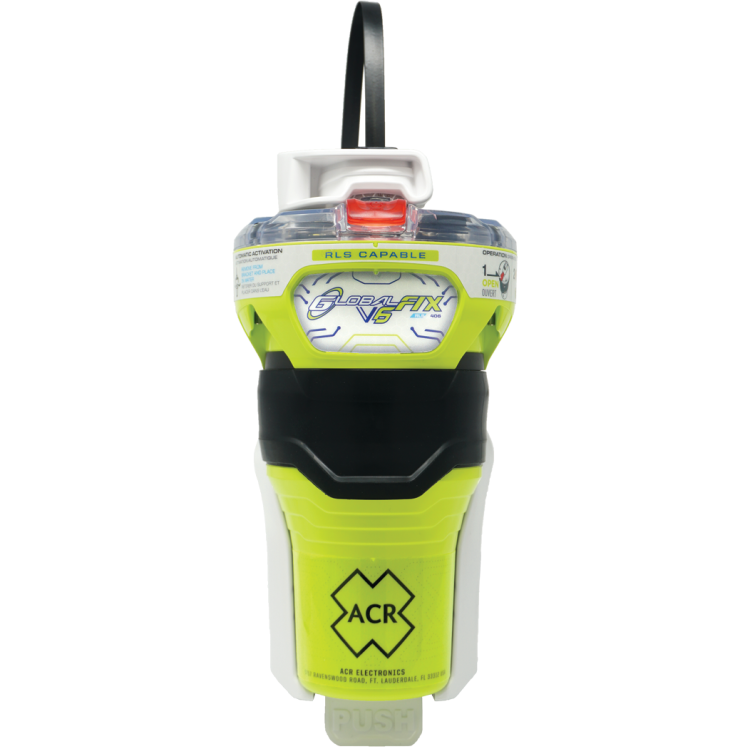
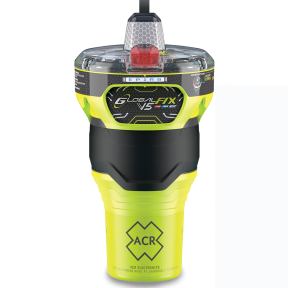
| EPIRB Category | Deployment and Application |
|---|---|
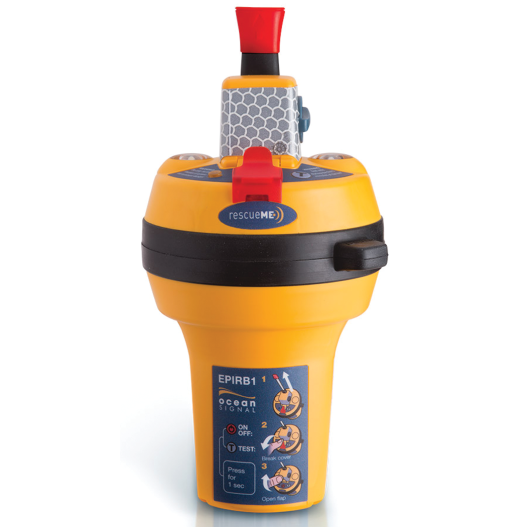
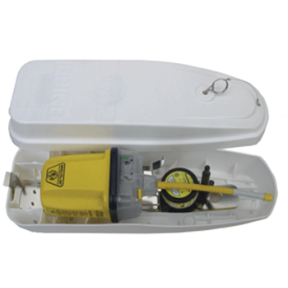
| Category I EPIRB | Uses an automatic-release arrangement and activates when deployed in the water, making this category suited to offshore and long-distance voyages. |
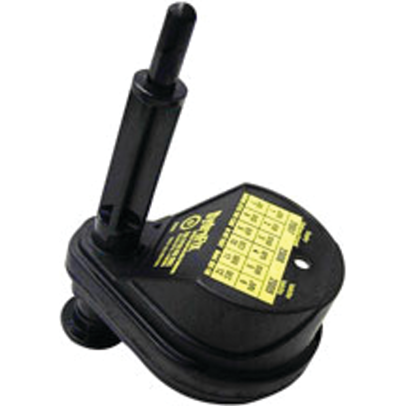
| Category II EPIRB | Uses manual bracket removal. A compatible beacon may activate automatically after removal from its bracket and immersion in water. |
EPIRBs and PLBs for Boating Safety
Emergency Position Indicating Radio Beacons and Personal Locator Beacons transmit 406 MHz distress alerts for offshore, coastal, and daysail boaters. Fisheries Supply carries marine emergency beacons from ACR Electronics, McMurdo, and Ocean Signal for vessel-based and person-carried rescue signaling. In addition to 406 MHz satellite alerts, all EPIRBs and PLBs transmit a 121.5 MHz homing signal for local rescue vessels and aircraft. Modern beacons may also feature Return Link Service (RLS) to confirm signal receipt and AIS to alert nearby vessels directly.
How 406 MHz Emergency Beacons Work
EPIRBs and PLBs transmit distress alerts through the international Cospas-Sarsat satellite system, which routes beacon details to search-and-rescue authorities. GPS/GNSS-equipped models include position data in the alert. Accurate NOAA SARSAT registration helps the U.S. Coast Guard and partner agencies identify the beacon owner, verify an emergency, and coordinate a response.
EPIRBs for Offshore and Extended Coastal Passages
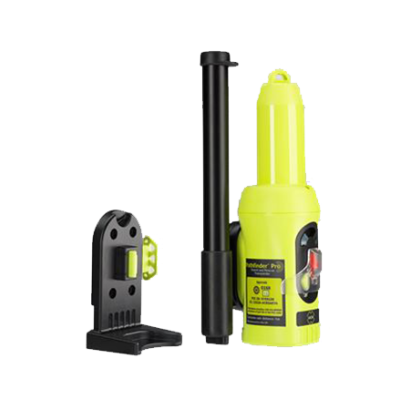
An EPIRB is a vessel-focused marine safety device that transmits a distress signal to search-and-rescue authorities. EPIRBs suit offshore passages, extended coastal routes, and operations where automatic deployment may be preferred.
| Feature | Description |
|---|---|
| Transmission time | Typically at least 48 hours. |
| Activation | Category I models support automatic deployment and activation. |
| Position encoding | GPS/GNSS-equipped models transmit more precise location coordinates. |
| Application | Vessel-based emergency signaling for offshore and extended coastal navigation. |
PLBs for Boaters, Kayakers, and Personal Carry
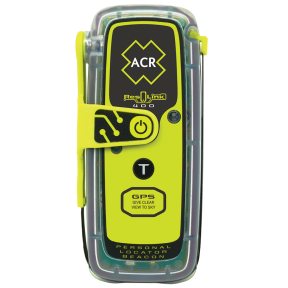
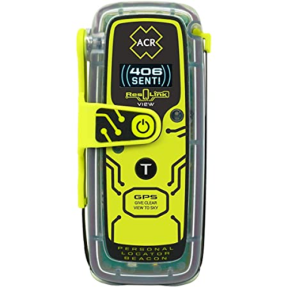
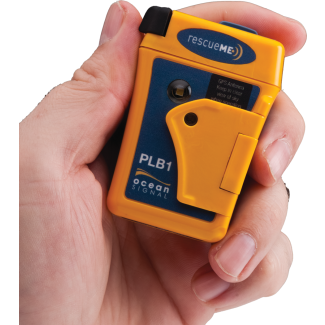
A Personal Locator Beacon is a compact, person-carried emergency device for boaters, kayakers, and outdoor users. The user manually activates the PLB to transmit a distress alert and, on GPS-enabled models, location coordinates to search-and-rescue authorities.
PLB Types and Features
| PLB Type or Feature | Description |
|---|---|
| Waterproof PLBs | Designed for marine exposure; selected models float when configured as directed by the manufacturer. |
| GPS-enabled PLBs | Encode position coordinates to improve location accuracy. |
| Transmission time | At least 24 hours. |
| Activation | Manual activation by the person carrying the beacon. |
| Application | Personal emergency signaling for boating, kayaking, and other outdoor activities. |
EPIRB vs. PLB Comparison
| Selection Factor | EPIRB | PLB |
|---|---|---|
| Primary use | Vessel-based offshore or extended coastal emergency signaling | Person-carried emergency signaling for boating, kayaking, and outdoor use |
| Activation | Category I supports automatic deployment; Category II requires manual bracket removal | Manual activation |
| Minimum transmission time | At least 48 hours | At least 24 hours |
| Form factor | Mounted or stored with the vessel | Compact and carried by an individual |
| Position data | Available with GPS/GNSS encoding | Available with GPS/GNSS encoding |
How to Choose an EPIRB or PLB
- Define the navigation area: Match the beacon to offshore passages, coastal boating, inland use, kayaking, or personal backup.
- Choose the deployment method: Decide whether automatic float-free deployment or manual activation fits the vessel and operating plan.
- Compare transmission time: Select an EPIRB when the longer 48-hour minimum is important.
- Consider personal carry: Select a PLB when compact size and individual wearability are priorities.
- Look for position encoding: Choose a GPS/GNSS-equipped beacon when precise coordinates are desired.
- Plan for registration: Register a U.S. 406 MHz beacon through the NOAA Beacon Registration portal.
Shop EPIRBs and PLBs by Brand
Browse marine emergency beacons from ACR Electronics, McMurdo, and Ocean Signal. For related information, review the guide to choosing an emergency device or browse man overboard rescue equipment.
Frequently Asked Questions
What is the difference between an EPIRB and a PLB?
An EPIRB is primarily a vessel-based distress beacon, while a PLB is a compact beacon carried by an individual. EPIRBs typically provide at least 48 hours of transmission and may support automatic deployment. PLBs provide at least 24 hours of transmission and require manual activation by the user.
Should offshore boaters choose a Category I or Category II EPIRB?
Offshore boaters commonly choose a Category I EPIRB when automatic deployment is a priority. A Category II EPIRB requires manual removal from its bracket and may activate after removal and water immersion. Navigation area, vessel setup, deployment preference, and emergency plan should guide the selection.
How does a 406 MHz EPIRB or PLB send a distress alert?
A 406 MHz EPIRB or PLB transmits an emergency alert through the Cospas-Sarsat satellite system. The system routes beacon information to search-and-rescue authorities. GPS/GNSS-enabled models also encode position coordinates, giving the U.S. Coast Guard and partner agencies more precise location data for rescue coordination.
How long will an EPIRB or PLB transmit after activation?
An EPIRB typically transmits for at least 48 hours, while a PLB transmits for at least 24 hours. The longer EPIRB duty cycle may suit offshore passages or extended coastal routes. Actual maintenance requirements and battery replacement dates should be checked against the beacon manufacturer’s instructions.
Do I need GPS or GNSS in an emergency locator beacon?
GPS/GNSS position encoding provides more precise location data in a 406 MHz distress alert. This information can help search-and-rescue authorities locate the beacon faster than an alert without encoded coordinates. Both EPIRBs and PLBs are available with GPS/GNSS capability for marine emergency use.
Do EPIRBs and PLBs need to be registered with NOAA?
U.S. owners should register 406 MHz EPIRBs and PLBs with NOAA SARSAT. Registration connects the beacon identifier with owner, vessel, and emergency-contact details, helping rescue authorities verify an alert and coordinate assistance. Registration information should remain accurate when ownership, contact details, or vessel information changes.