Boat Trailer Straps and Tie-Downs
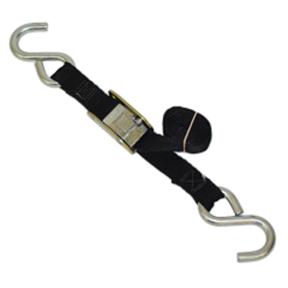
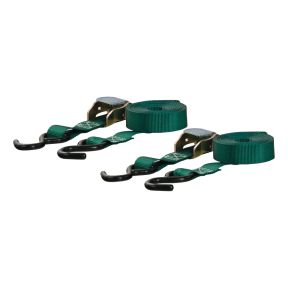
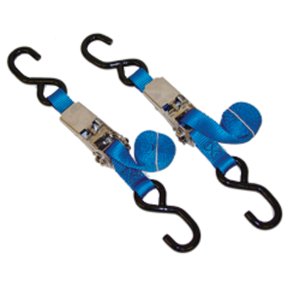
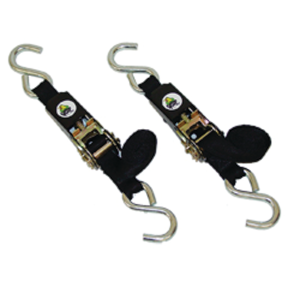
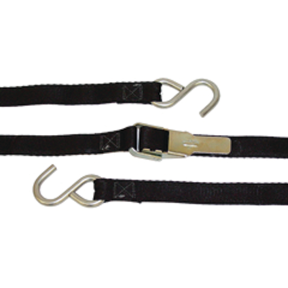
Boat trailer straps secure a boat to its trailer and limit movement during road transport. Boat owners can use bow straps, stern tie-downs, ratchet straps, and winch straps to protect the hull, trailer, and nearby vehicles.
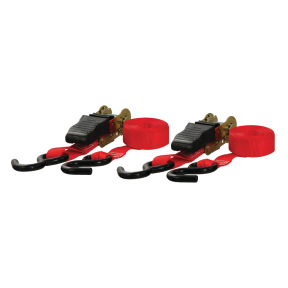
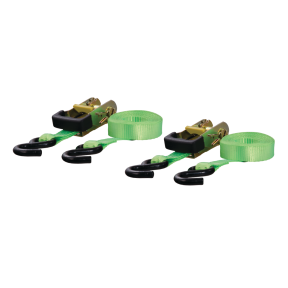
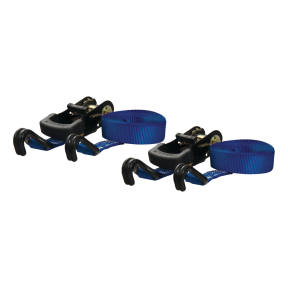
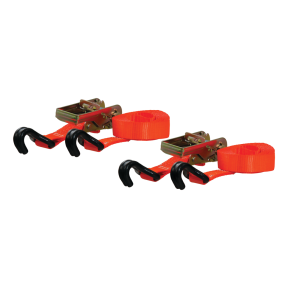
Browse brand options: Gator Tuff tie-downs, Sea Dog Line tie-downs, and Curt Manufacturing tie-downs.
Boat Trailer Strap Key Takeaways
- Restraint points: Secure the boat at the bow and stern for every trip.
- Working load limit: Match each strap's WLL to the boat, trailer configuration, and expected transport forces.
- Strap type: Use ratchet straps for controlled tension, winch straps at the bow, or over-center tie-downs for suitable lighter setups.
- Hardware fit: Select hooks that connect securely to the trailer tie points without contacting the hull.
- Tension: Keep straps snug without crushing the hull, damaging gelcoat, or stressing trailer components.
- Inspection: Recheck strap tension after driving a short distance.
Types of Boat Trailer Straps
| Strap Type | How it Works | Primary Use | How to Select |
|---|---|---|---|
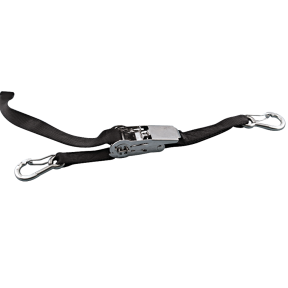
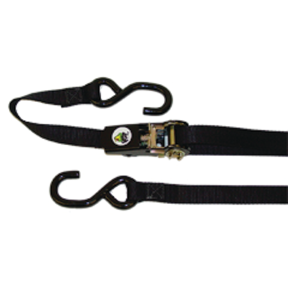
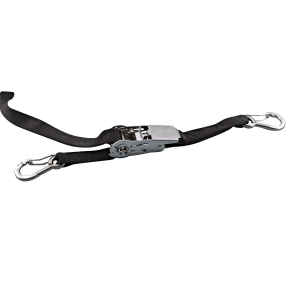
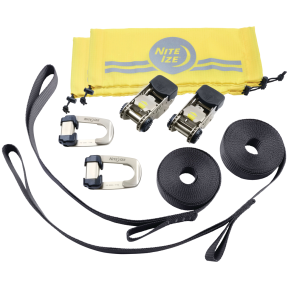
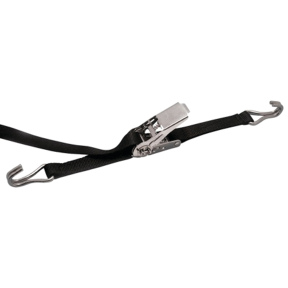
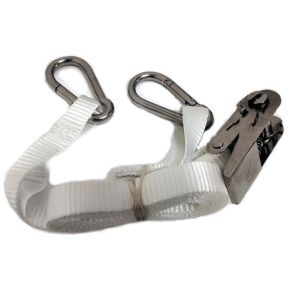
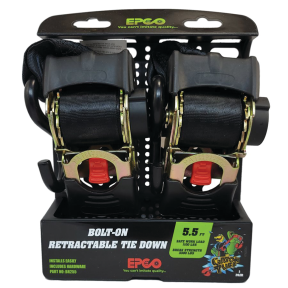
| Ratchet straps | A mechanical tensioner applies controlled pressure and locks the webbing in position. | Maintaining secure tension during boat trailer transport and vibration | Confirm the working load limit, strap length, hook style, and attachment-point compatibility. |
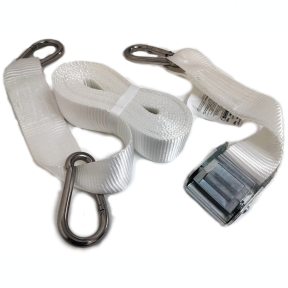
| Winch straps | The strap connects the bow eye to the trailer winch. | Pulling the boat toward the bow stop and holding its forward position | Use with the other restraints required for the boat and trailer setup. |
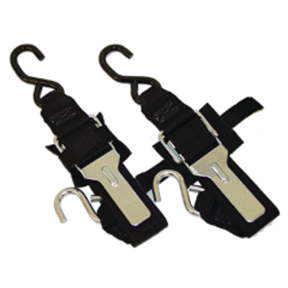
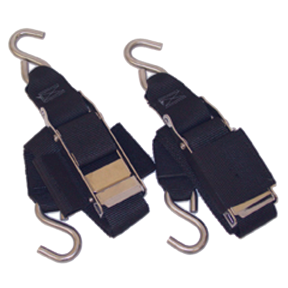
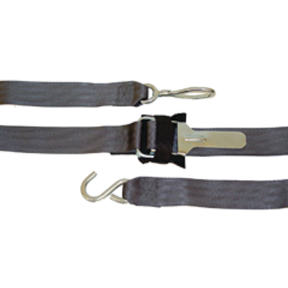
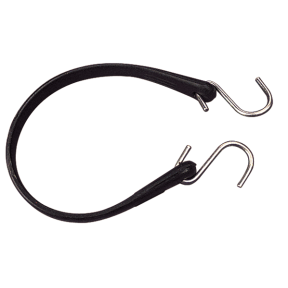
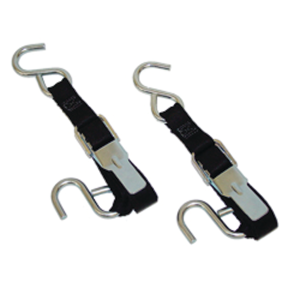
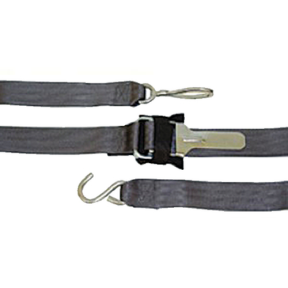
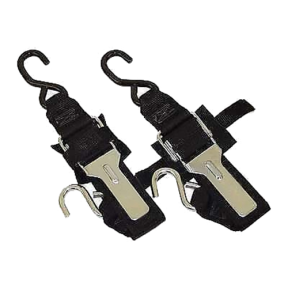
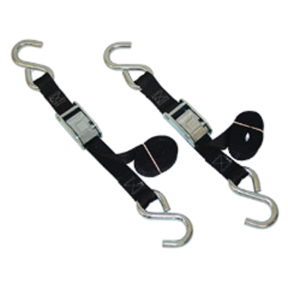
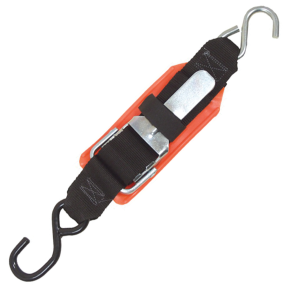
| Over-center tie-downs | An over-center mechanism provides quick attachment and release. | Securing suitable lighter or smaller boat and trailer setups | Confirm the load rating, length, hook configuration, and attachment-point compatibility. |
How to Choose Boat Trailer Tie-Down Straps
| Selection factor | What to check | Why it matters |
|---|---|---|
| Boat size | Required strap length, routing, and number of restraints | The straps must reach approved tie points without unsafe routing. |
| Working load limit | The WLL marked by the strap manufacturer | The rating must suit the secured load and transport forces. |
| Strap type | Ratchet, winch, or over-center mechanism | Each mechanism provides a different method of attachment and tensioning. |
| Hook configuration | Compatibility with the bow eye and trailer tie points | Correct hardware reduces insecure connections and hull contact. |
| Hull protection | Webbing route, hardware position, and applied tension | Proper placement limits gelcoat damage and concentrated pressure. |
Benefits of Boat Ratchet Straps
- Controlled tension: The ratcheting mechanism allows gradual, repeatable tightening.
- Locked position: The mechanism resists unintended release when correctly secured.
- Load-rated options: Different strap lengths, WLL ratings, and hook styles support varied boat and trailer configurations.
- Firm restraint: Correctly fitted boat ratchet straps reduce movement without requiring excessive pressure on the hull.
Using Boat Trailer Straps
- Inspect the webbing, stitching, ratchet, hooks, bow eye, and trailer tie points before use.
- Connect the bow restraint and stern tie-downs to compatible attachment points.
- Route each strap away from sharp edges, moving parts, and direct hull contact where possible.
- Tighten each restraint until snug without deforming the hull or gelcoat.
- Secure loose webbing so it cannot flap against the boat during travel.
- Stop after a short drive to inspect the connections and adjust tension if needed.
Frequently Asked Questions
What straps do I need to secure a boat to a trailer?
Use a bow restraint and stern tie-downs that fit the boat and trailer attachment points. Depending on the setup, this system may include a winch strap, ratchet straps, or over-center tie-downs. Check each strap's working load limit, length, hook configuration, and condition before travel.
How do I choose the correct working load limit for boat trailer straps?
Choose straps whose manufacturer-rated working load limits suit the secured load, trailer configuration, and expected transport forces. Do not treat break strength as the normal operating limit. Review the strap manufacturer's instructions and applicable securement rules when determining the required number and rating of restraints.
How tight should boat trailer tie-down straps be?
Boat trailer tie-down straps should be snug enough to limit movement without crushing the hull, deforming gelcoat, or overstressing trailer components. Apply even tension, secure loose webbing, and inspect the boat's position before departure. Recheck every connection after driving a short distance and adjust if necessary.
Are ratchet straps suitable for securing a boat trailer?
Ratchet straps are suitable when their working load limits, lengths, hooks, and webbing routes match the boat and trailer. The ratcheting mechanism provides controlled tension and locks in position. Avoid excessive tightening, sharp edges, damaged tie points, and hardware placement that could scratch or concentrate pressure on the hull.
What is the difference between a winch strap and a stern tie-down?
A winch strap connects the boat's bow eye to the trailer winch and helps pull the bow toward the stop. Stern tie-downs restrain the rear of the boat against the trailer. These components perform different functions and are normally used together as part of a complete securement system.
How often should boat trailer straps be inspected?
Inspect boat trailer straps before every trip and recheck them after driving a short distance. Look for cut or frayed webbing, damaged stitching, corrosion, bent hooks, worn ratchets, loose connections, and compromised tie points. Replace any component that cannot provide a secure, correctly rated connection.