How to Choose a Marine Watermaker

There's nothing like spending time on the water, basking in the sun and enjoying water sports. But nothing can kill the fun like running out of water when you're miles away from civilization. Having a reliable marine watermaker installed onboard can ensure you have enough water for everyone no matter how long you are off the dock. In this article we'll cover everything you need to know about choosing and installing a marine watermaker so that you'll always have enough water onboard.
Important Takeaways for Choosing the Best Marine Watermaker
- Reverse Osmosis Process: Marine watermakers utilize a 5-step reverse osmosis technology (Intake, Pre-filtration, High-pressure pump, RO Membrane, and Testing/Post-treatment) to isolate contaminants and convert seawater into fresh, drinkable water.
- Sizing Decisions: System requirements are calculated by multiplying daily individual water usage (drinking, cooking, washing, showering) by the total number of passengers onboard. Manufacturers specify output in Gallons Per Day (GPD) assuming continuous 24/7 operation.
- Cruising Environment Impact: Coastal cruisers with regular dock access can opt for smaller, lower-output systems, whereas offshore cruisers aiming for absolute self-sufficiency require higher-capacity units.
- Design Configurations: Buyers must choose between customizable, hands-on modular units built from separate components, and self-contained, automated enclosed units which offer inline testing but demand significant physical space.
- Power Source Variants:
- DC (12/24V): Low amp draw, ideal for solar/wind power on smaller boats, but features a slower production rate.
- AC (110/220V): High-output and fast, but demands a generator, shore power, or a heavy-duty inverter system.
- Engine Driven: Extremely efficient and high-yielding during active motoring, but carries a highly complex installation process.
- Environmental Factors Affecting Output: Optimal production occurs in water temperatures between 68°F and 85°F. Efficiency declines in colder waters (due to high viscosity), high-salinity zones (requiring greater pumping pressure), and harbor environments where silt and organic pollutants risk clogging the membrane.
- Critical Maintenance & Preservation: To extend the 5–7 year lifespan of expensive RO membranes, users must perform a fresh water flush after every operation to clear salt buildup. Systems left idle for more than 5 days or winterized for the season must be "pickled" using a protective chemical biocide.
- Safe Consumption Standards: Pure desalinated water is fully safe to drink once verified. The WHO recommends a Total Dissolved Solids (TDS) level of 50–300 ppm for optimal taste, while the EPA considers water safe for consumption up to 500 ppm.
How Reverse Osmosis Watermakers Work
The fact that we can make high quality fresh drinking water onboard from salt water in pretty amazing. Marine watermakers use a process called "reverse osmosis technology", forcing seawater through a semi-permeable membrane to remove salt and contaminants, producing clean water. Here are the 5 basic steps of the process broken down:
-
Intake system: The first step is drawing seawater into the system from below the waterline – normally through some sort of salt-water "sea-strainer" to keep out any large debris.
-
Pre-filtration: Next, the water moves through two inline filters – a 5 micron and a 20 micron filter. These remove any remaining large particles and impurities to help protect the membrane.
-
High-pressure pump: The salt water then moves past the high-pressure, high efficiency pump, which forces the sea water through a long tube containing the reverse osmosis (ro) membrane.
-
Membrane: In conjunction with the high pressure created by the pump, this semi-permeable membrane then filters out all the salt, bacteria, minerals and contaminants, allowing only pure fresh water molecules through the other side. As you can imagine, this takes a LOT of pressure to accomplish. All of the waste water that does not get pushed through is referred to as "brine" (because of its extremely high salt content) and is discharged overboard.
-
Testing and post-treatment: Once the water has passed through the membrane it should be tested for clarity (judged by TDS/PPMs - total desolved solids/parts per million) before being directed into your water storage tanks. Some systems may also include UV sterilization or mineralization for taste.
How do I know what size marine watermaker to buy?
Now that you've decided to add a marine watermaker, the first thing you need to figure out is how much water you use onboard on a daily basis. Try to estimate how much water you use for everything on your boat – including water for drinking, cooking, washing dishes, cleaning your hands and showering. Water usage can also be affected by the climate you're in and how many water activities you enjoy - so make sure you think about the kind of activities you'll be doing. Once you've got your number – multiply it by how many people will be onboard and you should have a good idea of how much water you will be using daily.
Most watermaker manufacturers calculate their unit's output in gallons per DAY – i.e. how much water it can make if it's running 24/7, so make sure you convert that into hours as you won't be running it 24 hours a day. For example, if the manufacturer says the unit can make 2,000 gallons per day (about 83 gallons per hour) and you only need about 10 gallons a day, that would be WAY too big a unit – so make sure you do the math.
Know Your Cruising Profile
The size of watermaker you need isn't just about how much water you use – it's also about how long you will go without access to fresh water sources – which is why it's important to consider the environment you'll be cruising in.
If you are a coastal cruiser, chances are you can usually find a reliable water source at least once a week to fill up your tanks – so you can buy a smaller output marine watermaker. But if you are planning to take your boat offshore and need to be completely self-sufficient – you may need a unit with higher output.
The Difference Between Enclosed vs. Modular Designs
It's also good to think about how "hands-on" you want to be when it comes to making water. Marine watermaker systems basically come two different ways – modular or enclosed.
-
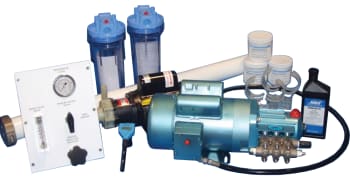
Modular units are just that – each individual piece you'll need for the installation, including filters, a high-pressure pump, a membrane tube, salinity tester, etc. You are meant to put the system together in a way that fits and works on your specific boat. These systems tend to be a little more hands-on, so you'll likely be doing the water testing and controlling the diversion valves.
-
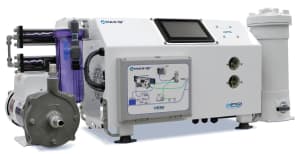
Enclosed units are complete units – all the parts in one compact package, so no messing around how you will install each piece. They also usually come with water testing inline and automatic diversion features. Seems like the perfect thing, right? But the downside is these tend to be very big, so it can be a real challenge to find room for them on an average boat.
Make sure (before you make your purchase) that you understand how hands-on your new system will need you to be. Will you need to do testing/valve control yourself or will it happen automatically?
At the end of each water making session, you'll also need to perform a "fresh water flush" which is where you use some of that water you just made to flush all of the salt water out of the system. This helps prevent growth of organisms throughout all the filters and RO membrane.
Most enclosed units offer electronics that automatically perform a fresh water flush after use or inactivity – while most modular systems require the manual manipulation of valves – so you need to ask yourself if you want control or if you prefer the unit do all the work. If you are the kind of boater who likes to "set it and forget it" then the fully electronic option is definitely the way to go.
Watermaker Powering Options
Another major point to consider is how you will power your new unit. Watermakers come in three main types – DC, AC or engine driven – all of which have their own pros and cons.
-
DC (12/24 Volt) watermakers usually operate with lower amperage draws – making them a great option for smaller boats, or for boaters who want to use solar or wind energy to power their energy efficient marine watermakers. The downside is that they produce less water per hour than AC or engine driven units so you'll need to run them for considerably longer to produce the same amount of water.
-
AC (110V/220V) watermakers take a lot of energy to run, so need either a generator or a high output alternator (if using your engine) in conjunction with a large inverter to operate – but they make a lot of water per hour, so the run time will be significantly lower. For boaters who regularly run a generator, this is a great option as it can add load while filling your water tanks – a win/win.
-
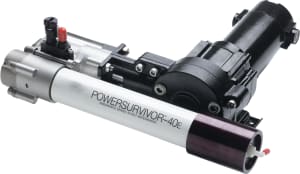
Engine driven watermakers can make water anytime you are running your engine – making this an interesting option as most of us run our engines fairly regularly. The downside is that while they can produce a lot of water, they can take up a lot of room and be complicated to install – so unless you are a mechanic, you'll need to consult with one to make sure it's a viable option for your engine/boat before proceeding.
| Type | Pros | Cons |
|---|---|---|
DC (12/24V) |
|
|
AC (110/220V) |
|
|
| Engine Driven |
|
|
What factors affect a watermaker’s GPD output?
There are several factors that can affect your watermaker's gallons per day output:
- Water temperature – while it varies slightly depending on the manufacturer, the optimal water temperatures for making water are roughly between 68°F and 85°F (20°C to 29°C) to balance output and membrane longevity. Operating in tropical heat, above 85°F, risks reduced efficiency and increased maintenance due to membrane fouling and scaling. Too low a temperature (below ~40°F/4°C) causes water production to drop significantly in harsh environments because water viscosity increases and membranes become less permeable.
- Salinity of Seawater – when operating in areas with higher salinity, it's makes desalination more energy-intensive and reduces water makers efficiency, lowering output because it requires more pressure to create the same amount of water – so if you plan to cruise somewhere that salinity is especially high, make sure you buy the unit with the best high pressure pump available.
- Operating Pressure – It's all about pressure, since the more water going through the membrane, the more water production. Higher pressure pumps increase the rate at which water is forced through membranes, thus increasing output - so do your homework on the quality of the high-pressure pump before making your purchase.
- Feed Water Quality – If you are questioning the quality of the water you are in, you probably shouldn't be making water there. The higher the level of contaminants, silt, or biological matter – the more chance your membrane will get clogged and output will be reduced. While the pre-filtration system can help, you should not be making water anywhere that might have contaminants such as biological matter, fuel or oil in the water, large quantities of silt or anything else that might contaminate your membrane. Marinas and harbors are highly likely to have one (or more) of these pollutants – so try to avoid making water in these locations.
Lastly – if you want your membrane to last (and trust us that they are expensive, and you do), you must always perform a fresh water flush after every water making session. Newer units will likely have this ability already built in, but if you buy a boat with an older marine watermaker installed, make sure to flush for at least 2 minutes with fresh, non-chlorinated water to keep your membrane at peak performance.
How do I flush and store a watermaker?
As previously stated, you should perform a fresh water flush after every use when the unit is being used regularly, and at least once every 5 days if it hasn't been used in that amount of time. If you are done using your system for the season, it's important to "pickle" the marine watermaker using the process recommended by the manufacturer. This usually means running some sort of biocide through the system and leaving it there until you are ready to start using it again. Consult your manual for specifics on this process as systems/procedures vary and not following them may result in voiding your warranty.
Maintenance Tips
- Always perform a fresh water flush after making water for the minimum amount suggested by the manufacturer.
- After 4-5 uses, check the condition of your pre-filters for contamination and replace them as needed.
- When not using the boat for longer periods, pickle (winterize) your marine watermaker per the manufacturer's specifications.
- Routinely check fittings for any leaks – especially around the tube that holds the membrane as any drop in pressure (due to leaks) will affect water production.
How much water can a watermaker produce?
This varies by the unit and can be anywhere from 1 gallon an hour to over 1000 gallons per day so it really depends on what you need. Here's a quick comparison of several marine watermaker units we sell at Fisheries Supply:
| Supplier | Model/Unit Name | Water Production | Notes |
|---|---|---|---|
| FCI Watermaker | Atlas+ APC | 1,400 – 3,600 Gallons/Day |
|
| Aquamiser+ Framed | ~200 – 600 Gallons/Day |
|
|
| US Watermaker | Clearwater | 400 – 1200 Gallons/Day |
|
| Island Explorer | 500 – 1200 Gallons/Day |
|
Frequently Asked Questions
How do I calculate what size marine watermaker I need for my boat?
Estimate daily water usage per person for drinking, cooking, washing, and showering, then multiply by the total number of passengers onboard. Because manufacturers rate output in Gallons Per Day (GPD) based on 24/7 operation, convert that figure to hourly output to match your actual daily run time before selecting a unit.
How much water does the average boater use per day onboard?
A conservation-minded boater typically uses around 5 gallons of fresh water per day, while others may use 10 to 20 gallons per person depending on climate, personal habits, and onboard activities. Accurately estimating individual daily consumption — including drinking, cooking, handwashing, and showering — is the essential first step in selecting correctly-sized marine watermaker output.
What is the difference between a modular and an enclosed marine watermaker?
Modular watermakers ship as separate components — pump, membrane tube, pre-filters, and salinity tester — which you configure to fit your vessel. Enclosed watermakers integrate all components into one self-contained unit with automatic inline water testing and diversion valves, but require significantly more physical installation space.
Can I run my marine watermaker in a marina or harbor?
Running a marine watermaker in a marina or harbor is not recommended. These environments typically contain elevated levels of silt, biological matter, fuel, and oil, all of which can rapidly clog the RO membrane, reduce output, and shorten the membrane's usable lifespan. Operate only in clean, open water.
How long does a reverse osmosis membrane last in a marine watermaker?
With consistent maintenance — including a fresh water flush after each use and periodic pre-filter replacement — a marine RO membrane typically lasts 5 to 7 years. Membrane lifespan shortens when the unit is used in poor-quality water, left unflushed, or stored without pickling during off-season periods.
Is desalinated water from a marine watermaker safe to drink?
Yes. Desalinated water is safe to drink once its Total Dissolved Solids (TDS) level is within an acceptable range. The World Health Organization (WHO) recommends 50–300 ppm for optimal taste; the U.S. Environmental Protection Agency (EPA) sets the safety ceiling at 500 ppm. Most marine watermakers include a built-in TDS meter for verification before water enters your storage tanks.
How difficult is it to install a marine watermaker yourself?
DIY installation is achievable for most modular and enclosed DC units if the vessel has an accessible seawater intake, an overboard brine discharge port, nearby electrical connections, and hose routing to fresh water storage tanks. Engine-driven marine watermakers are the exception, requiring professional mechanical installation due to the complexity of integrating with the engine drive system.
Are replacement RO membranes for marine watermakers easy to source worldwide?
Units using standard-size RO membranes are significantly easier and less expensive to service globally, as compatible membranes are stocked in most cruising regions worldwide. Systems using proprietary membrane sizes are harder to source on passage and typically cost more to replace, making standard membrane compatibility an important purchasing consideration for offshore cruisers.

While it's a lot of information to take in, hopefully you feel more prepared to move forward and make a decision on whether adding a marine watermaker to your boat is a good idea. If you decide it is, Fisheries Supply is proud to offer several brands of watermakers for a variety of needs – including FCI and US Watermaker.
If you still have additional questions, please don't hesitate to contact our product experts at (800) 426-6930.