Boat Fuel Tanks & Fittings at Fisheries Supply
Boat fuel tanks store gasoline or diesel for marine engines. Fisheries Supply carries portable and permanent marine fuel tanks, fuel lines, vents, fittings, anti-siphon valves, sending units, and related components for small boats, outboard motors, personal watercraft, dinghies, and larger powerboats.
Portable and Permanent Marine Fuel Tanks
Tank selection depends on the boat, engine, required fuel capacity, mounting location, and refill method. Portable tanks can be disconnected and moved, while permanent tanks become part of the vessel’s installed fuel system.
| Fuel Tank Type | Typical Applications | Capacity and Installation | Key Characteristics |
|---|---|---|---|
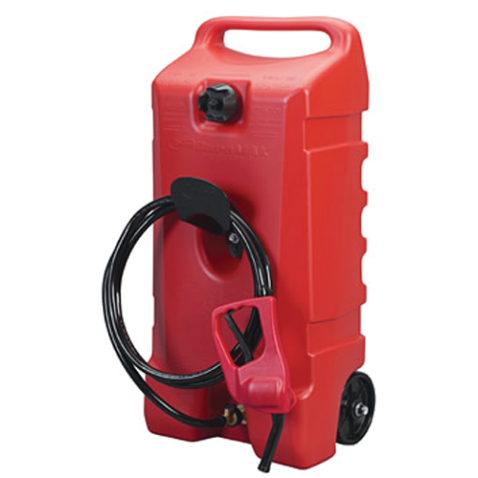
| Portable fuel tank | Outboard motors, personal watercraft, dinghies, and small boats | Removable tanks with capacities of 6 US gallons or less | Lightweight, corrosion-resistant, and designed for disconnection and transport. Models from Scepter provide a removable, corrosion-resistant fuel source for compatible outboard-powered boats and other small craft. |
| Permanent fuel tank | Larger boats and powerboats | Securely installed within the hull or below decks; capacities range from ten gallons to several hundred gallons | Higher-capacity storage requiring correct mounting, venting, hose routing, and professional installation |
Boat Fuel Tank Materials
Fuel tank material affects weight, strength, corrosion resistance, vapor permeation, mounting requirements, and service life. Compare the material with the fuel type, installation area, boat configuration, and manufacturer requirements.
| Material | Primary Benefits | Main Considerations | Typical Use |
|---|---|---|---|
| 5052 or 5086 aluminum | High strength-to-weight ratio and structural integrity | Requires protection from standing water, galvanic corrosion, crevice corrosion, and ethanol-related phase separation | Permanent marine fuel tanks |
| Cross-linked polyethylene | Lightweight, cost-effective, and resistant to corrosion and fuel additives | Minor fuel-vapor permeation must be addressed under applicable EPA diurnal-emission requirements | Portable and permanent fuel tanks |
| Stainless steel | High tensile strength | Susceptible to crevice corrosion in damp, poorly ventilated spaces and requires careful mounting away from standing bilge water | Specialized diesel tanks or small cylindrical gasoline tanks with domed heads under 20 gallons |
Marine Fuel Tank Installation and Safety
A marine fuel system depends on correct tank placement, secure mounting, ventilation, fuel-rated hoses, compatible fittings, and suitable valves. Permanent fuel tanks should be installed by a qualified marine professional familiar with US Coast Guard, EPA, ABYC, and manufacturer requirements.
Fuel Tank Fittings, Vents, and Valves
Fuel tank accessories control filling, ventilation, fuel delivery, level monitoring, and leak prevention. Components from brands such as Perko must match the tank, fuel, hose diameter, thread type, and installation design.
| Component | Function |
|---|---|
| Fuel tank vents | Allow air to enter or leave the tank as fuel volume changes, limiting pressure buildup and fuel-starvation vacuum. |
| Fill hoses | Carry fuel from the deck fill to the tank and require marine-grade, fuel-resistant construction. |
| Connection fittings | Join the tank, hoses, vents, valves, and engine supply line with compatible materials and dimensions. |
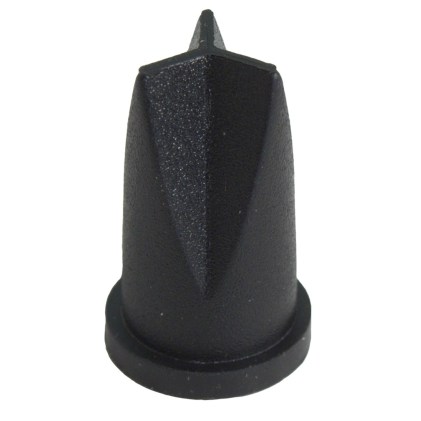
| Anti-siphon valves | Restrict gravity-fed gasoline flow when a downstream fuel line ruptures. |
| Fuel sending units | Measure fuel level and transmit resistance data to a compatible helm gauge. |
| Fuel filters and O-rings | Support clean fuel delivery and sealed component connections. |
Fuel Tank Monitoring and Maintenance
Inspect the marine fuel system regularly and replace damaged components immediately. Focus on tank surfaces, mounting supports, fill hoses, supply lines, vents, clamps, connection fittings, valves, filters, and seals.
| What To Inspect | What To Do |
|---|---|
| Aluminum tanks | Check for corrosion pits and areas exposed to trapped moisture. |
| Plastic tanks | Check for deformation, abrasion, damaged fittings, or loose mounting hardware. |
| Fuel lines and fittings | Replace cracked fuel lines, degraded O-rings, corroded clamps, and leaking fittings. |
| Tank compartments | Keep clean, dry, ventilated, and accessible for inspection. |
| Fuel-level monitoring | Use a fuel sending unit and gauge with matching resistance standards. |
Frequently Asked Questions
What type of boat fuel tank do I need?
Choose a portable fuel tank for a small boat, dinghy, personal watercraft, or compatible outboard motor. Choose a permanent fuel tank for a larger boat that needs integrated, higher-capacity storage. Confirm fuel type, available mounting space, required capacity, connection sizes, ventilation, and manufacturer compatibility before purchasing.
What materials are used for permanent marine fuel tanks?
Permanent marine fuel tanks are commonly made from 5052 or 5086 aluminum or cross-linked polyethylene. Aluminum provides structural strength with relatively low weight, while cross-linked polyethylene resists corrosion and fuel additives. Stainless steel is limited to specialized applications because damp, unventilated spaces can promote crevice corrosion.
Why does a boat fuel tank need a vent?
A boat fuel tank needs a vent so air can enter and leave as fuel volume and temperature change. Correct ventilation limits pressure buildup during expansion and prevents a fuel-starvation vacuum during engine operation. The vent, hose, fittings, and routing must match the tank design and applicable marine requirements.
What does an anti-siphon valve do in a marine fuel system?
An anti-siphon valve restricts gravity-fed gasoline flow if a fuel line ruptures downstream from the tank. The mechanical check valve stays closed until negative pressure from an operating engine fuel pump opens it. Correct valve selection and installation help reduce the risk of gasoline draining into the bilge.
How do I match a fuel sending unit to a boat gauge?
Match the fuel sending unit’s resistance range to the helm gauge. American systems typically use a 33–240-ohm range (240 ohms Empty, 33 ohms Full), while European systems typically use a 10–180-ohm range. Also confirm tank depth, mounting pattern, sender type, electrical connections, and compatibility with any connected NMEA 2000 display.
How often should I inspect a boat fuel tank and its fittings?
Inspect the boat fuel tank and connected components regularly and before seasonal operation or extended trips. Look for corrosion, abrasion, cracks, loose mounts, degraded hoses, damaged O-rings, leaking fittings, and loose clamps. Replace worn fuel-system parts immediately and keep the tank compartment clean, dry, ventilated, and accessible.