Navigate Confidently with Fisheries Supply Navigation Tools
At a Glance
- Traditional navigation tools provide reliable backups to electronics.
- Parallel rulers and dividers support manual chart plotting.
- Sextants enable celestial navigation during offshore passages.
- Paper charts remain essential for safe navigation planning.
Frequently Asked Questions
What are the primary manual tools recommended for plotting a course on a nautical chart?
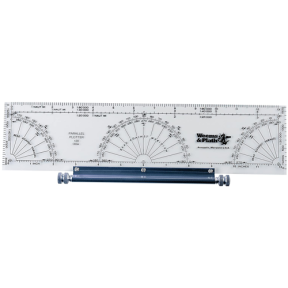
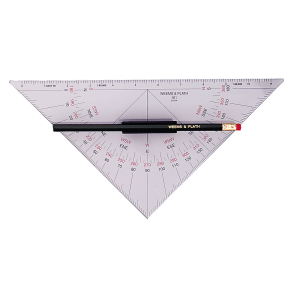
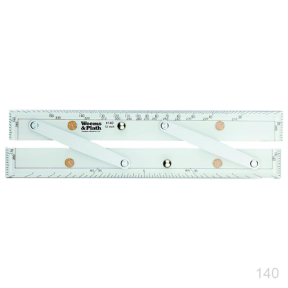
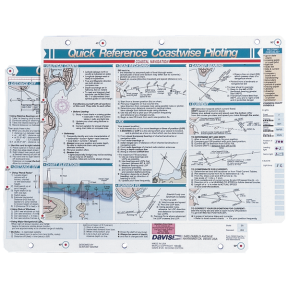
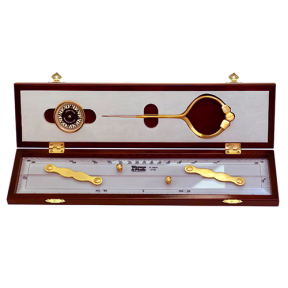
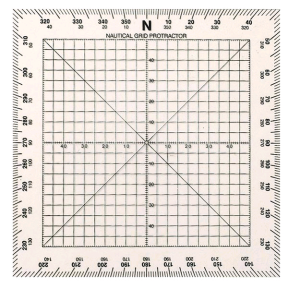
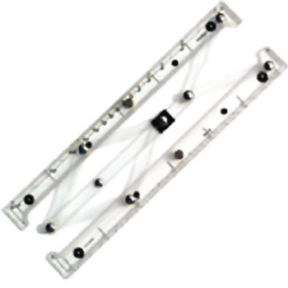
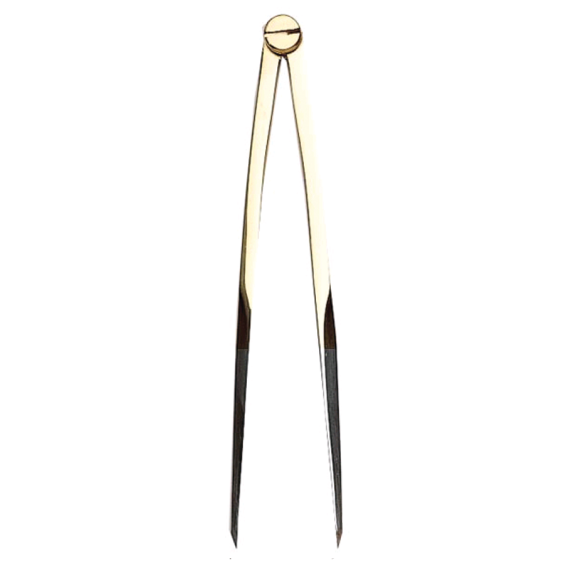
For precise manual plotting, the most essential tools include parallel rulers for drawing course lines and dividers for measuring distances between points. Protractors and parallel plotters are also commonly used to determine bearings and angles directly on the paper chart.
Why is it important to carry traditional navigation instruments like sextants and slide rules?
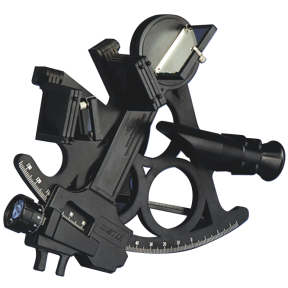
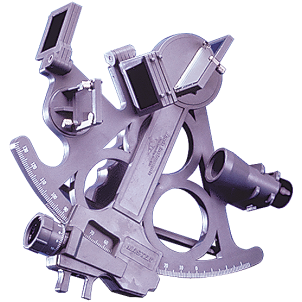
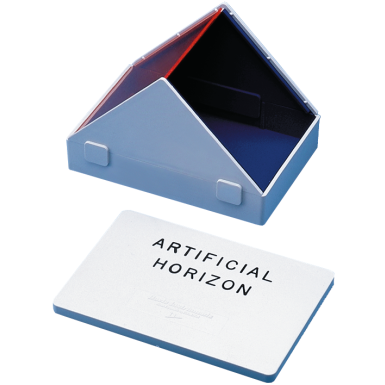
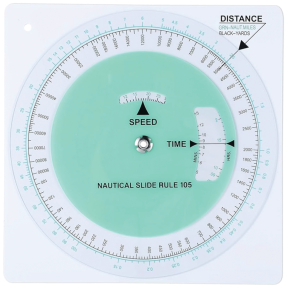
Traditional instruments serve as a critical backup to electronic systems. Marine sextants allow for celestial navigation if GPS fails offshore, while nautical slide rules provide a way to calculate speed, time, and distance without the need for power or batteries.
What is the difference between standard dividers and "one-hand" dividers?
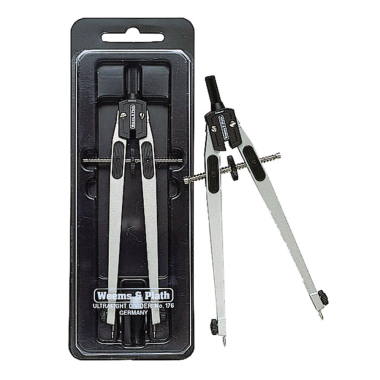
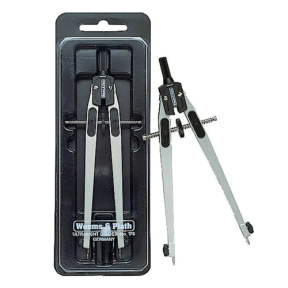
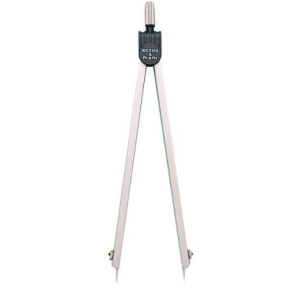
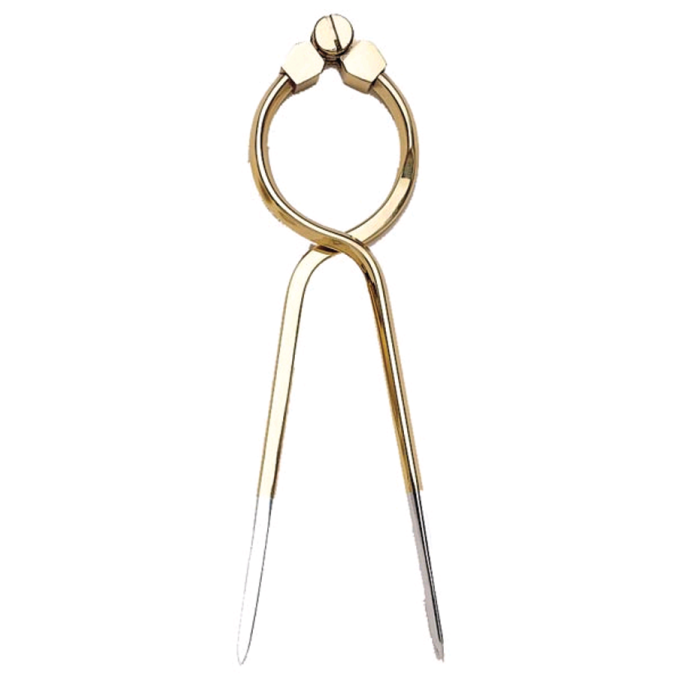
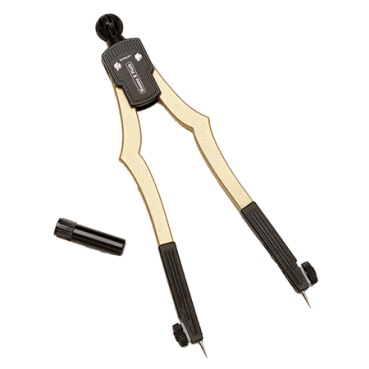
Standard dividers typically require two hands for precise adjustment, whereas one-hand dividers feature a specialized handle design that allows the navigator to open and close the points with a single hand, leaving the other hand free to hold a ruler or steady themselves on a moving vessel.
Are there specific tools available to help identify navigation lights and rules of the road?
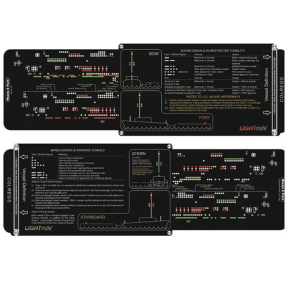
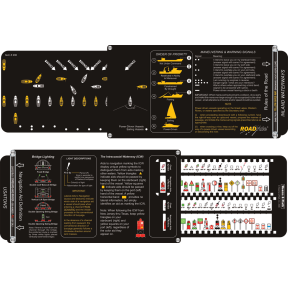
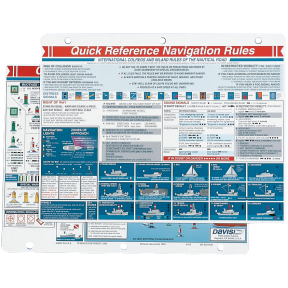
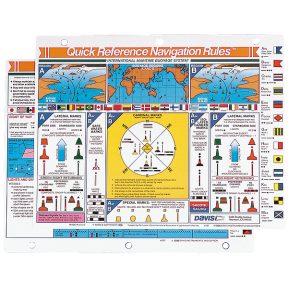
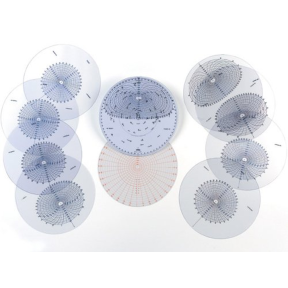
Yes, quick reference cards and specialized tools like the LIGHTrule and ROADrule provide immediate visual aids for identifying vessel lights, day shapes, and right-of-way maneuvers in both U.S. and international waters.
What items are typically included in a complete navigation hand tool kit?
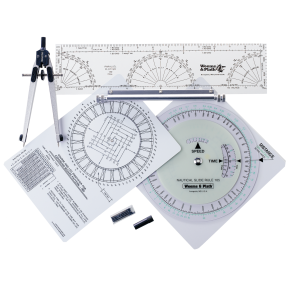
Comprehensive kits, such as those from Weems & Plath, usually bundle the core essentials required for professional charting, including dividers, parallel rulers, a pencil, and a sharpener, often housed in a protective case for organized storage on the bridge.
Why should I keep paper charts and plotting tools on board?
Electronics can fail, and traditional navigation tools allow you to calculate and plot a safe course even without electrical power or GPS reception.
Are these navigation tools suitable for coastal and offshore passages?
Yes. Durable, precision instruments from established marine brands are suitable for both coastal cruising and offshore voyages.