Specialty Marine Fasteners: Boat Rivets, Set Screws, Threaded Rods and Adhesives
Specialty marine fasteners include corrosion-resistant boat rivets, set screws, threaded rods, boat nails and bonding systems for vessel maintenance and repair. This selection guide helps boat owners, marine technicians and boatyards choose fasteners for aluminum hulls, decks, shafts, wood construction and hardware mounting.
Specialty Marine Fastener Buying Guide
Marine Fastener Types and Applications
| Product type | Common application | Top selection factor |
|---|---|---|
| Blind rivets | Hull, deck and hardware joints with access from one side | Diameter, grip range, material and open-end or closed-end construction |
| Aluminum boat rivets | Aluminum hull and structure repairs | Substrate compatibility and galvanic-corrosion control |
| Closed-end boat rivets | Marine joints where water ingress is a concern | Sealed body, grip range and compatible marine sealant |
| Set screws | Securing pulleys, gears and collars to shafts | Cup, flat or cone point matched to the shaft and holding requirement |
| Threaded rods | Adjustable connections, hangers and through-bolting | Thread size, material, corrosion resistance and load requirements |
| Boat nails | Traditional wooden boat construction and repair | Stainless steel, silicon bronze or copper selected for the wood and exposure |
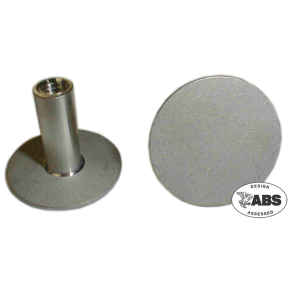
| Weld Mount AT-8040 | Bonding studs, standoffs and mounts without drilling | Surface preparation, substrate compatibility and manufacturer cure instructions |
Choosing Blind Rivets for Boat Repairs
| Rivet type | Application | Selection options |
|---|---|---|
| Open-end blind rivets | Permanent marine joints where only one side of the workpiece is accessible and watertightness is not required. | The open mandrel cavity can provide a path for moisture, making this design unsuitable for joints that must resist water ingress. |
| Closed-end and waterproof boat rivets | Hull, deck and marine hardware joints where resistance to water entry is important. | The enclosed mandrel cavity reduces water ingress. Use the correct grip range, suitable surface preparation and a compatible marine sealant. |
| Rivets for aluminum boats | Repairs and permanent joints in compatible aluminum hulls, decks and structural components. | Aluminum rivets can reduce galvanic potential. If stainless steel is required, isolate dissimilar metals with barriers, coatings, sleeves or sealants. |
Installation and Corrosion-Control Practices
| Step | Required action | Purpose |
|---|---|---|
| 1. Measure the joint | Calculate the combined thickness of every material in the joint and select a matching rivet grip range. | Supports proper rivet deformation and clamping force. |
| 2. Check access | Use blind rivets when the back of the joint cannot be reached. | Allows installation from one side of the workpiece. |
| 3. Match materials | Compare the fastener, hull, deck fitting and surrounding metals for galvanic compatibility. | Reduces the risk of galvanic corrosion between dissimilar metals. |
| 4. Prepare surfaces | Remove contamination and follow the sealant or adhesive manufacturer?s preparation instructions. | Promotes reliable adhesion, sealing and joint performance. |
| 5. Seal penetrations | Apply a substrate-compatible marine sealant where the joint must resist moisture. | Limits water entry around the fastener and mating surfaces. |
| 6. Inspect the repair | Check for movement, corrosion and leaks after installation and following saltwater exposure. | Identifies developing joint problems before further damage occurs. |
Marine Fastener Kits for Onboard Maintenance
Marine fastener kits organize commonly used rivets, mandrels, washers, nuts and sealing supplies for routine or emergency repairs. Select a kit whose fastener materials and sizes match the vessel?s hull, deck fittings and onboard installation tools.
Marine Fastener Brands and Selection Support
Fisheries Supply carries specialty marine fasteners, installation tools and bonding products from manufacturers including Fasco Fastener and Weld Mount. Product selection should account for substrate material, grip range, thread size, corrosion exposure, sealant compatibility and installation method.
Frequently Asked Questions
Are closed-end blind rivets waterproof on a boat?
Closed-end blind rivets reduce water ingress by enclosing the mandrel cavity, but the complete joint still requires correct installation. Select the proper grip range, prepare the mating surfaces and apply a compatible marine sealant where watertightness is critical. Inspect the finished joint for gaps, movement and leaks.
What rivet material should I use on an aluminum boat?
Aluminum rivets are often suitable for compatible aluminum hulls because matching metals can reduce galvanic potential. Fastener strength, alloy, joint load and exposure also matter. When using stainless steel, isolate dissimilar metals with approved barriers, coatings, sleeves or sealants and consult ABYC corrosion guidance.
How do I choose the correct grip range for a boat rivet?
Choose a grip range that includes the total thickness of every material in the joint. Measure the stacked hull, bracket, backing material and washers before selecting the rivet. A grip range that is too short or too long can reduce clamping force and produce an unreliable connection.
When should I use a blind rivet instead of a bolt?
Use a blind rivet when only one side of the joint is accessible and a permanent connection is appropriate. Use a bolt when the assembly needs higher serviceability, removable hardware or a specific engineered load capacity. Base the choice on access, substrate thickness, vibration and structural requirements.
Can Weld Mount adhesive replace drilling into a boat?
Weld Mount adhesive systems can attach compatible studs, standoffs and mounts without adding drilled penetrations. The suitability of Weld Mount AT-8040 depends on the substrate, load, surface preparation and cure conditions. Follow official product instructions and retain mechanical fastening where the application or governing standard requires it.
Which fasteners are suitable for traditional wooden boat repairs?
Stainless steel, silicon bronze and copper boat nails are common options for wooden boat work, but the correct material depends on the timber, nearby metals and moisture exposure. Select the nail type and size for the joint, and avoid combinations that may cause corrosion, staining or wood damage.