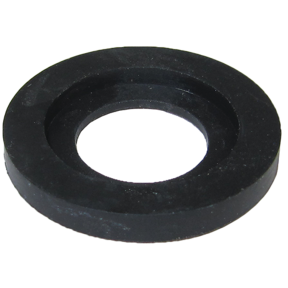
Essential Guide to Marine Washers & Circlips
This category provides boaters with an in-depth understanding of marine washers and circlips. We cover their types, materials, and best practices for installation and maintenance to ensure the reliability and safety of your boat's hardware.
Key Takeaways
- Purpose: Marine washers distribute load and prevent damage to surfaces, while circlips provide secure axial retention for components.
- Corrosion Resistance: Both are designed to withstand the demanding saltwater environment through the use of durable, corrosion-resistant materials.
- Variety: A wide range of types exists, including flat washers, lock washers, and fender washers, each with a specific function.
- Material Choice: Common materials include Stainless Steel, Silicone Bronze, and Nylon, selected based on strength, weight, and environmental exposure.
- Maintenance: Regular inspection is crucial to prevent fastener failure and maintain the integrity of your boat's components.
Understanding Marine Fasteners: Washers and Circlips
On a boat, every component is subject to constant vibration, motion, and the corrosive effects of a saltwater environment. This is why standard fasteners are insufficient. Marine washers and circlips are specifically engineered to provide enhanced durability and security in these demanding conditions, ensuring the long-term integrity of your boat.
Common Types of Marine Washers and Fasteners
Choosing the correct washer for a specific application is critical for safety and performance. The fasteners we offer are designed for a variety of tasks:
- Flat Washers: These are the most common type, used to distribute the load of a threaded fastener, like a bolt or nut, over a larger surface area. This reduces pressure and prevents damage to the component surface.
- Lock Washers: A vital safety component, lock washers create friction and resistance to prevent fasteners from loosening due to engine vibration and hull motion.
- Fender Washers: With a significantly larger outer diameter than flat washers, these are used when fastening thin or soft materials. They provide a wider bearing surface, preventing the fastener from pulling through.
- Finishing Washers: Also known as countersunk washers, these offer a clean, polished appearance by recessing the head of the screw. They are ideal for visible applications where aesthetics are important.
- Circlips: These specialized fasteners, also called snap rings, are used for axial retention. They snap into a machined groove on a shaft or bore to prevent a component from moving along the axis.
Corrosion-Resistant Materials for Marine Environments
The material of a fastener is as important as its function. We offer washers and circlips in a range of durable materials suited for demanding marine environments, ensuring longevity and reliability.
- Stainless Steel: A top choice for its excellent corrosion resistance and high strength. Grades like 316 stainless steel are particularly favored for saltwater applications.
- Silicone Bronze: This material is highly regarded for its exceptional durability and resistance to both saltwater and chemicals, making it a reliable option for critical applications.
- Brass: Provides good corrosion resistance and is often used in marine plumbing and electrical systems where a softer, more malleable material is required.
- Titanium: The ultimate in marine fastener materials, titanium offers superior strength and is virtually immune to corrosion. It is an ideal choice for high-stress, long-term applications.
- Nylon: A lightweight and non-corrosive synthetic material, nylon is perfect for non-load-bearing applications where metal-to-metal contact needs to be prevented.
- Galvanized Steel: Steel coated with a protective layer of zinc, galvanized steel offers increased corrosion resistance for a variety of marine uses.
The Importance of Regular Fastener Inspection
Even the most durable fasteners require routine checks. Regular inspection is critical to identify signs of wear, stress, or corrosion before they can lead to failure. By proactively checking the security and condition of your marine washers and circlips, you can ensure your boat's components remain securely fastened and prevent costly or dangerous equipment failures.