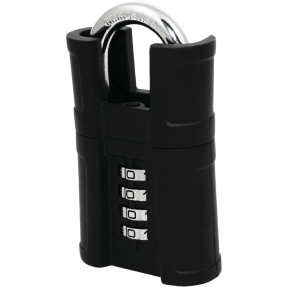
Boat Padlocks, Hasps & Barrel Bolts
The marine environment places constant stress on hardware through moisture, salt, and vibration. When boats are left unattended, standard locks often fail prematurely. Fisheries Supply addresses these challenges by offering a focused selection of marine-grade locking hardware designed for durability, corrosion resistance, and dependable security.
What to Know
- Select corrosion-resistant materials suited for saltwater environments.
- Match lock type to the access point and frequency of use.
- Install hasps and bolts through a solid structure for real security.
Understanding Marine-Grade Padlocks
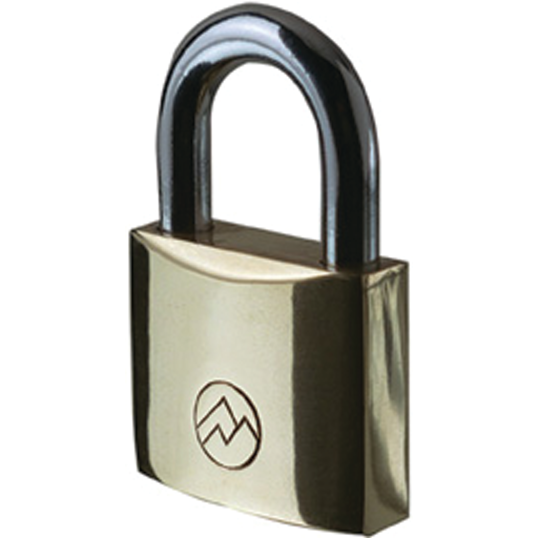
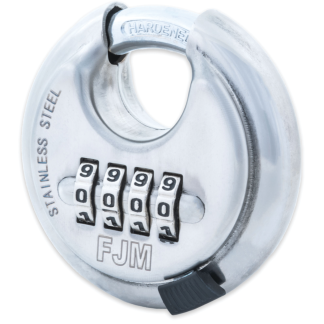
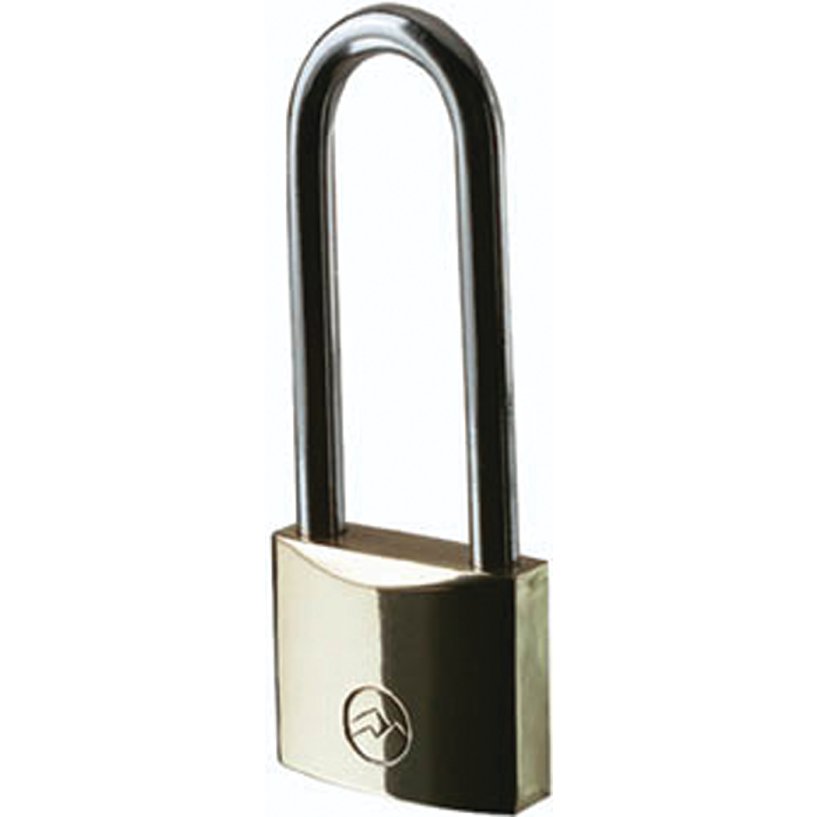
Marine-grade padlocks are engineered specifically for use in saltwater and high-humidity conditions. Unlike household locks, they are manufactured from materials that resist oxidation and internal seizure, helping maintain reliable operation over time.
Key Features of Marine Padlocks
- Corrosion resistance: Stainless steel, brass, and bronze resist rust and pitting.
- Durable construction: Built to tolerate vibration, weather exposure, and repeated use.
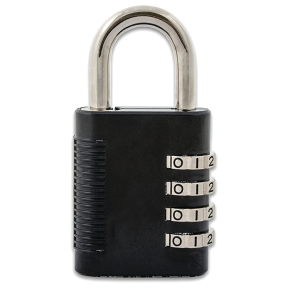
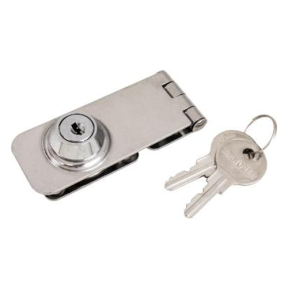
- Security design: Available in keyed, concealed-shackle, and combination configurations.
Marine Hasps and Barrel Bolts
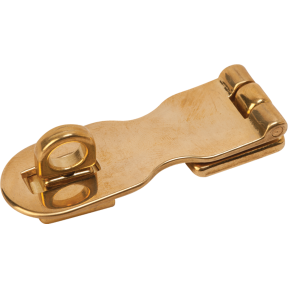
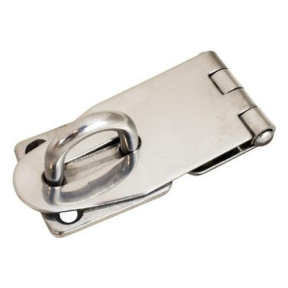
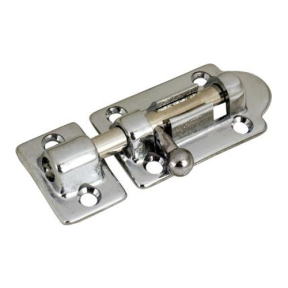
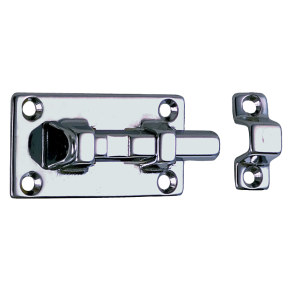
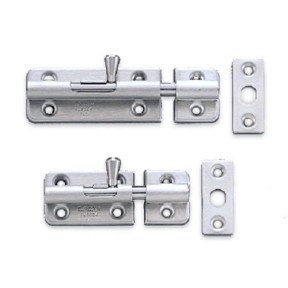
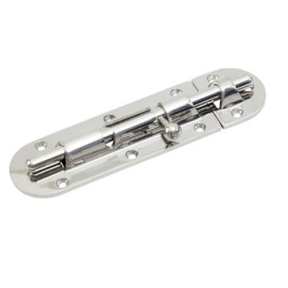
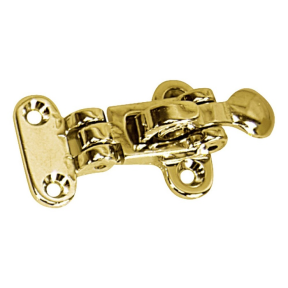
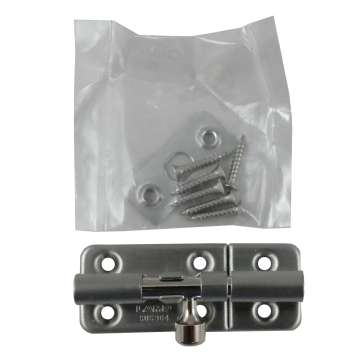
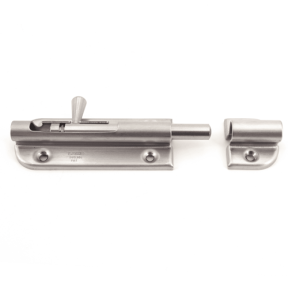
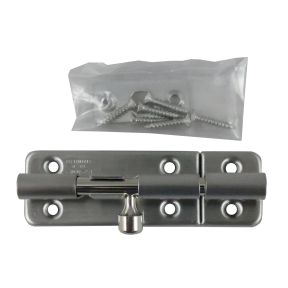
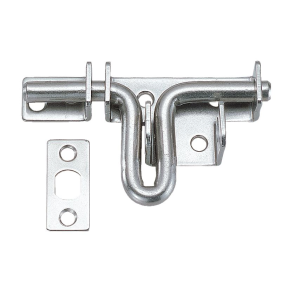
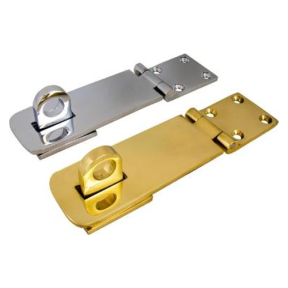
Marine hasps and barrel bolts add mechanical closure and lockable security to boat doors, cabinet doors, lockers, and storage compartments. The right hardware depends on whether the access point needs a padlock, a sliding latch, or both.
| Hardware Type | Primary Function | Common Uses | Best Fit |
|---|---|---|---|
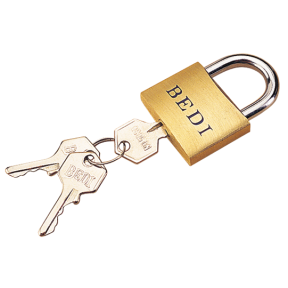
| Marine padlock | Locks a hasp, chain, latch, or dock box fitting | Dock boxes, lockers, gates, storage compartments | Access points that need removable keyed or combination security |
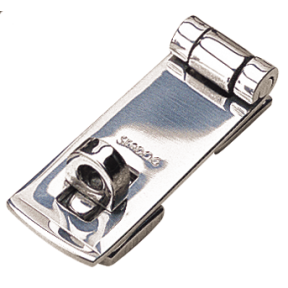
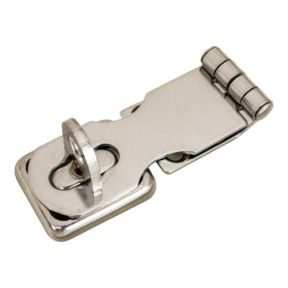
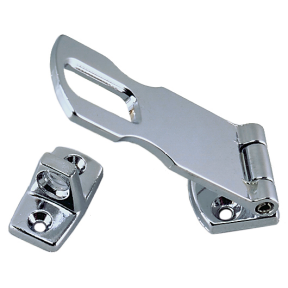
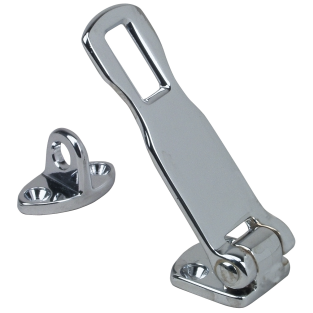
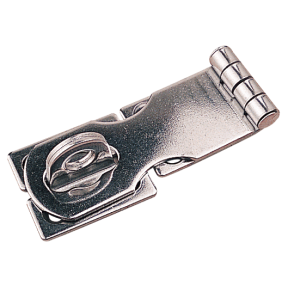
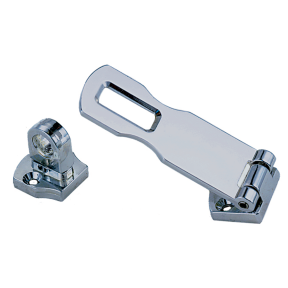
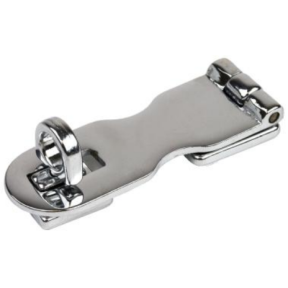
| Marine hasp | Creates a hinged locking point for a padlock | Hatches, lockers, doors, cabinets, dockside storage | Doors or lids that need padlock-compatible security |
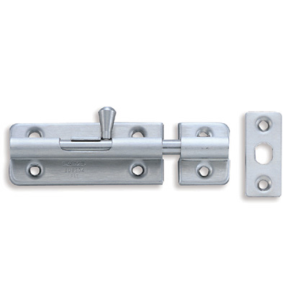
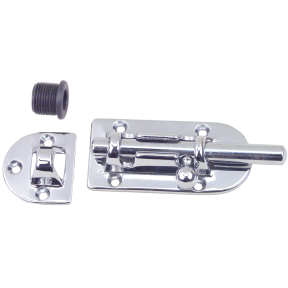
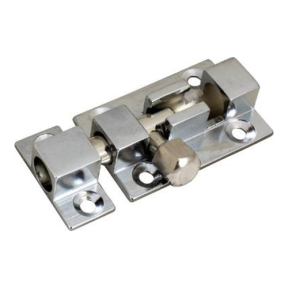
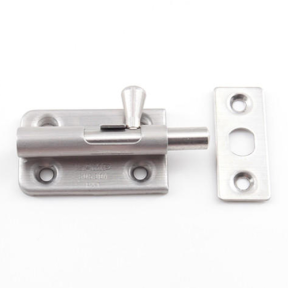
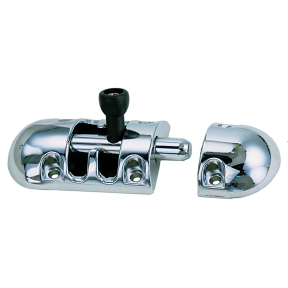
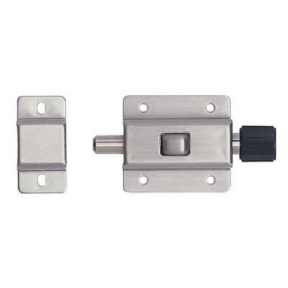
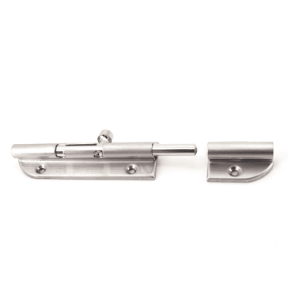
| Barrel bolt | Slides a metal bolt into a receiver or catch | Cabinet doors, interior compartments, hatches, light-duty closures | Applications that need a simple mechanical latch |
| Dock box lock | Secures dockside equipment storage | Marina storage boxes, work gear, tools, personal equipment | Shared dock areas and shoreside storage |
Choosing Boat Padlocks, Hasps, and Barrel Bolts
Proper selection and installation are just as important as the lock itself. When evaluating marine locking hardware, consider the following:
Hasp Configuration
Through-bolted hasps mounted to a solid structure provide far better security than surface-mounted hardware fastened with short wood screws.
Material Selection
Stainless steel, brass, and bronze are commonly used in marine hardware due to their resistance to corrosion and long service life.
For dock boxes and shared storage, a heavy-duty marine combination lock paired with a reinforced hasp offers convenience without sacrificing security. For higher-risk applications, high-security marine padlocks can be combined with heavy-duty hasps or barrel bolts to protect valuable onboard equipment.
To shop specifically for door locks, explore our selection of marine door hardware.
Frequently Asked Questions
What is the difference between a hasp and a barrel bolt?
A hasp is a hinged metal fastener designed to work with a padlock, while a barrel bolt is a sliding metal bar that secures directly into a catch without a separate lock.
Can regular padlocks be used on boats?
Regular padlocks are not recommended. Marine-grade padlocks made from stainless steel or brass are better suited to resist corrosion and demanding marine conditions.
How secure are marine hasps and barrel bolts?
Security depends on material quality, installation method, and the padlock used. Heavy-duty designs and concealed-shackle configurations offer increased resistance to tampering.
Why is 316 stainless steel the preferred material for marine locking hardware?
316 stainless steel is considered the superior "marine grade" material because it contains molybdenum. This added element gives it significantly greater resistance to pitting corrosion and crevice corrosion, which are common failures for other grades of metal, like 304 stainless steel, when constantly exposed to salt water and high-chloride environments.
What is a safety hasp, and how does it differ from a standard swivel hasp?
A Safety Hasp is designed so that when the hasp is closed and secured with a padlock, the mounting screws or fasteners used to attach it to the door and frame are completely concealed. This prevents unauthorized removal of the hardware. A Swivel Hasp has a rotating or hinged staple, allowing it to be used flexibly on applications where the mounting surfaces may not be perfectly aligned or flat.