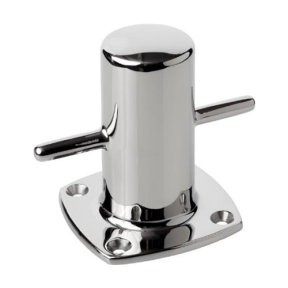
Upgrade your boat with premium boat cleats from Fisheries Supply
This category helps boaters and marine professionals choose, size, and install reliable marine cleats—with trusted options from top brands and practical selection tips.
Key Takeaways
- Match cleat length to line diameter and boat loads (see sizing guidance below).
- Choose materials for your environment: stainless steel for saltwater, aluminum for weight savings, galvanized for value.
- Consider low-profile styles (pop-up / folding) for safety in high-traffic deck areas.
- Use through-bolts, backing plates, and marine sealant for secure, leak-free installations.
Trusted brands and wide selection
Count on a broad assortment from reputable manufacturers, including Sea Dog Line and Schaefer Marine. Our product team prioritizes corrosion resistance, strength, and clean finish quality.
Explore boat cleat styles
Find the right fit for mooring, docking, and fender applications:
- Pop-up & folding cleats for a streamlined, low-profile deck
- Stainless steel cleats for maximum corrosion resistance
- Aluminum and galvanized steel options for weight, value, and durability
- Dedicated fender cleats and specialty designs
- Toe-friendly folding profiles for high-traffic zones
Whether you run a sailboat, pontoon, or motor yacht, our representatives can help you select the right combination of style, material, and size.
Sizing & strength—how to choose the right cleat
- Quick sizing guideline: Rule of thumb: For every 1/16 in (1.6 mm) of rope diameter, use 1 in (25.4 mm) of cleat length. Example: a ½ in dock line pairs with a = 6 in cleat.
- Consider boat and mooring loads:
- Displacement & windage: Heavier or high-windage boats benefit from longer and stronger cleats.
- Application: Primary bow/stern cleats may need higher working loads than spring-line or fender cleats.
- Environment: For saltwater exposure, prefer 316 stainless steel.
Explore compatible marine rope and line to complete your dock-line setup.
Installation best practices
- Position the cleat to align with mooring loads and fairleads.
- Mark and drill pilot holes; dry-fit before sealing.
- Use marine-grade through-bolts with washers and a backing plate.
- Apply marine sealant to prevent leaks and galvanic corrosion.
- Torque fasteners per manufacturer guidance; recheck seasonally.
Frequently Asked Questions
What is the best material for boat cleats?
The best material depends on environment and duty cycle. Stainless steel excels in saltwater and high-load applications, aluminum balances weight and strength, and galvanized steel offers value for moderate duty.
What are pop-up cleats and why use them?
Pop-up cleats retract when not in use for a sleek, low-profile deck, reducing trip hazards and snag points.
How do I install a deck cleat correctly?
Mark and drill pilot holes, use through-bolts with a backing plate, bed hardware with marine sealant, and torque fasteners per the manufacturer. Seal and re-inspect periodically.
When should I choose folding cleats?
Use folding cleats in high-traffic areas (cockpits, side decks) where a low profile improves safety without sacrificing function.
Why buy from Fisheries Supply?
- Large in-stock selection of boat cleats and hardware
- Expert support from a dedicated marine team
- Fast nationwide and international shipping