
Handheld and Mounted Boat Spotlights and Marine Searchlights
Boat spotlights and marine searchlights provide focused illumination for nighttime navigation, docking, security checks, and emergency searches. This category helps recreational boaters, commercial operators, and marine installers compare handheld, mounted, remote-control, LED, halogen, and xenon searchlights.
What Are Marine Searchlights Used For?
Marine searchlights support onboard tasks by directing a concentrated beam toward objects or areas that fixed deck lights cannot illuminate effectively.
| Use | Purpose | Top Considerations |
|---|---|---|
| Night Navigation and Hazard Detection | Identifies buoys, daymarks, docks, moorings, shorelines, floating debris, and nearby vessels. | Aim the beam briefly and carefully to preserve night vision and avoid obscuring required navigation lights. |
| Search and Emergency Use | Illuminates people, boats, or objects in the water while assistance is coordinated. | Compare beam reach, control response, power availability, and mounting position. |
| Security and Work Lighting | Helps inspect approaching vessels, docks, moorings, anchorages, and equipment. | Use floodlights, spreader lights, or deck lights when broad cockpit or work-deck illumination is needed. |
Types of Boat Spotlights and Marine Searchlights
Available options include products from ACR Electronics, Perko, and Jabsco. The correct light depends on beam pattern, operating range, electrical capacity, mounting location, and frequency of use.
| Searchlight type | Primary characteristics | Common applications |
|---|---|---|
| LED searchlight | Low power consumption, long service life, fast activation, and reduced lamp maintenance | Frequent nighttime use, small boats, helm-controlled systems, and battery-conscious installations |
| Halogen searchlight | Established lamp technology with practical short-range illumination | Docking, close-quarters maneuvering, and general-purpose lighting |
| Xenon searchlight | Bright, narrow beam designed for longer-distance spotting | Larger recreational boats, commercial vessels, and distant target identification |
| Flood, spreader, or deck light | Wide beam pattern for area and task lighting | Cockpits, working decks, line handling, ground tackle, and equipment inspection |
| Infrared or thermal system | Imaging or illumination beyond the visible-light spectrum | Specialized commercial operations and frequent low-light navigation |
How to Choose a Marine Searchlight
Match the Beam to the Application| Application | Recommended Beam or Feature |
|---|---|
| Navigation Support | Choose a controlled, focused beam that can identify markers and hazards. |
| Long-Range Spotting | Compare the manufacturer’s documented beam distance and beam intensity. |
| Docking and Deck Work | Select a broad flood or spreader beam pattern. |
| Emergency Searches | Prioritize reliable controls, rapid aiming, and adequate operating time. |
| Security Monitoring | Consider remote movement and convenient access from the helm. |
Confirm Electrical Compatibility
Verify the searchlight voltage, current draw, circuit protection, wire size, control requirements, and available battery capacity. LED marine spotlights typically consume less power than comparable halogen models, but the manufacturer’s electrical specifications should govern installation decisions.
Compare Mounting and Control Options
| Searchlight Configuration | Operation and Use |
|---|---|
| Handheld Spotlight | Provides portable illumination and flexible manual aiming. |
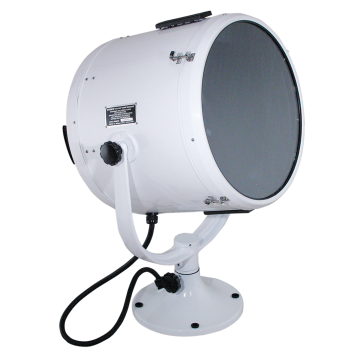
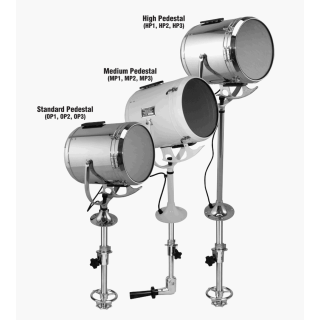
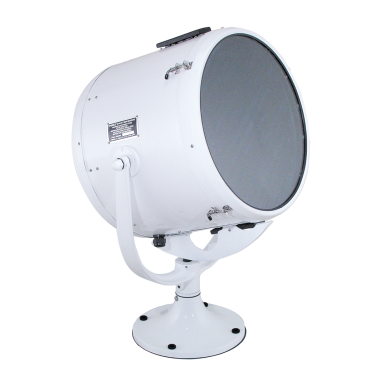
| Fixed-Mounted Spotlight | Creates a dedicated beam from a selected deck, cabin, or rail position. |
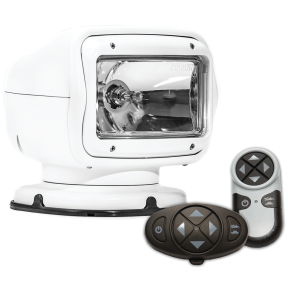
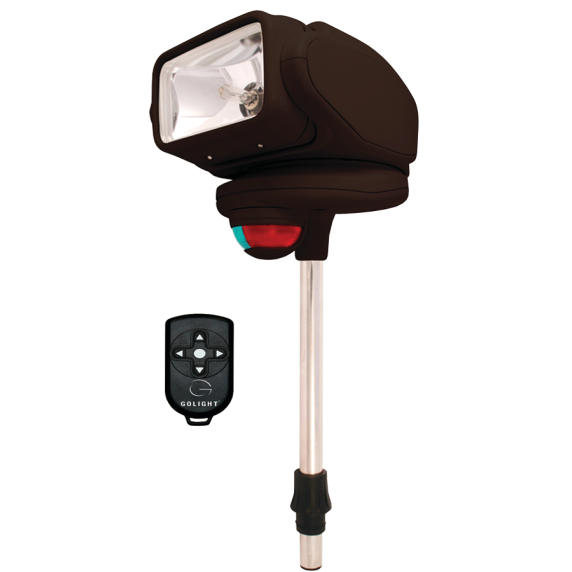
| Remote-Control Searchlight | Allows the operator to rotate or tilt the light from the helm. |
| Manual-Control Searchlight | Suits straightforward installations where the operator has direct deck access. |
Frequently Asked Questions
What is a boat spotlight used for at night?
A boat spotlight is used to identify buoys, channel markers, docks, shorelines, debris, and people or vessels in the water. It supplements ambient lighting and required navigation lights. Operators should use the focused beam selectively because continuous illumination can reduce night vision or distract nearby boaters.
Should I choose an LED, halogen, or xenon marine searchlight?
Choose LED for lower power consumption, long service life, and frequent operation; halogen for conventional short-range lighting; or xenon for a narrow, long-range beam. The practical choice depends on the boat’s electrical capacity, required beam reach, maintenance preferences, mounting space, and expected operating time.
What should I check before buying a remote-control boat searchlight?
Check system voltage, current draw, control-panel compatibility, mounting clearance, rotation range, tilt range, beam pattern, and cable-routing requirements. The searchlight housing should also suit saltwater, spray, vibration, and UV exposure. Compare each manufacturer’s wiring instructions and environmental ratings before selecting a model.
Can a marine searchlight replace required navigation lights?
No. A marine searchlight is a supplemental visibility tool and cannot replace navigation lights required by applicable boating rules. Position and operate the searchlight so its beam does not hide red, green, white, or yellow navigation signals or interfere with another vessel operator’s ability to see safely.
How many lumens and how much beam distance does a boat spotlight need?
The required output depends on boat size, speed, operating area, weather, and intended use. About 1,000 lumens and a 1,000-foot beam may suit many small-boat tasks, but these figures require product-level confirmation. Compare tested beam distance and intensity rather than relying on lumen output alone.
What is the difference between a spotlight and a marine floodlight?
A spotlight projects a concentrated beam for identifying distant markers, hazards, or targets. A marine floodlight spreads light across a wider area, making it more useful for cockpits, decks, docking, line handling, and equipment work. Some fixtures combine spot and flood patterns for multiple onboard tasks.