Marine Plumbing Fittings at Fisheries Supply
This category is intended to help boat owners, refitters, and marine technicians select, size, and install marine plumbing fittings with confidence—prioritizing safety, corrosion resistance, and standards-aware practice.
Key takeaways
- Choose materials that match the environment: bronze and stainless steel for seawater; brass and quality synthetic composites for select systems.
- Verify thread standards (NPT vs. BSP) and barb sizing to prevent leaks and failures.
- Below the waterline, use double clamps and marine-grade components; plan for service access and periodic inspection.
Comprehensive Selection of Marine Fittings
As a premier source for boat plumbing and fittings, Fisheries Supply stocks a wide inventory for potable water, raw-water, and drain systems.
Explore by material:
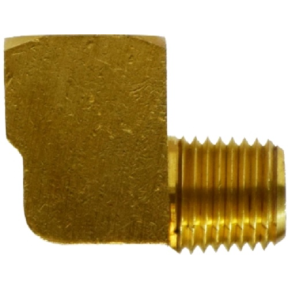
- Brass fittings
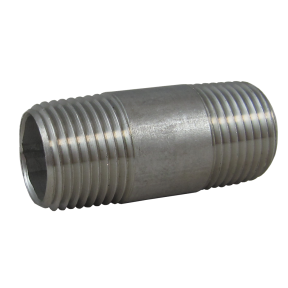
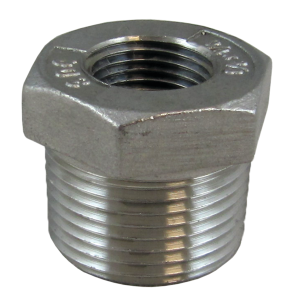
- Stainless steel pipe couplings and fittings
- Bronze plumbing connectors
- Synthetic hose fittings
Choose from common geometries and connection styles:
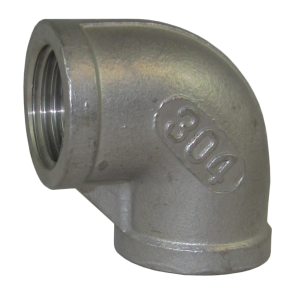
- 45-degree and 90-degree elbows
- Pipe-to-hose adapters
- Garden hose fittings
- Seacocks and nipples
Choosing the Right Boat Plumbing Fittings
Match the fitting to its job and environment. Consider:
- Corrosion resistance & galvanic compatibility. For seawater and through-hull service, marine bronze or 316 stainless are typical choices; avoid soft brass below the waterline.
- Serviceability & access. Leave space for two clamps, valve actuation, and hose replacement. Add labels for future maintenance.
- System compatibility. Verify thread standards (NPT vs. BSP), hose-barb size, temperature/pressure ratings, and potable-water approvals where required.
Example configuration: pair durable bronze seacocks with lead-free nipples and couplings for freshwater or raw-water intakes. Quality synthetic composite fittings are also used in specific marine plumbing applications.
Well-selected water fittings keep potable water flowing smoothly and help prevent leaks and corrosion, whether you’re dockside or offshore.
Why Choose Fisheries Supply for Your Plumbing Fittings?
- Extensive selection across materials, thread standards, and sizes
- Advice from experienced marine product specialists
- Competitive pricing from trusted brands
Installation & Good Practice
- Use double hose clamps below the waterline; ensure a proper hose-to-barb fit and use a glycerin-based lubricant during assembly. Choose marine-grade clamps.
- Confirm NPT vs. BSP threads—do not mix standards. Use appropriate sealants compatible with the fitting material and media.
- After installation, pressure-test or run-up systems and re-torque clamps after initial sea trials.
Ready to build your system? Shop marine pipe fittings or add a vented loop to complete your installation.
Frequently Asked Questions
How do I install marine hose fittings for a secure connection?
Match hose ID to the barb OD, warm the hose end in hot water if needed, lubricate with a glycerin-based product, fully seat the hose, and use two marine-grade clamps (opposing screw heads) below the waterline.
Why use double clamps below the waterline?
They add redundancy against leaks and slippage in high-risk locations. Industry guidance recommends double clamps for below-waterline and exhaust connections where feasible.
What’s the difference between NPT and BSP fittings?
NPT (U.S.) uses a 60° thread angle and tapered threads; BSP (international) commonly uses a 55° angle and may be tapered (BSPT) or parallel (BSPP). Threads are not interchangeable.
Which materials are best for seawater exposure?
Marine bronze seacocks and fittings are a classic choice; 316 stainless is used where appropriate. Avoid soft brass for sustained seawater immersion.
What sealant should I use on pipe threads?
Use a thread sealant or PTFE tape rated for the media (potable water, fuel, exhaust) and compatible with the fitting material. Avoid over-application that could migrate into systems.