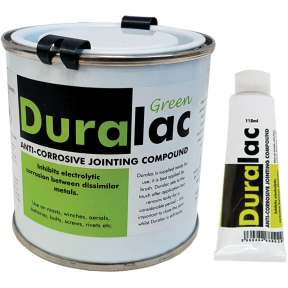
Protect Your Boat with Duralac Jointing Compound
When it comes to marine maintenance, Duralac paste is a must-have for preventing galvanic corrosion. At Fisheries Supply, we recommend this trusted anti-corrosive jointing compound to boaters looking to safeguard metal components and fasteners mounted above the waterline.
How Duralac Prevents Galvanic Corrosion
Duralac jointing compound contains barium chromate, which forms a low-solubility, passivating barrier between dissimilar metals such as stainless steel and aluminum. This anti-corrosive compound blocks electrolytic reactions caused by moisture, salt spray, and atmospheric exposure, significantly extending the life of mast fittings, deck hardware, and fastened joints.Easy Application for DIY Boaters
The tacky, high-viscosity nature of Duralac anti-corrosive jointing compound makes it easy to apply directly to threads and mating surfaces. Whether you're installing stainless bolts, rivets, or marine-grade hardware into aluminum spars, Duralac green paste stays put—setting to form a rugged, protective skin that seals out the elements.Trusted by Marine Professionals
Used globally in marine, aviation, and industrial settings, Duralac is the go-to anti-galvanic corrosion paste for rigorous atmospheric isolation. Call Fisheries Supply today and talk to our marine experts to find the right Duralac paste solution for your boat.FAQs About Duralac
Is Duralac waterproof?Duralac is highly water-resistant against rain, washdowns, and sea spray. However, because it relies on a slightly soluble barium chromate formula to passivate metal surfaces, it is not recommended for continuous immersion below the waterline.
Can I use Duralac on aluminum?
Absolutely. Isolating stainless steel fasteners and hardware from aluminum hulls, masts, and arches is exactly what Duralac is designed for.
Does Duralac harden?
Yes, Duralac is a skinning compound that cures to a firm, paste-like consistency over time to ensure a long-term environmental seal. It does not remain an open grease, but it can be scraped away during future disassembly.