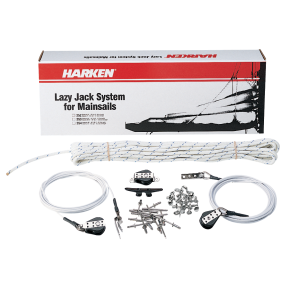
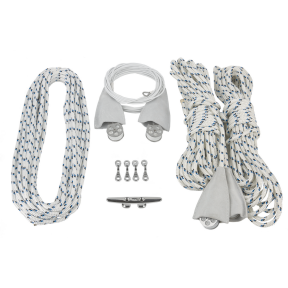
Lazy Jack Systems for Sailboats
Effortless mainsail handling is achievable with a properly designed lazy jack system. At Fisheries Supply, we carry a focused selection of lazy jacks for sailboats from established marine hardware manufacturers, including Harken and Schaefer Marine.
Key Takeaways
- Lazy jacks guide the mainsail neatly onto the boom during drops.
- They are well suited for shorthanded and solo sailing.
- Proper sizing and installation improve effectiveness and sail control.
- They assist with reefing but do not replace a topping lift.
What Is a Lazy Jack System?
A lazy jack system consists of light control lines that run from multiple attachment points along the boom up to the mast, typically terminating just above the spreaders. As the mainsail is lowered, the lines guide the sail so it flakes and stacks neatly along the boom.
This arrangement works with standard mainsails, full-batten sails, and boats equipped with a stack pack sail cover. By preventing the sail from spilling over the lifelines or onto the deck, lazy jacks reduce clutter and help maintain control during sail drops.
Benefits of Lazy Jacks
Selecting the right lazy jack kit can noticeably improve everyday sailing. Practical advantages include:
- Ease of sail handling: Contain the mainsail as it drops, even in light wind.
- Support for shorthanded sailing: Reduce the need for crew on deck during sail handling.
- Durable construction: Made from marine-grade materials intended to resist UV exposure, chafe, and corrosion.
Types of Lazy Jack Kits
Fisheries Supply stocks complete lazy jack kits in a range of sizes to accommodate different sail plans and rigging layouts. Whether you are outfitting a compact coastal cruiser or a larger offshore boat, kit sizing is matched to boom length and sail area.
Choosing the correct configuration helps ensure the sail is guided evenly and stacks cleanly without interfering with hoisting or trimming.
Popular Lazy Jack Systems Available
Among the most commonly selected systems are:
- Harken Lazy Jacks: Known for clean, efficient hardware and straightforward installation.
- Schaefer Lazy Jacks: Often chosen for demanding use, with an emphasis on long-term durability.
Installation and Maintenance Tips
Installing a lazy jack system generally involves securing lines to the boom and leading them upward to turning blocks on the mast. Proper setup is essential for smooth sail handling.
- Set line tension to guide the sail without restricting hoists.
- Terminate the system no higher than about 50% of the mainsail hoist above the boom.
- Inspect lines and hardware regularly, especially at blocks and cleats.
Lazy jacks are not a substitute for a topping lift and are not intended to support the full weight of the boom or sail.
Frequently Asked Questions
What does a lazy jack system do?
A lazy jack system guides the mainsail as it is lowered so the sail folds and stacks neatly along the boom instead of falling onto the deck or over the sides.
Where are lazy jack lines typically attached?
The lines run from multiple points along the boom up to the mast, usually terminating just above the spreaders.
Are lazy jacks compatible with full-batten mainsails?
Yes, lazy jacks can be used with standard mainsails, full-batten designs, and boats fitted with a stack pack sail cover.
Do lazy jacks replace a topping lift?
No, lazy jacks are not designed to carry the full weight of the boom or sail and should not be used as a substitute for a topping lift.
How do I prevent my sail battens from snagging on the lazy jack lines during a hoist?
To avoid snagging, it is best to head the boat directly into the wind so the sail stays centered in the "pocket" created by the lazy jacks. Some sailors also install "twings" or shock cords to pull the upper parts of the lazy jacks outward toward the spreaders, widening the opening for the sail to pass through.
How do I choose between Harken and Schaefer lazy jack kits?
The choice depends on your boat size and sailing style. Harken systems are known for being streamlined and easy to install, making them a popular choice for coastal cruisers. Schaefer systems are often favored for their heavy-duty construction and longevity, making them well-suited for larger offshore vessels or sailors who prioritize maximum durability.
Are lazy jacks compatible with traditional sail covers or stack packs?
Yes, lazy jacks are highly versatile. They can be rigged to work with standard sail covers by simply loosening and moving the lines forward to the mast when the sail is covered. They are also the primary support structure for "stack packs" or integrated sail covers, which allow the sail to drop directly into a protective bag that zips closed.
What is the ideal height for mounting the turning blocks on the mast?
General rigging guidelines suggest mounting the mast turning blocks at a height approximately 50% to 70% of the way up the mainsail luff (measured from the boom). Positioning them too low reduces the "funnel" effect, while positioning them too high can create excessive line chafe and make tensioning more difficult.