
Advanced Marine Throttle Controls
Marine electronic engine controls give boat operators precise throttle and shift command from the helm, flybridge, tower, or secondary station. These systems are built for recreational boat owners, repower projects, twin-engine vessels, and professional marine installers who need dependable throttle response, station transfer, and engine compatibility.
Fisheries Supply offers electronic marine throttle controls, electric throttle actuators, control heads, harnesses, synchronizers, and remote engine control components from trusted brands including Glendinning Marine and ZF Mathers.
What Electronic Throttle Control Means on a Boat
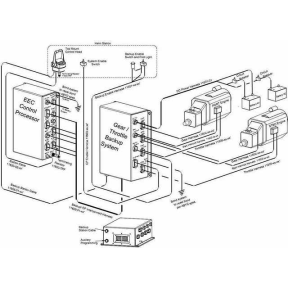
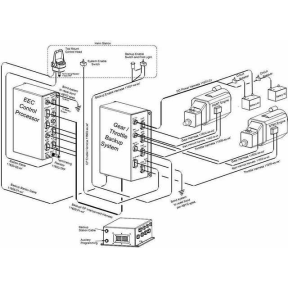
An electronic throttle control system uses helm input, electrical signals, control modules, wiring harnesses, and actuators to manage throttle and shifting. In many installations, the system replaces or supplements mechanical push-pull cables with electronic command signals for smoother engine response and easier multi-station integration.
A helm-mounted control head sends a command to an electronic or electro-mechanical actuator positioned near the engine or marine gear. The actuator then moves the throttle linkage, shift linkage, or transmission interface according to the operator’s input.
Key Benefits of Electronic Marine Throttle Controls
Improved Throttle and Shift Precision- Electronic command signals reduce the friction and stiffness common in older mechanical cable systems.
- Fine throttle resolution supports docking, close-quarters maneuvering, trolling, and low-speed vessel handling.
- Repeatable shift movement helps maintain consistent control feel across helm stations.
- Electronic engine controls can support main helms, flybridges, towers, aft stations, and secondary control locations.
- Station-transfer logic helps manage which helm has active throttle and shift authority.
- Remote engine control components simplify complex layouts on larger recreational and commercial vessels.
- Modern control systems often include neutral-safety logic, station indicators, and diagnostic functions.
- Secure harness connections and clean power supply support dependable operation.
- Routine inspection helps protect throttle response, shift accuracy, and actuator reliability.
Marine Throttle Control Components
Electronic engine controls are selected as a complete system, not as isolated parts. The correct configuration depends on the boat’s propulsion layout, engine technology, transmission interface, and number of control stations.
| Component | Primary Function | Best Use Case |
|---|---|---|
| Control Heads | Provide the helm interface for throttle and shift commands. | Single-engine, twin-engine, single-station, and multi-station helm layouts. |
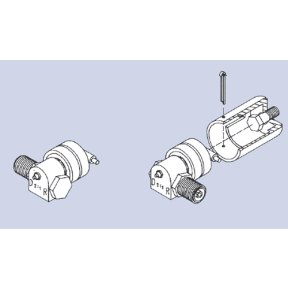
| Electric Throttle Actuators | Convert electronic command signals into mechanical throttle or shift movement. | Mechanical engines, hybrid systems, retrofit projects, and linkage-driven propulsion systems. |
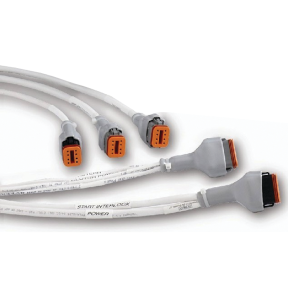
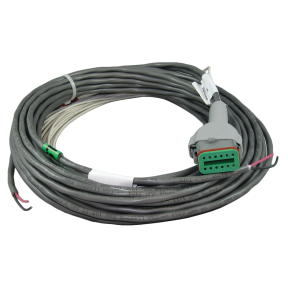
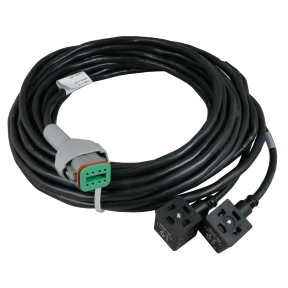
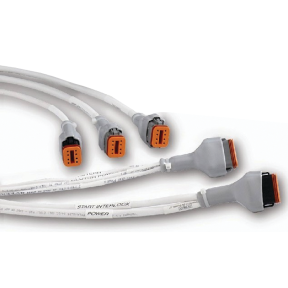
| Harnesses | Carry power, signal, and data between control heads, processors, actuators, and stations. | New installations, system upgrades, and replacement of aged wiring assemblies. |
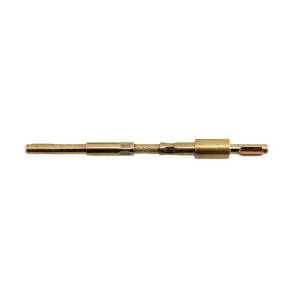
| Drive Cables | Connect actuator output to throttle or shift linkage where mechanical movement is still required. | Hybrid electronic-mechanical control systems and older marine engines. |
| Engine Synchronizers | Balance RPM across twin or multi-engine propulsion systems. | Twin-engine boats that need smoother operation, reduced vibration, and matched engine speed. |
| Remote Engine Controls | Add throttle and shift control from secondary operating stations. | Flybridges, towers, aft docking stations, pilot houses, and multi-helm vessels. |
Featured Marine Engine Control Brands
Glendinning Marine Electronic ControlsGlendinning Marine manufactures integrated propulsion control systems, actuator assemblies, and multi-station solutions for electronic and mechanical engine applications. Glendinning systems are commonly considered for repowers, upgrades, and vessels that need reliable station transfer and smooth throttle response.
- Shop Glendinning Marine engine controls and actuators
- Useful for electronic controls, mechanical engine interfaces, and multi-station propulsion control layouts.
- Relevant product types include control heads, actuators, harnesses, processors, and related control accessories.
ZF Mathers electronic controls include MicroCommander and related control-head systems designed for single-lever throttle and shift operation. These marine control systems are used in single-engine, twin-engine, multi-station, and electronically assisted propulsion configurations.
- Shop ZF Mathers control heads and electronic engine controls
- Useful for single-lever throttle and shift command from one or more helm stations.
- Relevant product types include control heads, processors, harnesses, station components, and control accessories.
Frequently Asked Questions
What are electronic engine controls for boats?
Electronic engine controls are marine throttle and shift systems that use electrical signals instead of only mechanical cable force. A helm control head sends commands through a harness to a processor, actuator, engine interface, or transmission interface to manage throttle response, shifting, station transfer, and diagnostics.
How do marine electronic throttle controls work?
Marine electronic throttle controls work by converting helm lever movement into an electrical command. The system sends that command to a control module or actuator, which adjusts throttle and shift linkage, engine speed, or transmission position according to the boat’s propulsion configuration.
Are electronic engine controls compatible with all boat engines?
Electronic engine controls are not automatically compatible with every boat engine. Compatibility depends on the engine manufacturer, throttle style, transmission interface, actuator requirements, helm stations, and control system specifications from brands such as Glendinning Marine and ZF Mathers.
Can electronic throttle controls be installed on an older boat?
Electronic throttle controls can often be installed on older boats when the engine, transmission, linkage, wiring path, and actuator mounting space support the conversion. Mechanical engines may require electric throttle actuators, drive cables, calibration steps, and inspection by a qualified marine installer.
What is the difference between a control head and a throttle actuator?
A control head is the helm-mounted lever assembly the operator uses to command throttle and shift movement. A throttle actuator is the mechanical output device near the engine or gear that converts the electronic command into physical linkage movement.
Which brands make marine electronic engine controls?
Glendinning Marine and ZF Mathers are established brands for marine electronic engine controls. Glendinning Marine offers integrated control systems and actuator solutions, while ZF Mathers provides control heads and MicroCommander-style systems for single-engine, twin-engine, and multi-station vessels.