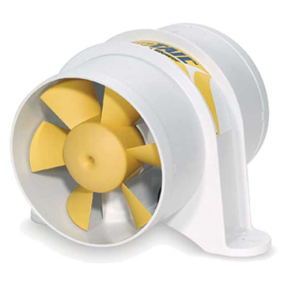
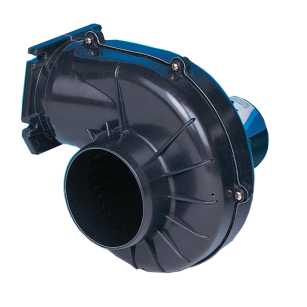
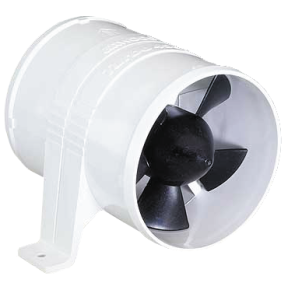
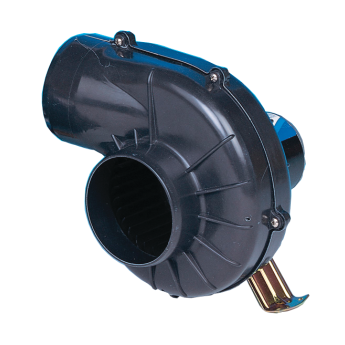

Engine Bay Ventilation Solutions
Key Takeaways
- Use a powered ventilation system in gasoline engine compartments to actively purge fumes and heat.
- Right-sized blowers improve safety, engine efficiency, and crew comfort; undersizing leads to heat buildup and poor air quality.
- As a rule of thumb, run blowers for ~4 minutes before engine start to clear vapors in gasoline spaces.
- Separate inlet and exhaust ducting to prevent prevent airflow interference.
- “Fan vs. blower”: blowers deliver higher pressure for ducted, directed airflow in confined compartments.
Engine Room Blowers
Ventilation blowers maintain a safer, cooler engine space by exhausting fuel vapors (gasoline installations) and removing excess heat from machinery. Proper ventilation supports reliable ignition, reduces corrosion from moisture, and protects sensitive equipment.
Our Product Range
Browse marine-grade ventilation solutions from Fisheries Supply—specified for durability in confined, high-temperature spaces.
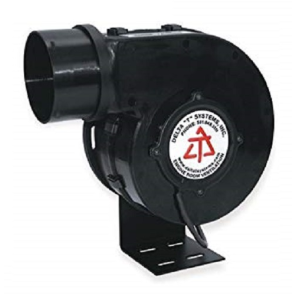
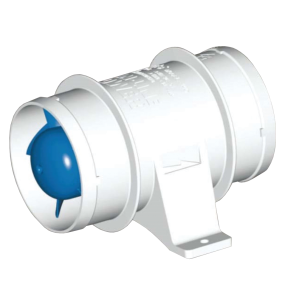
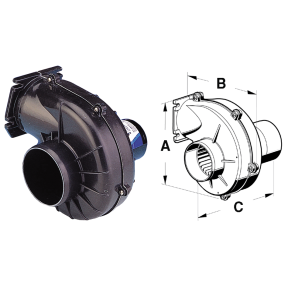
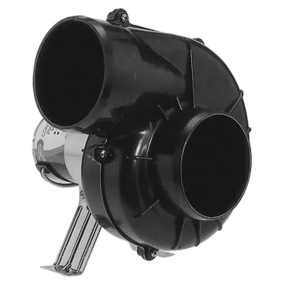
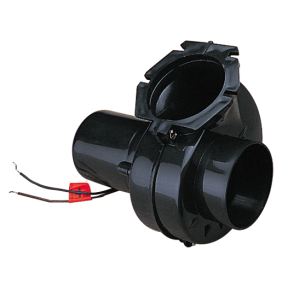
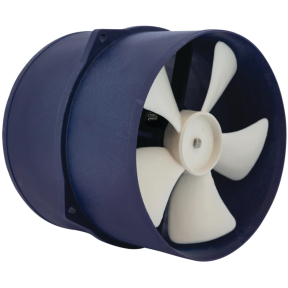
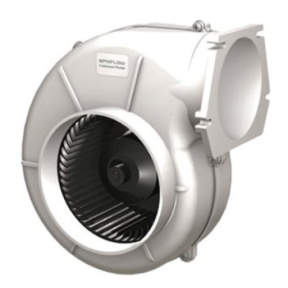
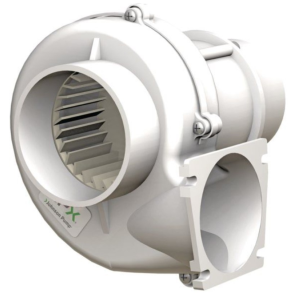
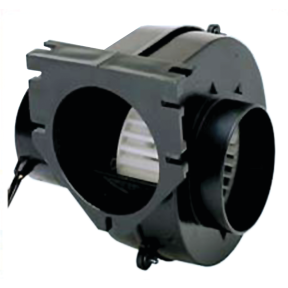
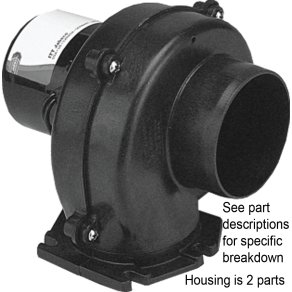
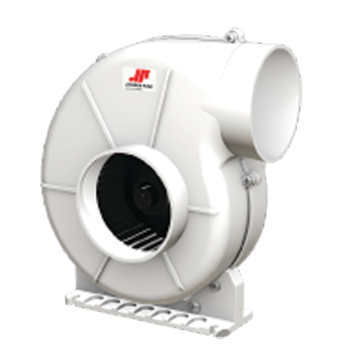
- Boat Blowers — High-pressure exhaust blowers purpose-built to move vapors and hot air through ducting in engine spaces.
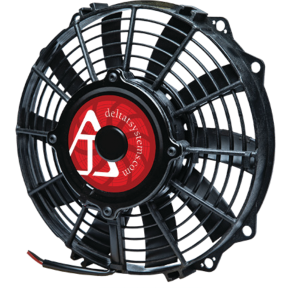
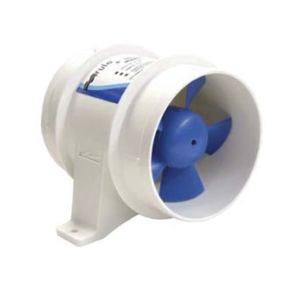
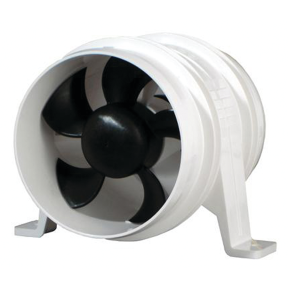
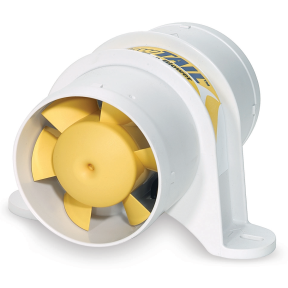
- Marine Blower Fans — Rugged assemblies engineered for consistent airflow in bilges and lockers.
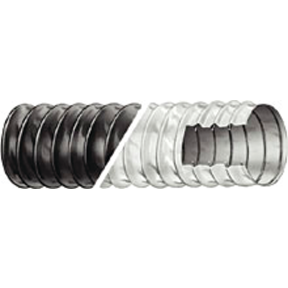
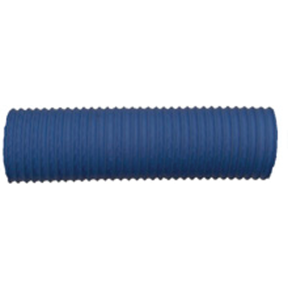
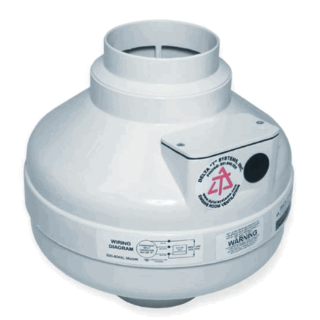
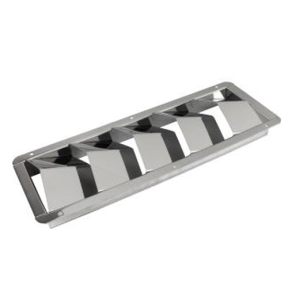
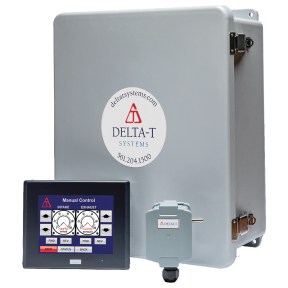
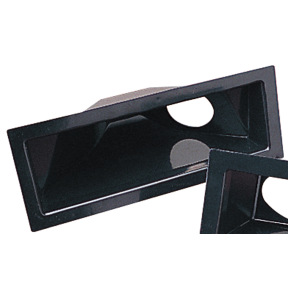
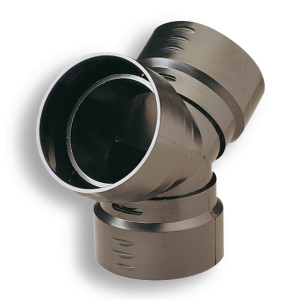
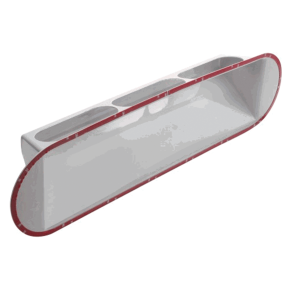
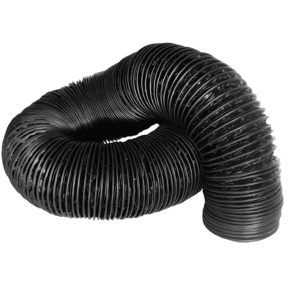
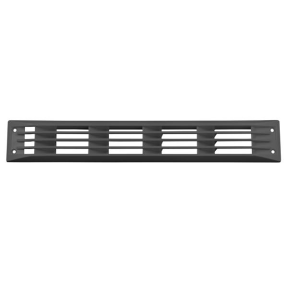
- Ventilation Systems — Matched blowers, hoses, vents, and controls for a cohesive system.
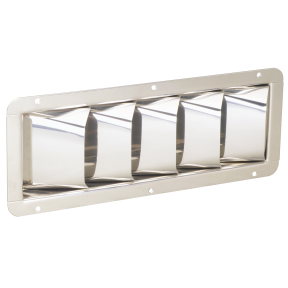
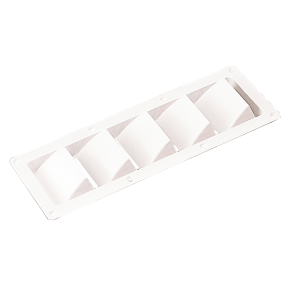
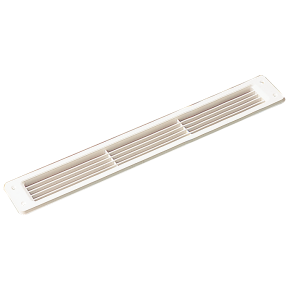
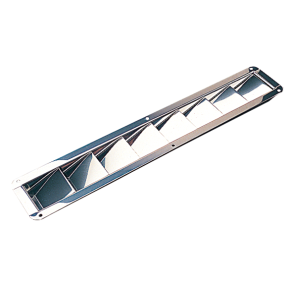
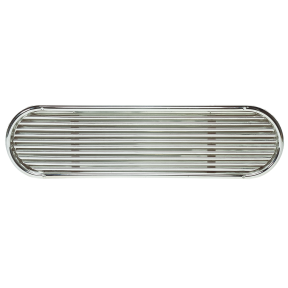
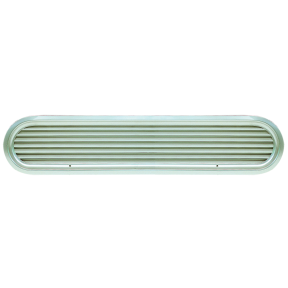
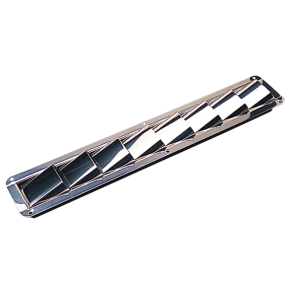
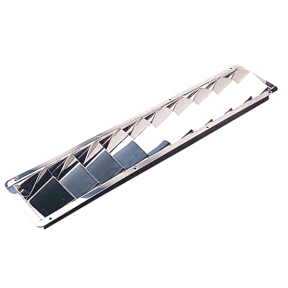
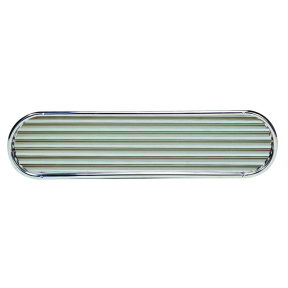
See also: marine vents.
Benefits of Marine Ventilation Systems
- Enhanced Safety: Exhausting fumes lowers the risk of fire or explosion in gasoline compartments.
- Improved Engine Performance: Cooler, drier air helps engines maintain power and reduces corrosion.
- Crew Comfort: Removes hot, stale, or contaminated air for better on-board conditions.
Selection & Sizing
- Airflow targets: Match blower capacity to compartment volume (gasoline spaces), using common guidance:
- Up to 70 cu ft: ~100 CFM
- 71–100 cu ft: ~150 CFM
- 101–300 cu ft: ~250 CFM
- Fan vs. Blower: Per engineering conventions, a fan moves high-volume air at low pressure, while a blower provides higher pressure (typically specific pressure ratio ~1.11–1.2) for ducted, directional flow—ideal for engine-room exhausts in confined spaces.
- Ducting & placement:
- Separate inlets and exhausts: Place fresh-air inlets away from exhaust outlets to prevent short-cycling.
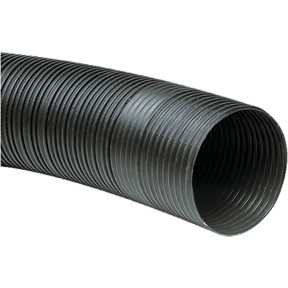
- Heat & fume sources: Pull from low points where vapors settle; route exhaust outside the boat. Keep runs smooth with minimal bends.
- Duty cycle: Choose blowers rated for pre-start purges; consider continuous-duty models for high-heat installations.
Operations & Best Practices
- Pre-start purge (gasoline): Run the blower for ~4 minutes before starting; sniff bilge/engine compartment for residual vapors.
- Underway: Use blowers as needed to manage heat and odors; follow manufacturer duty-cycle guidance.
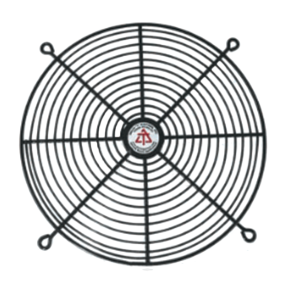
- Inspection: Periodically check hose clamps, wiring, guards, and intake screens; replace degraded ducting.
Notes for Diesel Installations
While diesel vapors are less volatile than gasoline, forced ventilation still improves combustion air supply and keeps engine-room temperatures within recommended limits—improving performance and longevity.
Frequently Asked Questions
How do I choose the right size blower for my boat?
Use compartment volume as a starting point. Common guidance (100–250 CFM for ~70–300 cu ft) works for many recreational boats. For complex layouts or high heat loads, consult manufacturer curves and pressure-drop estimates across ducting and grills.
Are blowers required on every boat?
Gasoline engine compartments generally require powered ventilation; diesel installations benefit from forced ventilation for heat control and engine air but are typically not subject to the same fume-extraction requirement. Always verify applicability for your boat and jurisdiction.
What’s the difference between a fan and a blower?
A blower develops higher static pressure than a fan and is designed for ducted, directional airflow—making it suitable for exhausting compartments with bends, grills, and hose runs.
How long should I run the blower before starting?
Run it for about four minutes in gasoline compartments to purge vapors, then verify with a nose check. Continue ventilating if fumes persist.
Where should I put the inlet and exhaust ducts?
Separate them physically to avoid recirculating the same air. Place inlets high/cool where fresh air is available; place exhaust pickups low/near likely fume accumulation points, exiting overboard.
Questions or need help finding parts? Contact Fisheries Supply for product guidance.