

Mooring Buoys and Hardware at Fisheries Supply
Mooring buoys provide a long-term way to locate your mooring in deep or shallow water. Fisheries Supply carries mooring balls, boat mooring systems, pennants, shackles, swivels, snubbers, and related hardware for boat owners building or maintaining a mooring.
Boat Mooring Systems for Deep and Shallow Water
Mooring buoys are a practical solution for securing boats in established mooring areas. Fisheries Supply offers individual components and complete boat mooring systems from marine manufacturers including Polyform, Taylor Made, and Jim-Buoy.
The correct system depends on boat requirements, water depth, local conditions, ground tackle, chain weight, buoy construction, and the connection between the mooring and vessel.
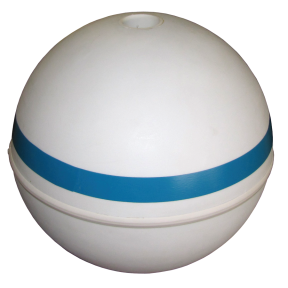
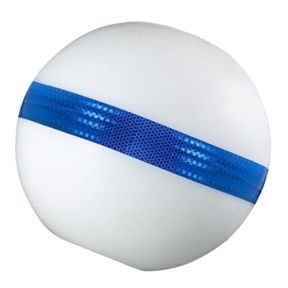
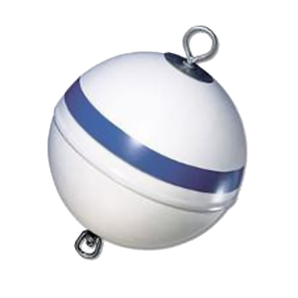
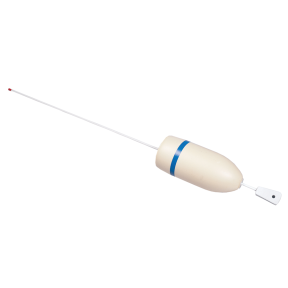
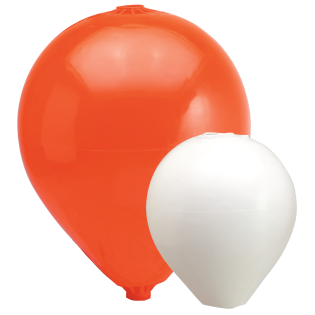
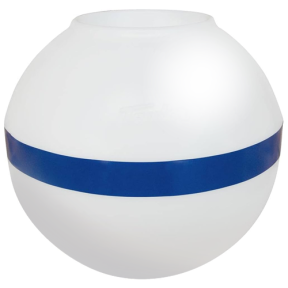
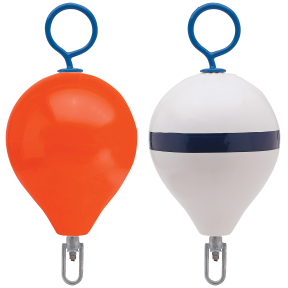
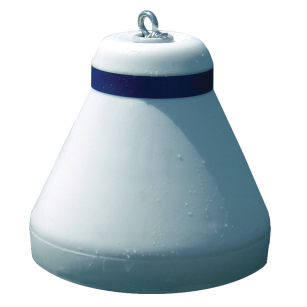
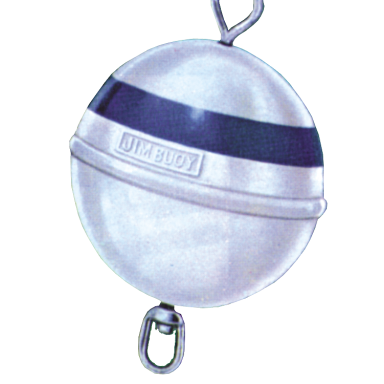
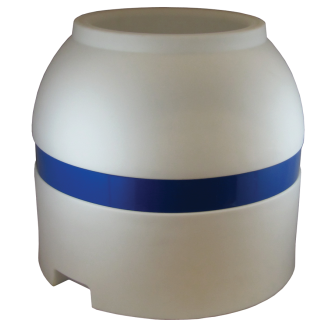
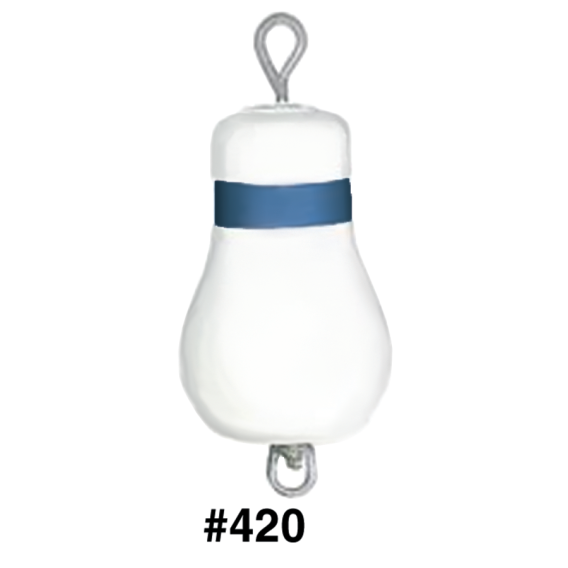
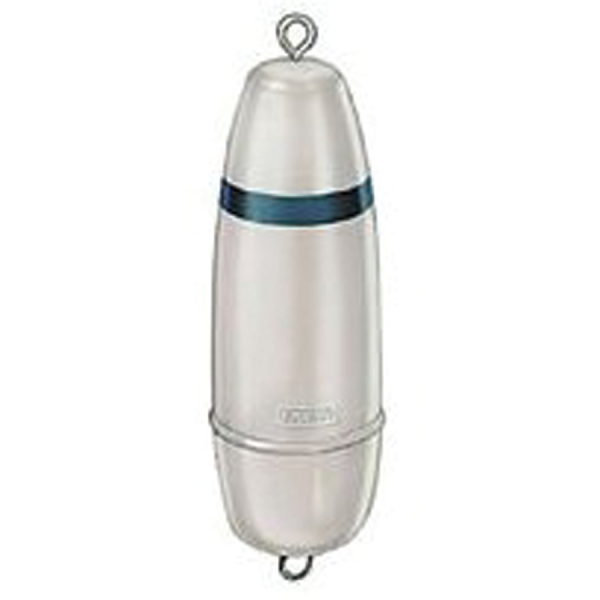
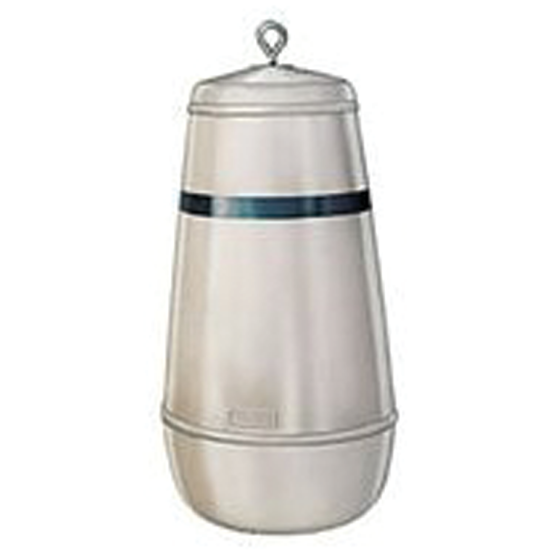
Types of Mooring Buoys and Mooring Balls
| Buoy Type | Construction | Key Benefit | Maintenance Consideration |
|---|---|---|---|
| Foam-filled mooring ball | Hard outer shell with internal foam | Maintains flotation if the shell is punctured | Inspect the shell, fittings, and attachment points |
| Inflatable mooring ball | Flexible vinyl body | Provides softer contact near the hull | Check inflation pressure and inspect for damage |
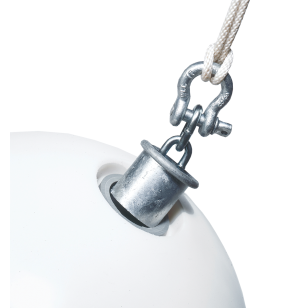
| Tube-through-the-center buoy | Vertical tube that allows chain to pass through the buoy | Places the mooring load on the chain and top shackle | Inspect the chain, shackle, and wear points |
Essential Mooring Buoy Hardware
| Hardware | Material or Construction | Function |
|---|---|---|
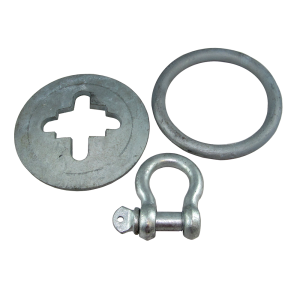
| Galvanized shackles | Galvanized steel | Make secure mooring connections. |
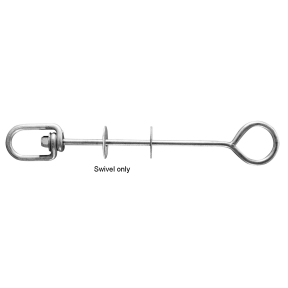
| Eye-to-eye swivels | Eye-to-eye swivel design | Reduce chain twisting and line entanglement as the boat changes direction. |
| Mooring snubbers | EPDM rubber | Stretch to absorb shock loads. |
| Mooring pennants | High-strength nylon line | Connect the boat to the mooring system. |
| Marine clips | Stainless steel | Provide connections in compatible mooring applications. |
Environmental and Practical Benefits
Properly installed mooring systems reduce repeated anchor use in established mooring areas. Limiting anchor dragging can reduce disturbance to sensitive seabed habitats such as coral reefs and seagrass beds while providing a consistent location for securing a boat.
Mooring buoys must be installed, positioned, and maintained according to applicable federal, state, and local requirements. Rules may address buoy color, size, placement, ground tackle, inspection, and permitted mooring locations.
Frequently Asked Questions
How do I choose the right size mooring buoy for my boat?
Choose a mooring buoy by matching its flotation to the submerged chain and hardware it must support. A common guideline is approximately twice as much buoyancy as the total submerged hardware weight. The buoy should ride high enough to remain visible without being pulled beneath the surface.
What is the difference between hard-shell and inflatable mooring buoys?
Hard-shell mooring buoys use a rigid polyethylene shell and closed-cell foam for durable flotation, even after a puncture. Inflatable vinyl buoys provide softer hull contact and compact storage when deflated, but they require periodic pressure checks and inspection for leaks, abrasion, or valve damage.
Where should a mooring pennant attach to the mooring system?
A mooring pennant should typically connect to the chain shackle or lower swivel rather than a buoy eye intended only for retrieval. This arrangement transfers the boat load to the mooring hardware. Confirm the attachment method with the buoy manufacturer and applicable local mooring requirements.
How are mooring buoys anchored to the seabed?
Mooring buoys are commonly connected by heavy chain to concrete blocks, helix screws, mushroom anchors, or Manta Ray anchors. The suitable ground tackle depends on boat load, seabed composition, water depth, wind, waves, tide, and local regulations. Installation should follow the selected system manufacturer’s requirements.
What is a tube-through-the-center mooring buoy?
A tube-through-the-center buoy has a vertical channel that lets the mooring chain pass through the buoy body. The design places the vessel load on the chain and top shackle rather than the buoy shell. It can also make critical chain, shackle, and wear points easier to inspect.
How often should mooring buoys and hardware be inspected?
Inspect visible mooring components at least twice each year and complete a fuller underwater inspection annually. Check the buoy, pennants, shackles, swivels, and chain for marine growth, cracks, corrosion, abrasion, and thinning. Inspection and replacement intervals vary with salinity, exposure, boat load, and local water conditions.