Stay Warm on the Water with Marine Diesel Heaters from Fisheries Supply
This category is intended for boaters selecting and installing diesel cabin heat.
Key Takeaways
- Understand air vs. hydronic systems before buying.
- Size heat output to cabin volume and insulation quality; consider cruising climate.
- Prioritize sealed combustion, correct exhaust routing, and ventilation to mitigate CO risk.
- Choose proven brands and compatible flue/installation kits for long-term reliability.
How Marine Diesel Heaters Work
Diesel marine heaters combust fuel in a sealed chamber and transfer heat across a heat exchanger; a fan circulates warmed air into the cabin while exhaust is vented overboard.
Maintaining steady, dry cabin heat helps suppress condensation that leads to mold and mildew, improving comfort during cold-weather cruising.
Our Selection of Heaters & Accessories
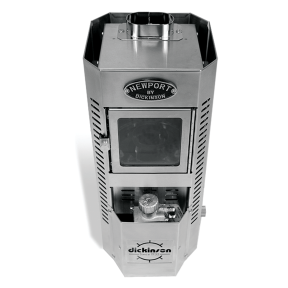
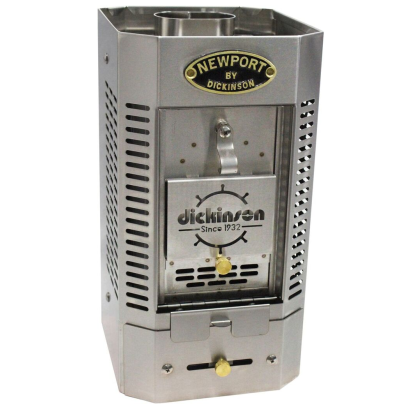
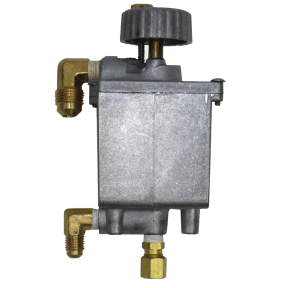
We stock compact, lightweight units through high-capacity models, plus installation components for a professional result. Brands include: Dickinson Marine, Sig Marine, Davey & Co., and Camco. We carry stainless flue kits, control panels, and blowers for complete systems.
Choosing Air vs. Hydronic (Liquid)
Direct Air Systems- Fast, simple installs; duct warm air to cabins.
- Efficient space heating with minimal plumbing.
- Heat water/glycol loop feeding fan coils/radiators; can support DHW via heat exchanger.
- More complex installs (piping, pumps, expansion tank) but highly flexible zoning.
Sizing & Climate: Match output to cabin volume and insulation; align system choice with cruising temperatures and humidity.
Installation & Safety Essentials
Use sealed-combustion appliances, route exhaust per manufacturer instructions, and provide adequate make-up air/ventilation. Reference applicable industry guidance during design and installation.
Carbon monoxide awareness is critical aboard any enclosed boat; proper exhaust placement, system maintenance, and ventilation reduce risk. Consider CO detectors in accommodation spaces.
Expert Guidance from Our Team
Selecting the right heater involves boat size, fuel consumption, and installation constraints. Our team can help you evaluate layouts, venting paths, and accessory compatibility for new builds or upgrades.
Competitive Prices & Convenient Shopping
Expect competitive pricing across small diesel heaters and accessories, with clear product descriptions and easy checkout.
Frequently Asked Questions
How do marine diesel heaters work?
Answer: “Marine diesel heaters are designed to provide efficient and reliable heat for your boat's interior. They work by drawing fresh air through an intake and passing it through a heat exchanger, where it is warmed by the heat generated from combusting diesel fuel. The warm air is then circulated into the cabin by a fan while the diesel exhaust is safely vented outside.”
How do diesel air heaters work?
Answer: “Diesel air heaters burn diesel fuel in a combustion chamber, which heats a heat exchanger. A fan forces air over the heat exchanger, warming it, and then distributes the heated air through ducts to various parts of the boat.”
What are the installation requirements for diesel boat heaters?
Answer: “Diesel air heaters have simpler installations, requiring minimal setup and no pipework. Diesel liquid heaters require more complex installations involving pipework and radiators. Proper ventilation is essential for both types to ensure safe operation.”
Are diesel boat heaters safe to use?
Answer: “Yes, diesel boat heaters are generally safe when installed correctly. They have sealed combustion chambers and vent exhaust gases outside, reducing the risk of carbon monoxide buildup. However, regular maintenance is crucial to maintain safety and efficiency.”
What should I consider when choosing a heater?
Answer: “The required heat output will depend on the size of your boat cabin and the quality and effectiveness of the insulation you're using. Your cruising ground location can also affect your choice of diesel fuel heater.”