Eco-Friendly Boat Cleaners: A Guide for Boat Owners
If you own a boat, you know the joy of being on the water. It's important that we take care of our marine environments so that future generations can feel that same joy – so let’s consider why you should make the switch to eco-friendly boat cleaners instead of the harsh chemicals that are in some marine cleaning products. Trust us – it's easier than you may think!
Making this choice can lower your environmental impact while helping to keep our lakes, rivers, and oceans healthy and full of life. Our goal with this guide is to educate you about your options while making it easy for you to clean your boat in an eco-friendly way.

Key Highlights
- Eco-friendly boat cleaners are a safer choice for our waterways. They help keep marine environments healthy by lowering pollution in the water.
- Try to choose products for cleaning that break down well and have low toxicity. You can look for the EPA's " Safer Choice" logo to know if the cleaner meets this standard.
- A lot of eco-cleaners work just as well as older chemical options for most cleaning jobs.
- Some of the best boat cleaner brands are brands such as Star Bright, 303, Boat Zoap and MaryKate.
- The way you clean your boat matters. Try to lower the amount of cleaning runoff, which can be as important as your choice of cleaner.
- Watch out for environmental claims on packaging. Not all claims are checked or correct, so read them with care.
Understanding Eco-Friendly Boat Cleaning
Eco-friendly boat cleaning means you use products and ways of cleaning that do not hurt anything living in the waters you cruise. Basically, it means using cleaning agents that are biodegradable (safely break down in the water) and that have low toxicity to marine life. It also means thinking about the runoff that occurs as the cleaning water drains off your boat. So whether you need a general-purpose soap or a strong hull cleaner, we'll give you some good ideas for using a more green approach to help protect the marine environments we love.
What Makes a Boat Cleaner “Green” or Eco-Friendly?

Unfortunately, you can't just trust all the environmental claims you see, like “eco-safe” or “natural,” because these words are not regulated as of yet in the marine industry. That's why it's important to understand the difference between what's good and bad for the environment. So let's dive into some clear signals that you can use to help you decide if your favorite product is good for the environment.
Why Traditional Boat Cleaners Can Harm Aquatic Environments
Many regular boat cleaners have harsh chemicals in them. When you use these for cleaning, the chemicals get into the water via the runoff from cleaning your boat. Whether on a trailer or in the slip, all of these harsh chemicals likely go straight into the water around you - potentially creating some amount of environmental impact on the area.
Some marine cleaners can have very high toxicity. They can kill fish, plants, and the smaller organisms that live in the water. Chemicals like phosphates, for example, promote algae blooms that deplete oxygen in the water, suffocating marine life and disrupting the natural balance.
The best eco-friendly boat cleaners are made to have low toxicity and break down fast. Some old cleaning products may look more powerful, but tests show many green cleaners work just as well, making them a better and smarter choice.
Essential Ingredients to Look for in Green Boat Cleaners

Making a safer choice for the environment means you need to read the label first. The ingredient list lets you see exactly what your are putting into the water. Don't let bright "green" label fool you. Look for cleaners that are biodegradable and not toxic.
So what exactly does biodegradable mean, anyway? When you see that a product is called "biodegradable", it means that the product will break down on its own into harmless substances over time. The faster these products break down, the better it is for clean water. Some of the best products break down in only a few weeks, helping to keep our waterways safe.
"Non-toxic" is a word used to talk about how a substance can affect living things. A non-toxic cleaner will have little or almost no bad impact on plants and animals in water. This is very important to help maintain healthy marinas.
Avoiding Harmful Chemicals Commonly Found in Marine Products
Being a good boat owner means you need to know what harsh chemicals to stay away from. A lot of old cleaning products have ingredients in them that leave a toxic residue, even after you clean. Here are some of the most harmful ingredients in marine cleaners that you should try to avoid:
- Phosphates: watch out for trisodium phosphate (TSP) – a strong cleaner and de-greaser for removing oils and prepping surfaces – or sodium tripolyphosphate (STPP), which acts like a magnet in detergents, grabbing metal ions to soften water and helping cleaning agents work better. Both of these chemicals fuel rapid blooms of algae, which then die off and break down, using up oxygen in the water and creating "dead zones," which are bad for all marine life.
- Caustic Chemicals: Boat cleaners often have strong alkaline substances that break down grease, oil, and other dirt from the hull, deck, and tanks. Two frequently used caustic ingredients are sodium hydroxide and potassium hydroxide. These are bad for the environment because they raise alkalinity in the water, causing a higher pH, which harms fish and other invertebrates that are sensitive pH shifts.
- Bleach: Bleach (also listed as sodium hypochlorite) is highly toxic to marine life primarily because it releases free chlorine, which damages gills, disrupts respiration, and kills fish, shellfish, and plankton even at low concentrations.
Even when a cleaner works well, its long-term effects are very important, so try to pick cleaners with low toxicity and good biodegradability. Brands such as Star Bright, 303, and MaryKate make products that score well when it comes to low toxicity, but more on them later.
Most Effective Eco-Friendly Boat Cleaner Types

Not every cleaning job is the same and you can often find an eco-friendly cleaning agent that will work for what you need. If you need to clean vinyl seats, wash down the fiberglass hull, or just need a general cleaner, there's likely a green product for the job.
To help you pick the right cleaning product, it's good to know the two main types of green cleaners available: enzyme-based or plant-based formulas. Both have their own benefits, and each works well for different cleaning jobs on your boat.
Enzyme-Based Boat Cleaners
Have you ever wanted to know how some cleaners can get rid of tough messes without using harsh chemicals? A cleaner that works with enzymes uses natural proteins (found in nature) to break down grease, grime, oil, and mildew. They do not use strong chemicals to get stains out. Instead, the enzymes “eat” the mess away! This way of cleaning works great for many jobs around your boat, from the bilge to the deck. Enzymes are very good at finding and getting rid of certain kinds of dirt without hurting the surface underneath.
Best of all, enzyme-based cleaners are usually safe for the environment. They break down things in a natural way, and are inherently biodegradable, so they have very little impact on marine life. These cleaners are a great choice if you want to take care of your boat and help the planet at the same time.
Plant-Based Cleaners
Plant-based cleaners are also a good choice for people who care about the planet and their boat. These cleaning products are made with ingredients that come from natural sources like corn, coconut, or citrus fruits. They offer powerful cleaners, but do not depend on chemicals made from oil or other synthetic ingredients.
Plant-based cleaners work well for all kinds of jobs. Depending on the cleaner, they can be used as a general cleaner on deck or to deal with tougher problems like stains from oxidation or bird droppings or salt residue – leaving your boat sparkling clean.
When you choose a plant-based cleaner, you can also look for trusted eco-certifications such as the EPAs Safer Choice label which help show it's safe for the sea.
Top-Rated Green Boat Cleaner Brands in the United States

- Check for the EPAs "Safer Choice" outdoor program label, which requires "rapid biodegradability and low aquatic toxicity suitable for marine cleaners". Several products that meet these standards are 303 Multi-Surface Cleaner, MaryKate Super Suds Boat Soap and Star Brite Sea Safe Boat Wash - see table below for more information.
- Check for MARPOL Annex 5 compliance, which focuses on "non-harmful marine discharges verified through independent testing". Products that qualified include Ecoworks Marine products and Boat Zoap.
Here's a quick look at some top choices:
| Brand/Product | Key Features | Best For |
|---|---|---|
| 303 Multi-Surface Cleaner | Low toxicity and quick breakdown | General washing |
| MaryKate Super Suds Boat Soap | Effective cleaning without marine harm | General washing |
| Star Brite Sea Safe Boat Wash | Low toxicity, and great biodegradability | General washing |
| Ecoworks Marine products | Biodegradability and non-toxicity in seawater | Multiple task specific options available |
| Boat Zoap | Phosphate-free | General washing |
If you’re looking to buy eco-friendly boat cleaning supplies online, reputable retailers such as Fisheries Supply offer a wide selection of green options that are designed to minimize toxicity and support eco-friendly practices.
Comparing Green Marine Cleaners to Traditional Options
Many boat owners ask if green cleaners really clean as well as traditional marine cleaners - obviously no one wants to do the work and end up feeling like something is still dirty. When you compare eco-friendly cleaners with traditional cleaners, there are two main things to think about – effectiveness and the environmental impact they have.
Cleaning Performance Differences: Eco-Friendly vs. Chemical-Based
Studies show that there is not much link between how "eco" a product is and how well it cleans. A lot of eco-friendly cleaning products do the job just as well as the regular ones – removing dirt and residue without any extra work.
If you have more stubborn stains, you may need to use a specialized eco product, like a thick paste or a strong spray. Applied directly to the problem area, they often work as well as other cleaners with strong chemicals. For example, Grunt Boat Cleaner is a thick gel which can be painted on to get rid of tough stains or spots. The main point is that for most cleaning tasks, a quality eco-cleaner will get the job done.
DIY Solutions – Making your Own Safe Boat Cleaners at Home

Sometimes the best solution is one you already have on your shelf! Common items such as vinegar and baking soda work great for light cleaning jobs while being completely safe for the environment too. You can often use these to replace a store-bought cleaner.
Making your own boat cleaners is way easier than you may think. A great all purpose cleaner is a simple mixture of white vinegar and water, mixed 1:1 in a spray bottle – perfect for cleaning hard surfaces like windows and countertops. If you want to clean something that is a little more delicate, use one part vinegar and two parts water instead - but always test it on a small area first if you are not sure.
If you want a bit more scrubbing power to clean stains on the deck, you can make a paste from baking soda and water, baking soda and lemon juice, or you can mix some flour and salt with a little bit of vinegar to make a paste. Between your vinegar spray and the paste you make, a sponge, and a scrub brush – most messes can be cleaned up quickly.
Please note: NEVER mix vinegar with bleach as it produces a dangerous chlorine gas that is highly toxic! This combination irritates eyes, throat, and lungs even at low levels and can cause severe respiratory failure or death in higher concentrations.
Green Cleaning Practices Every Boat Owner Should Know
Choosing the right product is only half the battle – your cleaning routine is just as important. How you use, rinse, and dispose of your cleaners can have a bigger environmental impact than the product itself.
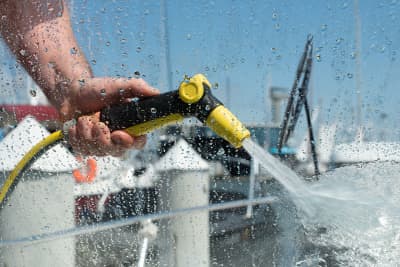
One of the best things you can do is rinse your boat regularly with fresh water, which helps stop dirt from building up on your boat. You won't need to wash the boat as often and you'll be able to use a less concentrated soap when you do.
It's also important to consider where all that cleaning water runoff goes. If you can, wash your boat at a marina where there is a special spot for cleaning that will catch and treat the wastewater. If that's not an option, try to use less cleaning product or use a lower concentration. You can also try to wipe away the cleaner with a damp cloth instead of using water to rinse it off, which helps stop cleaner from getting into the water.
Follow these tips for better wastewater management:
- Use the weakest mix of your cleaner that still does the job.
- For tough stains, use a cloth to spot-treat. This keeps the product in one place.
- Do not clean your boat when it is raining. Rain can lead to more runoff.
Frequently Asked Questions
 Are enzyme-based boat cleaners really effective and eco-safe?
Yes, an enzyme-based cleaning agent works well and is definitely good for the planet. These eco-friendly boat cleaners have natural enzymes that help break down grease, grime, and mildew while also breaking down quickly after they enter the water. They are a great way to clean while helping to keep the marine environment safe.
Is Simple Green a recommended choice for cleaning boats responsibly?
Simple Green is often marketed as eco-friendly for boat cleaning due to its biodegradable, non-toxic formula that avoids harsh caustics and phosphates. The manufacturer claims high biodegradability (up to 80-100% in tests), making it safer for marine use than traditional chemicals.
Still, some people have said that Simple Green breaks down slower in lake or river water than it does in city systems. So while it is better than bleach or strong chemicals for cleaning your boat, it's not as good as vinegar or enzymes when it comes to biodegradability.
Can Green Cleaning Products for Boats Replace Harsh Cleaners Like Caustics or Bleach?
Absolutely. Enzyme formulas can break down organics in a safe way. Vinegar is good for mild acids and biodegradable citrus products clean hull grime well while not messing with pH levels or adding toxicity to the waterways.
How can I tell if I'm using eco friendly boat cleaning products?
To check if a cleaner is truly green, do not rely only on the environmental claims you see on the packaging. You should read the label closely, looking for high biodegradability, while avoiding caustics, phosphates and bleach. The best way is to see if there is a third-party certification, such as the EPA "Safer Choice" logo. This logo means the cleaner meets strict health and eco standards. But since "Safer Choice" is not used a lot in the marine world yet, it's best to read the label and look for indications based on what you've read here.

While it's easy to think we can't make a real difference as an individual – it's important to remember that every small step we take counts in preserving our precious waterways. By understanding what makes a cleaner “green,” and by recognizing harmful ingredients to avoid, you can effectively protect aquatic ecosystems while ensuring your boat remains in top shape.
Once you make the switch, you'll feel great knowing you're doing something to help. Maybe you'll even get some fellow boaters to switch! Even small efforts like these help contribute to a cleaner, healthier marine environment.
We hope you've enjoyed this article about eco-friendly cleaners – but if you have more questions, or need personalized recommendations, feel free to reach out to our customer service department at (800) 426-6930.