Marine Inverter Basics

What is an inverter?
A marine inverter takes DC power from your boat's battery bank and converts it into AC power, so that you can use “household” items on your boat without being hooked up to shore power. Inverters come in a variety of sizes and options, so in this article we will cover some of the main features such as pure or modified sine wave, surge protection, transfer switches and efficiency ratings, how to choose the best marine inverter for when you're off the dock, along with answers to some frequently asked questions.
Why does my boat need a DC to AC inverter?
If you plan to watch TV, warm something up in the microwave, charge your laptop, use the coffee maker or maybe tackle that project that needs the power drill – all of these items need AC power – but boats run on DC power from your battery bank. So when you're at anchor, you need a way to create AC power. Inverters convert available DC power to AC so that you can use all those items without the need for a generator.
While there may be some die hard “old salts” out there that think all marine inverters should be thrown overboard, the vast majority of modern day boaters have become pretty attached to the AC gadgets we use every day. So if you desire the conveniences of home while you're out on the water – an inverter will make that possible…..as long as your battery bank is sufficient to handle the load.
What is the difference between a modified sine wave or a pure sign wave inverter charger?
- Modified Sine Wave – This type of power basically steps the wave – similar to a staircase going up and down – in an effort to emulate the pure wave of AC power. Inverters which use MSW will normally run the majority of your household gadgets without issue. However, they may have issues with “electronic noise” and/or some items may not run at their full power. Even more important, sensitive electronics (like computers) need a pure sine wave to run properly and you may cause permanent damage if you try and run them with a modified sine wave – so think carefully about what you'll be using your inverter for before you make your decision.
- Pure/True Sine Wave – This type of marine inverter produces a pure wave – similar to a rolling wave on the ocean – going up and down in a smooth line like AC power. While inverters using this type of sine wave are usually more expensive, they are significantly better at dealing with sensitive electronics and/or making sure your items operate at their top performance level. If you plan to use your inverter for charging a computer, using a printer, dimming your lights or watching that new flat screen TV onboard – you should definitely select a Pure or True sine wave inverter.
Additional Features to Consider
Here are some further features to look at when you are considering an inverter purchase:

- Surge Capacity – while most appliances that we run have an estimated wattage, many of them will exceed that estimate (sometimes by 2-3 times) when they start up. It's very important to make sure you have an inverter large enough to cover these surges for the items you intend to run. Most manufacturers will refer to this in their specs as the “Surge” or “Peak” output to indicate how much load you can exceed over the stated wattage.
- Transfer Switches – a transfer switch is useful if you have purchased a combined battery charger/inverter. If it's a built in switch, it will automatically sense when there is AC power available (such as when you are using shore power or a generator) and will move from inverting to charge mode. If it's not built in, the unit will usually have a switch that you flip to change from one mode to the other.
- Efficiency Ratings – all marine inverters will lose some amount of power during the conversion process – some more than others. Efficiency ratings were developed to give a better apples to apples comparison to see just how much power you might be losing (or not) between models. Efficiency ratings are usually expressed as a percentage of the output – such as 90% – which would mean it turns greater or equal to 90% of the DC power used into AC power. The normal range is 80 to 95% efficiency, with most inverters coming in at around 90%. If you plan to use your inverter to power something that needs to run all the time (such as refrigeration), you want as high a rating as possible.
- Multi-step Battery Charging – again, this is only for inverter/charger combination units, but basically this means the charger portion is utilizing the 3-step process of Absorption/Bulk/Float to properly charge your batteries. This will ensure your batteries have a much longer life and are charged at the right amounts during the entire charging process.
What size/voltage marine inverter charger do I need?
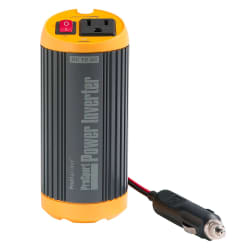
In addition to the wave type, inverters are also available in different levels of output power – which will often dictate whether they are portable or fixed mount. Most of the smaller, portable units are made to plug into a 12 volt socket style outlet – like the cigarette lighter in your car. These inverters will usually provide up to 300-400 watts of power and are suitable for powering laptops, cell phones or some small appliances.
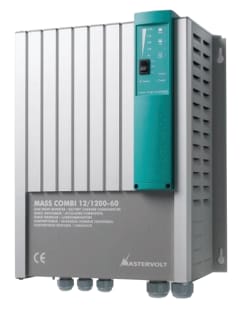
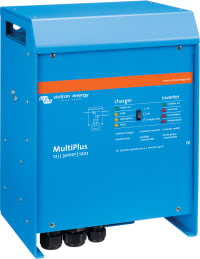
A larger, fixed mount marine inverter can provide up to 4000 watts of output power, depending on the model and brand you select. Fixed mount units will normally be hardwired to your battery bank and will often integrate directly with your AC wiring – which is why it's best to leave their installation to the experts. At higher outputs they may come with a remote panel and (depending on the model) may be combined with the ability to perform as a charger when shore power or a generator is being used – highly convenient!
So now that you know what they are, how they work, what features to choose from, and the different sizes available - your last step is to figure out how big an inverter (output wattage) you should purchase.
To do this, you'll need to add up the total wattage of all of the items you could be running at the same time (such as phone charger + computer + coffee maker). Most items will list their wattage somewhere on the bottom or near the cord. If they only show the amps, you can figure out the watts by using this conversion: Volts x Amps = Watts (with Volts being 120 for AC). So if you have something that runs at 10 amps, you will need a 1200 watt inverter to run it (120 x 10 = 1200).
Once you have your total, you should choose the next highest unit available. For instance – if you need 1400 watts, you could use a 1500 watt inverter – but you would be much better off with a 2000 watt inverter to give your system a little breathing room. Remember that often items start at higher rates of usage, so that little extra may avoid a lot of headaches - especially when you need to make coffee!
How do I install a pure sine wave inverter?
To safely install a pure sine wave inverter on your boat, start by selecting a properly rated inverter for your power needs. Mount the inverter in a dry, well-ventilated area away from heat and moisture. Use appropriately sized marine-grade cables and fuses between your battery bank and the inverter to handle the required current and protect against electrical faults. Essential accessories include a fuse or circuit breaker, battery cables of the correct gauge, a remote on/off switch (if available), and proper ventilation. Always follow the manufacturer’s instructions, and consult a professional if you are unsure about any part of the installation process.
Final Considerations

Last – but most definitely not least – it's extremely important to make sure your battery bank capacity is large enough to support these needs and that you can maintain your battery voltage while using your inverter. The higher the wattage and the longer you need to use the item may overrun your battery bank's capacity to cover those needs – so it's critical to take your battery bank's amp hours into consideration when deciding what you can (and can't!) run on your boat with an inverter. In addition, inverters do use up a small amount of power when running - so if you're not actually using it, remember to turn it off so that you don't waste battery power.
Frequently Asked Questions
Are there any disadvantages to using a pure sine wave inverter?
Yes, there are several disadvantages of pure sign wave inverters, including: higher cost, they usually weigh more than a modified sine inverter, they take up a larger footprint - so may need more installation space and they are slightly less efficient.
That said, they offer far superior compatibility with many of the sensitive electronics boaters have onboard these days. If you have a very simple boat with little need for AC power, you're probably fine with a less expensive modified sine marine inverter - but if you're like most modern boaters, you should take a serious look at onboard demands before making your final decision.
Can I use a RV inverter on my boat?
While technically you can use a less expensive RV inverter on your boat, there's several reasons why you shouldn't. First off - they are not made for the marine environment. Marine inverters are specifically manufactured with corrosion-resistant coatings, sealed enclosures (to prevent water intrusion) and enhanced vibration resistance. RV units may not have the same level of waterproofing or anti corrosion measures.
In addition, marine units must comply with stricter ABYC safety standards, which are important on a boat. There are some small differences when dealing with power on the water vs. on land, so it's really best to stick with a marine version.
| Feature | Marine Inverter | RV Inverter |
|---|---|---|
| Environmental Protection | High: salt, moisture, vibration | Moderate: vibration only |
| Corrosion Resistance | Yes | Usually no |
| Sealed | Fully/partially sealed | Often unsealed |
| Electrical Standards | ABYC/Neutral/ground bonding | Land based (automotive/house) |
| Cost | Higher | Lower |
Should my inverter be portable or permanently installed?
If you're simply looking to run your computer or charge your phone, a small portable inverter is a great option. You can move it around the boat to where it's needed, they are far less expensive and they are plug & play, so no installation required. However, if you're looking to run higher demand electronics like a microwave you'll definitely want a permanently installed version.
What's the best inverter for onboard microwave?
The best inverter for an onboard microwave typically ranges from 1000 to 3000 watts, depending on the microwave's power requirements. Look for pure sine wave inverters for optimal performance and safety. Brands like Victron Energy, MasterVolt, or Xantrex are highly recommended for reliability and efficiency while at sea.

Fisheries Supply carries a wide variety of marine inverters in all shapes and sizes from the best manufacturers – including Victron Energy, MasterVolt, Pro Mariner and Xantrex. We have an inverter to meet the needs of every boater no matter how big or small - so if you have any additional questions or need help making your decision, feel free to contact our product experts at (800) 426-6930.