Mastering Marine Solar Panels: The Basics and Beyond
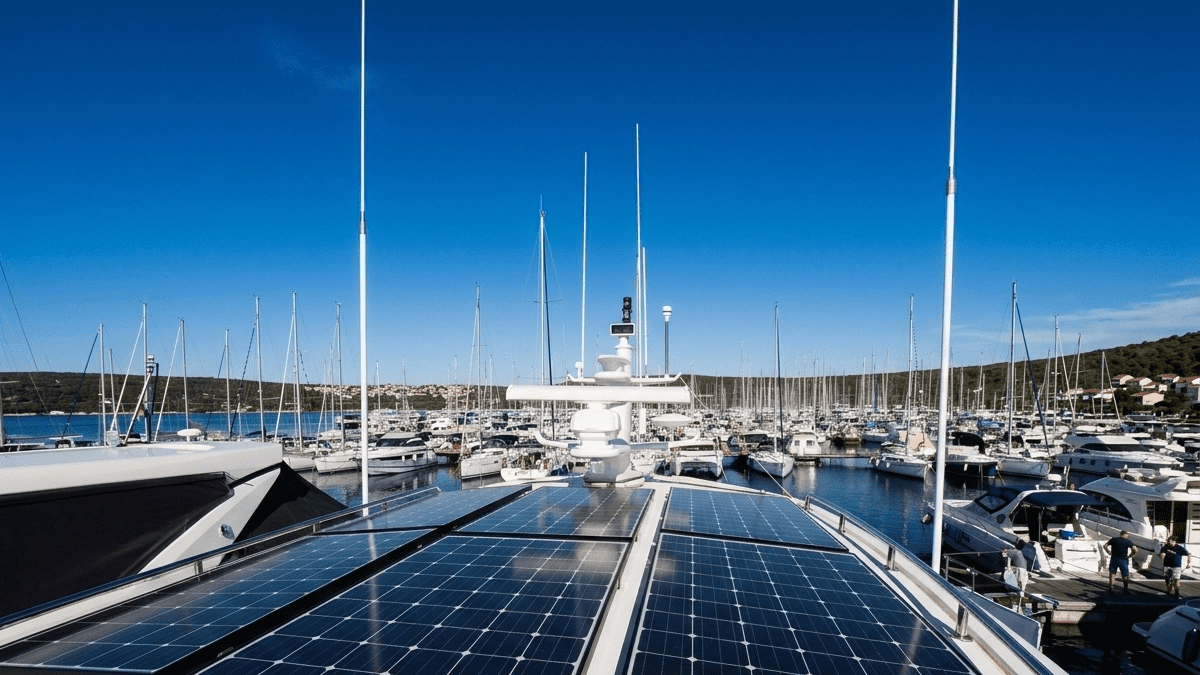
Marine Solar Panel Key Insights: What Every Boater Needs to Know
- Significant Cost and Quality Improvements: Over the past decade, marine solar panel costs have dropped substantially, while their quality, installation simplicity, and system monitoring have improved significantly.
- Quiet Energy Independence: Solar power systems use photovoltaic cells to quietly convert sunlight into electric current, providing an efficient, low-amperage "float" charge to top up batteries while at anchor without generator or engine noise.
- Core System Components: A basic marine solar setup requires three fundamental components: the solar panels, a battery bank, and a solar charge controller (like the smart MPPT controller) to protect the batteries from overcharging and maintain health.
- Sizing and Daily Output Estimation: Solar panels are generally estimated to produce peak power for 5 hours a day under good conditions. To calculate amp production, divide the panel's rated wattage by 15 (e.g., a 100W panel yields ~6.67 amps/hour or ~33 amps/day).
- Placement and Shading Vulnerabilities: Panels function at peak efficiency when completely perpendicular to the sun and provided with adequate airflow. Shading even a single solar cell can reduce overall power output by 20% or more, making optimal horizontal placement crucial.
- Wiring Configurations: Wiring panels in series increases voltage while keeping current constant (allowing smaller wire gauges), but leaves the entire system vulnerable to shading. Wiring in parallel keeps voltage constant while current is additive, ensuring unshaded panels still perform at max efficiency.
- Monocrystalline vs. Polycrystalline Cells: Monocrystalline panels feature a single-crystal structure that offers higher efficiency (15% to 23%), better temperature performance, and uniform black aesthetics compared to less expensive blue, speckled polycrystalline panels (13% to 17% efficiency).
- Maintenance Requirements: Regular routine maintenance is necessary to clean off dust, dirt, and salt residue, secure mounts, and inspect for wear to maximize system lifespan and efficiency.
Over the last decade, the cost of installing solar power on a boat has dropped substantially while the quality of solar panels has improved. Installation and monitoring have never been easier – making solar power a feasible option for many boaters. In this article, we look at the benefits of installing a solar system on your boat, the type of solar panels available, the number of panels you may need, what to consider when sizing your panels, and deciding how your installation should be set up to best utilize direct sunlight.
Benefits of Solar Panels for Boats
If you spend a lot of time at anchor and can't stand the noise of running your engine or generator to top up the batteries, solar power may be just the clean energy you're looking for. Once installed, solar panels use photovoltaic cells to quietly convert sunlight into electrical current – putting amps into your batteries over the course of the day and replacing the amps of power you've used running the stereo or chilling a beverage – and they do this with almost zero interference, day after day for as long as you have them hooked up. Additionally, marine solar panels offer the added benefit of being DIY friendly, giving boat owners the freedom to choose and install their own off-grid marine solar panels and accessories that will meet their personal power requirements.
With good quality panels that are sized correctly, your solar installation can give you complete energy independence - and because solar charging tends to be low amperage, it's a more efficient way to top up your batteries since the “float” cycle can take a ridiculously long time.
Best of all, it allows you to safely charge your batteries when you are away from the boat. So if you leave your boat on a mooring or choose not to plug in at the dock, you'll still have charged batteries when you return to the boat. Even if you normally pay for power at the dock, the savings in the amount of power you'll need can potentially add up.
Solar Power Systems - the Best Solar Panels for a Boat
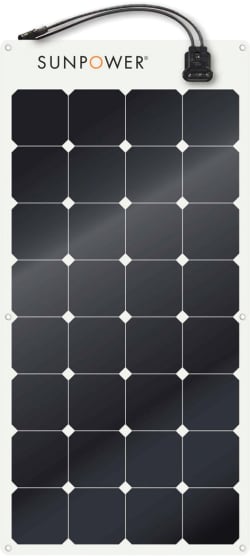
A basic solar power installation will consist of 3 things: the solar panel(s), a solar charge controller, and your battery bank. The solar panel(s) will be wired to the charge controller, and the controller will be wired to your batteries. While it's possible to wire the panels directly to the battery, we don't advise it due to the current's variability based on the sunlight hitting the panels. We highly recommend a solar charge controller to protect the batteries from receiving too much current during higher panel output.
At Fisheries Supply, we offer a variety of solar charge controllers, including options for lithium batteries. At their most basic – they will regulate the amount of current passing through to make sure the batteries are not overcharged. But like everything – solar controllers have evolved, and newer options, such as the popular MPPT Solar Charge Controller, will not only maximize the harvesting of energy from your panels to achieve full charge in the shortest possible time – but it's also “smart” enough to maintain your batteries' health and extend their life by administering charge based on what charge state the batteries are in. Some controllers (including this one) even come with the ability to monitor what's happening during charging remotely (via Bluetooth) – whether you're on your boat or at work – giving you peace of mind that everything is working correctly.
Sizing your Solar Panels
The amount of solar panels that you will need is determined by how many amps you would like to replace. Do you just want to offset the self-discharge rate of your battery bank and keep them topped up without plugging into shore power – or do you want them to replace the average amps used during a weekend on the hook? Once you've added up the number of amps you think you'll need – you will have a better idea of how many panels to install, taking into consideration the typical amp hours and volts used by your appliances.
While solar panels technically gather sunlight and produce energy all day long, it's generally accepted that, given good sunlight and minimal shading, they will produce their maximum stated power for five hours a day. Keeping this in mind – let's figure out how many amps a panel will produce daily.
Since most solar panels are rated in watts, we need to divide by 15 to determine the approximate output in amps. So, a 100-watt panel will produce a maximum output of approximately 6.67 amps per hour during perfect conditions at highest light levels. Taking our 5 hours of maximum power a day, that same 100-watt panel will produce a little over 33 amps during the best hours (6.67 x 5) with variable numbers outside those hours. Since it's pretty rare to get perfect conditions for 5 hours a day, this number should be a good estimate for the entire day's production. Therefore, if you think you need to replace 100 amps a day – you would need at least three 100-watt panels and strong solar to do it. Obviously, if all we want to do is offset the self-discharge of our battery bank, you would need far less power.
Panel Placement
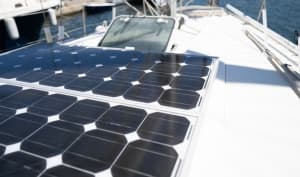
Almost as important as getting the sizing right is determining the best placement for your panels. Panels operate at peak efficiency when perpendicular to the sun – so it's imperative that you consider horizontal placement to get the best exposure as the sun moves across the sky.
Solar panels are also affected by heat – the hotter the panel gets, the less efficient it will be – so it's a good idea for your installation to allow airflow around the panel if possible.
Lastly, solar panels are highly affected by “shadowing” – that is, having part of their collective cells blocked by shade. For this reason, it's very important to consider items that will create shade throughout the day as the sun moves across the sky and your boat changes position at anchor. This might include a radome, the mast/spreaders, or even something as small as an antenna. While modern solar panels have become more efficient by using bypass diodes across each cell, they are still affected by shade, and having a shadow on just one cell of the panel could potentially reduce power by 20% or more – so consider placement carefully, especially when using flexible solar panels that can be mounted on canvas such as a bimini top.
Wiring in Series vs. Parallel
If you will be installing more than one panel, you'll also need to decide how you are going to wire them. Your two choices are wiring in series or in parallel. When wiring marine solar panels in series, the voltage is additive, and the current is constant – so you can use a smaller wire size over longer runs. Conversely, wiring panels in parallel means the voltage is constant while the current is additive – meaning you'll have higher currents traveling through the wire, and so will need larger gauge wire (which may be harder to run), and you may suffer loss over a long wire run.
Knowing this, why would you choose a parallel installation? Since each panel functions separately, there is less of an issue with shading. If one panel is heavily shaded, but the other panel is not shaded at all – the non-shaded panel is still producing at maximum efficiency. If the panels are in series, one shaded panel will affect the output of ALL the panels, so if you can't avoid shading issues, you may want to consider wiring in parallel.
Sizing your Solar Charge Controller
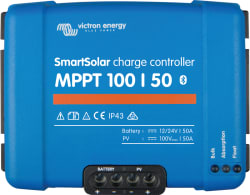
Once you've figured out what size panel(s) you are going to buy, it's time to calculate what size solar charge controller you need. Most controllers are sized by the maximum voltage over current (Voc) – but given temperature variables, this number can be hard to calculate. Thankfully, Victron has developed a handy sizing calculator. To use it, you'll need some information that should be displayed on the back of your marine solar panels or in the specifications for your panel(s). One thing to remember when filling out the “PV Module Temperature” min/max is that you should use the coldest date on record for the regions you plan to cruise in. Since operating temperatures impact the controller and since Voc increases as temperature decreases, it's very important to know the coldest potential operating temperature so that the controller doesn't fail on that trip to Alaska. If there's any doubt, up size!
What is “Cell Efficiency” in Boat Solar Panels and Why Does it Matter?
The solar cell efficiency rating refers to the portion of sunlight that can be converted (via photovoltaics) into electricity. As of publishing, the majority of typical commercially available marine solar panels only convert electricity with a maximum efficiency of 22-23% with the highest getting closer to 24%, but only in the lab. As a rule, solid (frame) solar panels tend to have higher efficiency ratings than flexible panels (usually about 22% vs. 15%), but with advancements in solar technology – that is changing too. For example, our Sun Power line of flexible panels has achieved a rating of 22-24% - astounding for a flexible panel.
The bottom line is that the higher the cell efficiency percentage, the more energy you can convert with your marine solar panel, which equals higher amps going into your batteries - so it's an important number to consider when deciding which panels to buy.
Monocrystalline vs Polycrystalline (Multi-Crystalline) Solar Cells - What are the Best Marine Solar Panels?
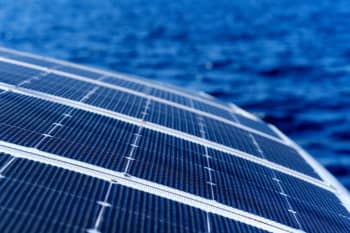
While both Mono and Polycrystalline cells capture the sun, turn it into electricity, and are made from silicon – there is one key difference. When Monocrystalline cells are manufactured, silicon is formed into bars and cut into wafers. Because the cell is composed of a single crystal or ingot, the electrons that generate a flow of electricity have more room to move. With poly or multi-crystalline cells, there are many crystals in each cell, which means there is less room to move, which results in lower efficiency ratings. While polycrystalline cells are less expensive, their reduced efficiency often results in a less effective installation, which is an important factor to think about when considering the cost. As with most things in life – you get what you pay for.
| Feature | Monocrystalline | Polycrystalline |
|---|---|---|
| Silicon Structure | Single crystal (single ingot) | Multiple silicon crystals |
| Efficiency Range | ~15% to 23% | ~13% to 17% (up to ~20%) |
| Electron Flow | Less resistance, more free flow | More resistance at grain boundaries |
| Cost | Higher upfront cost | Lower upfront cost |
| Power Output per Area | Higher | Lower |
| Temperature Performance | Better (lower efficiency loss) | Worse (higher efficiency loss) |
| Appearance | Black, uniform | Blue, speckled |
Are there any specific maintenance requirements for marine solar panels?
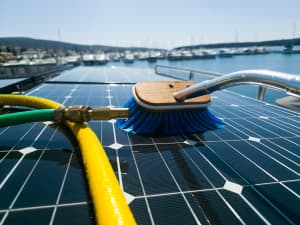
Regularly clean marine solar panels to remove dust, dirt, and salt residue that can reduce efficiency. Check for any loose connections, ensure panels are securely mounted, and inspect for any signs of wear or damage. Routine maintenance helps maximize the lifespan and performance of marine solar panels.
Frequently Asked Questions
How do I calculate how many solar panels I need for my boat?
To determine your solar needs, calculate the total daily amp-hours consumed by what you run on your boat and then decide how many of those you want to try to replace. Solar panels are generally expected to produce their maximum power for about 5 hours a day under good conditions - so to estimate a panel's daily amp production, take its rated wattage and divide it by 15 to find the hourly amp output, then multiply that by 5. For example, a 100-watt panel produces roughly 6.67 amps per hour (100\15), yielding about 33 amps per day (6.67 x 5). If you need to replace 100 amps daily, you would need at least 300-watts of solar panels and strong sunlight.
Should I wire multiple marine solar panels in series or in parallel?
It depends on your boat's layout and potential shading issues. Series wiring makes voltage additive while current remains constant. This allows you to use smaller wire gauges over long runs, but makes the entire system highly vulnerable to shading, so if one panel is blocked, the output of all of the panels will drop. Parallel wiring keeps voltage constant while current is additive. This requires heavier gauge wiring to prevent loss over long runs, but it isolates each panel. If one panel is shaded, the remaining unshaded panels still operate at maximum efficiency - so the answer really depends on your particular vessel.
How drastically does shading or "shadowing" affect a panel's performance?
Shading has a severe impact on efficiency. Even though modern panels utilize bypass diodes to mitigate the effect, having a shadow fall on just a single solar cell can potentially reduce the entire panel's power output by 20% or more. Because of this, careful horizontal placement away from masts, radomes and antennas is critical.
What is the difference between monocrystalline and polycrystalline solar cells?
The primary differences lie in structure, efficiency, and cost. Monocrystalline panels are made from a single silicon crystal, allowing electrons to move with less resistance. They offer higher efficiency (15% to 23%), better performance in high temperatures, a higher power output per area, and a uniform black appearance, though they cost more upfront. Polycrystalline panels consist of multiple silicon crystals, creating more resistance for electron flow. They are less expensive but have lower efficiency (13% to 17%), worse temperature performance, and a speckled blue appearance.
Why do I need a solar charge controller instead of wiring the panels straight to my batteries?
Solar panel output fluctuates constantly depending on sunlight intensity. Wiring panels directly to a battery bank can result in severe overcharging and damage. A solar charge controller regulates the current passing to the batteries. MPPT controllers maximize energy harvesting to charge batteries faster, adjust charging based on the battery's health state, and often include Bluetooth capabilities for remote monitoring.
What should I consider when sizing a solar charge controller?
Charge controllers are typically sized by their maximum voltage over current (Voc). When calculating this, you must account for regional temperature variables because Voc increases as temperature decreases. When inputting data into a sizing calculator, you should use the coldest date on record for your intended cruising grounds (such as Alaska) to prevent the controller from failing in cold weather. If you are ever in doubt, it is best to size up.
As you can see, there are many things to consider when deciding on a solar power installation for your boat, but we hope you've found this article helpful. If you need more information, please don't hesitate to call our knowledgeable staff at (800) 426-6930.