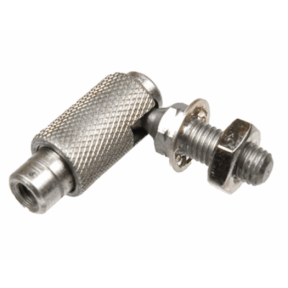
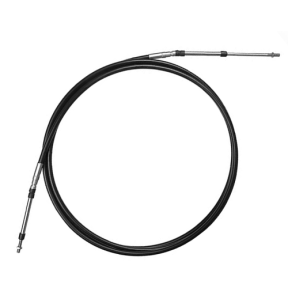
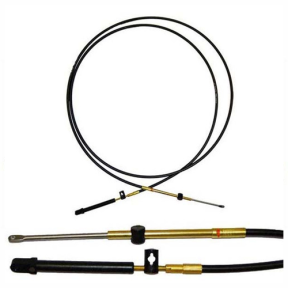
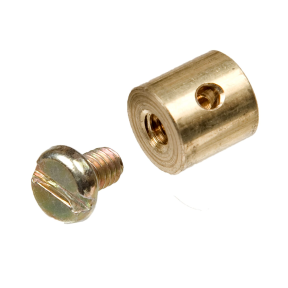
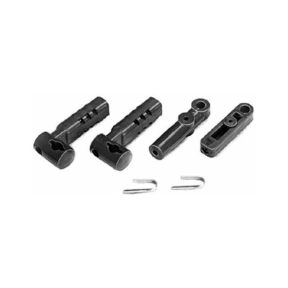
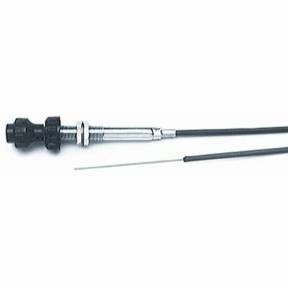
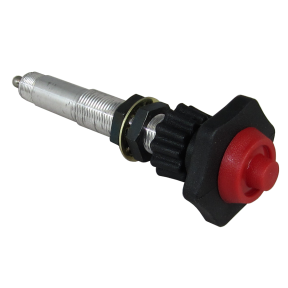
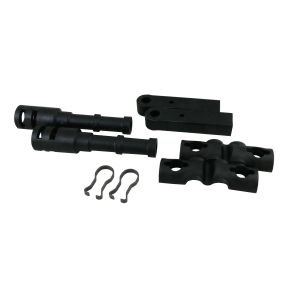
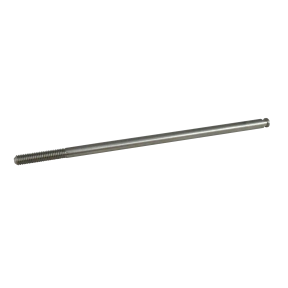
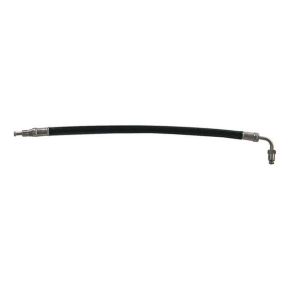
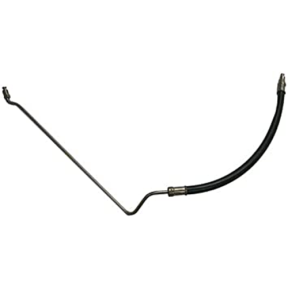
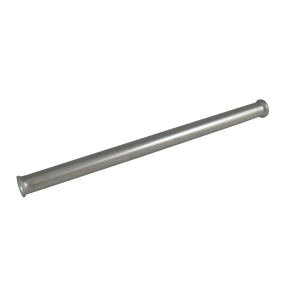
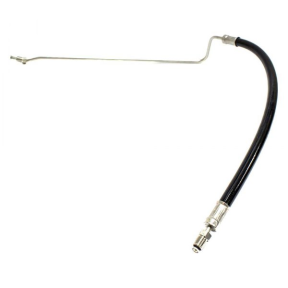
Boat Control Cables: Steering, Throttle, Shift, and Engine Control Cables
Boat control cables connect the helm, throttle lever, shift control, and engine so powerboats respond accurately to steering and engine-control input. This category is for boat owners, marine technicians, and refit projects that need replacement steering cables, throttle cables, shift cables, universal 33C/3300 control cables, or engine stop cables for reliable mechanical control.
What Are Boat Control Cables?
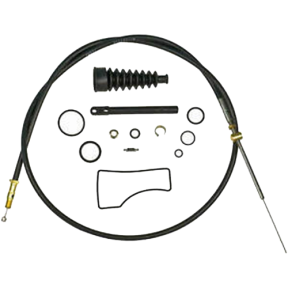
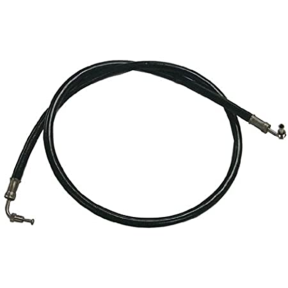
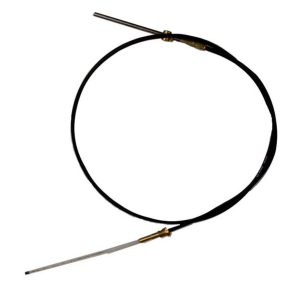
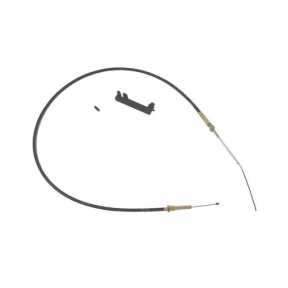
Boat control cables are mechanical marine cables that transmit movement from the helm, throttle lever, or shift control to the engine, drive, or steering system. They are essential components in many powerboat steering and engine-control systems because they convert operator input into predictable steering, acceleration, shifting, and engine shutoff actions.
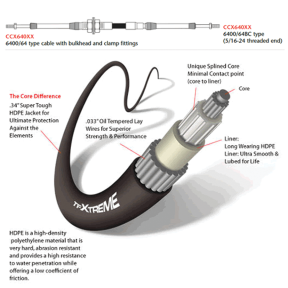
Marine control cables are built for repeated movement, vibration, saltwater exposure, UV exposure, and tight installation spaces. Quality cables use corrosion-resistant materials, durable outer jackets, low-friction liners, and precise end fittings to maintain smooth operation in demanding marine environments.
Types of Boat Control Cables
| Cable Type | Primary Function | Common Applications | Selection Notes |
|---|---|---|---|
| Boat Steering Cables | Connect the steering helm to the engine, outdrive, or rudder mechanism. | Mechanical steering systems on powerboats and small craft. | Match the helm system, cable length, steering type, and manufacturer specification. |
| Boat Throttle Cables | Connect the throttle lever to the engine throttle linkage to control RPM. | Outboard, sterndrive, and inboard engine-control systems. | Confirm engine brand, control head, cable series, travel length, and end fittings. |
| Boat Shift Cables | Connect the control lever to the gear selector for forward, neutral, and reverse. | Single-lever and dual-lever marine engine controls. | Choose the correct OEM-specific or universal cable pattern for the control system. |
| Universal Marine Control Cables | Provide throttle or shift control using common 33C/3300-style cable patterns. | Many replacement, refit, and multi-brand marine control applications. | Verify universal cable compatibility with the engine, control head, and required adapter hardware. |
| Engine Stop Cables | Provide mechanical engine shutoff control. | Commonly used on diesel engine installations and mechanical stop systems. | Confirm cable length, handle style, mounting location, and end connection requirements. |
How to Choose the Right Marine Control Cable
- Identify the cable function. Determine whether the replacement is a steering cable, throttle cable, shift cable, universal 33C/3300 cable, or engine stop cable.
- Confirm the engine and control system. Match the cable to the control head, engine brand, drive system, and required end fittings. Common entities include Mercury Marine, Yamaha Marine, OMC, SeaStar, and Morse Controls.
- Check the cable series. Use the existing cable part number, OEM cross-reference, or manufacturer compatibility chart whenever available.
- Measure the length accurately. Measure the existing cable end-to-end or follow the manufacturer’s routing method from the control box to the engine with proper routing allowance.
- Evaluate cable routing. Avoid tight bend radii, heat sources, pinch points, sharp edges, and chafe areas that increase friction or damage the jacket.
- Select the performance tier. Premium low-friction control cables can improve helm feel, throttle response, and shift effort, especially on longer cable runs.
When to Replace Boat Steering, Throttle, or Shift Cables
Boat control cables should be replaced when they no longer move smoothly, show visible damage, or fail to deliver precise control response. A worn cable can increase operator effort and may affect steering, acceleration, gear engagement, or engine shutoff reliability.
- Stiff steering wheel movement or heavy helm effort
- Notchy, sticky, or inconsistent throttle lever movement
- Delayed throttle response under load
- Difficult forward, neutral, or reverse engagement
- Visible rust, corrosion, cracked jacket, crushed jacket, or exposed strands
- Kinked cable routing or damage near bends and mounting points
- Loss of full travel at the engine, drive, or steering linkage
Frequently Asked Questions
How do I choose the right boat control cable?
Choose the right boat control cable by matching the cable function, engine brand, control head, cable series, length, travel, and end fittings. Use the existing cable part number, manufacturer compatibility chart, or OEM cross-reference before ordering a steering cable, throttle cable, shift cable, or 33C/3300 universal marine control cable.
What is the difference between a throttle cable and a shift cable on a boat?
A throttle cable controls engine RPM, while a shift cable controls gear engagement for forward, neutral, and reverse. Both cables may connect to the same marine control lever, but each performs a separate function and must match the engine linkage, control head, travel length, and end fitting requirements.
How do I measure a replacement boat control cable?
Measure a replacement boat control cable by checking the existing cable length or following the manufacturer’s control-box-to-engine routing method. Include the correct routing allowance for smooth bends, avoid sharp turns, and confirm the final length against the cable series and engine-control application before installation.
What are the signs that a marine control cable needs replacement?
A marine control cable needs replacement when steering, throttle, or shift movement becomes stiff, notchy, delayed, or inconsistent. Visible corrosion, cracked jackets, crushed sections, exposed strands, broken end fittings, and kinked routing are also strong indicators that the cable may no longer provide safe, reliable mechanical control.
What does 33C or 3300 mean on a marine control cable?
33C and 3300 refer to common universal marine control cable patterns used for many throttle and shift applications. These cables are widely used with compatible control heads and engines, but fitment still depends on cable length, end fittings, travel requirements, adapter hardware, and the specific engine-control system.
Can I install boat steering, throttle, or shift cables myself?
Many boat owners can install mechanical steering, throttle, or shift cables with basic tools, careful routing, and correct adjustment. The installation must allow full travel without binding, chafe, or tight bends. A qualified marine mechanic is recommended when engine linkage adjustment or steering-system safety is uncertain.