Ultra Safety Systems at Fisheries Supply
This category helps boaters with choosing Ultra Safety Systems bilge pump switches and using Ultra Tef-Gel to prevent galvanic corrosion on mixed-metal assemblies.
Highlights
- Reliable bilge switching (Mini, Junior, Senior) helps prevent flooding through automatic pump control and optional high-water alarm integration.
- PTFE-based Ultra Tef-Gel isolates electrolytes at metal interfaces to reduce galvanic corrosion and eliminate galling/seizing.
- Shop a broad in-stock selection at Fisheries Supply, with expert support and fast nationwide & international shipping.
Bilge Pump Sensors & Switches
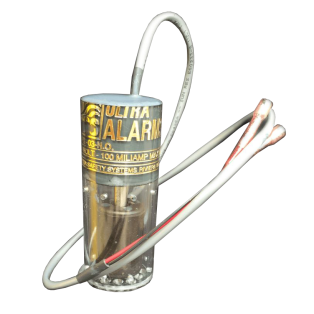
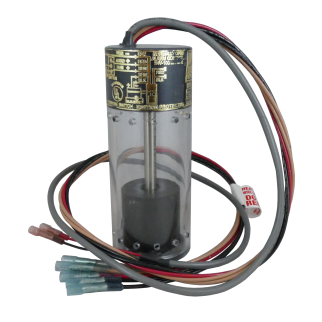
Ultra’s enclosed-design switches provide dependable automatic control of your bilge pump, minimizing debris fouling and reducing nuisance cycling.
Select the right shape and alarm capability for your bilge geometry and risk profile:
- Ultra Bilge Pump Switches
- Mini — Compact footprint for tight bilge spaces.
- Junior — Standard capacity for most runabouts and cruisers.
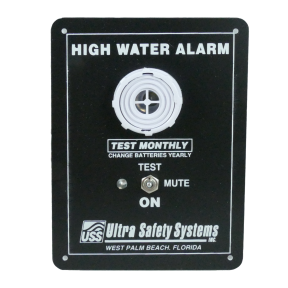
- Senior (UPS-01) — Adds an isolated high-water alarm circuit to warn of rising levels beyond pump capacity.
- Ultra High-Water Alarm
Operational note: The Senior (UPS-01) model typically features a ~1-1/4" on/off differential and a separate alarm circuit that can be wired "Normally Open" or "Normally Closed" to your buzzer/light panel. See the manufacturer’s wiring instructions for current limits and relay use.
Ultra Tef-Gel — Corrosion Isolation & Anti-Seize
Ultra Tef-Gel is a high-performance assembly compound that reduces galvanic corrosion between dissimilar metals by excluding electrolytes at their interface. The PTFE-rich paste also prevents galling and cold-welding on stainless fasteners.
- Tef-Gel (a.k.a. Tefgel / Ultra Tef-Gel) — For fasteners, hinges, masts, radar arches, and deck hardware (stainless on aluminum, Inconel, etc.).
- Anti-Seize Lube 0.1 oz — Pocket-size field tube for periodic maintenance or travel kits.
How it Works
- ~40% PTFE solids in a non-evaporating carrier helps fill voids and block capillary electrolyte ingress.
- Applied to both surfaces, it maintains an insulating barrier across the joint to limit galvanic potential and crevice corrosion over time.
- Acts as an anti-seize to ease future disassembly and resist fastener galling.
Selection & Installation Guidance
Match the Switch to the Bilge
- Space & access: Choose Mini for tight wells; Junior for standard compartments; Senior when you want an independent high-water alarm.
- Pump capacity & wiring: Verify current draw, voltage, and use a relay when exceeding switch ratings.
- Debris load: Enclosed tube designs mitigate fouling compared with exposed arm floats.
Best Practices
- Mount level, secure strain-relief on leads, and fuse per circuit recommendations.
- Test operation monthly during the season; inspect every 6 months, replace on damage or erratic cycling.
- For mixed-metal hardware, coat threads and mating surfaces with Tef-Gel; wipe away squeeze-out after torqueing.
Shop Ultra at Fisheries Supply
Whether you need a reliable bilge switch, a high-water alarm, or a corrosion-isolating lubricant, our team can help you select, size, and install with confidence. Explore the full Ultra Safety Systems lineup, or contact our product representatives for application-specific guidance.
Frequently Asked Questions
What’s the practical difference between Mini, Junior, and Senior switches?
Mini fits tight spaces; Junior covers most boats; Senior adds a separate high-water alarm circuit for early warning if the bilge rises faster than your pump can handle.
How loud is a typical high-water alarm, and where should I mount it?
Many marine alarms are roughly 100 dB. Mount the sounder in a protected, audible cabin or helm location; label the panel light/buzzer and test monthly.
Will Ultra switches work with my existing 12V or 24/32V bilge pump?
Yes—models are available for 12V and 24/32V systems. Confirm pump current draw vs. switch/relay ratings and follow the wiring diagram.
How does Tef-Gel reduce corrosion between stainless and aluminum?
The PTFE-rich compound fills micro-voids and blocks electrolyte (saltwater) from the joint, reducing galvanic potential and preventing crevice corrosion and galling.
How often should I inspect or replace my bilge switch?
Inspect every 6 months and test monthly in season. Replace if you observe sticking, erratic cycling, cracked housings, or corroded leads.