Understanding GFCI Outlet Types for Marine Applications

While we are all used to seeing GFCI breakers in our homes – you may not know exactly what they do and why they are now required on all new boats being built. So in this article we will explain what a Ground Fault Circuit Interrupter (GFCI) does, the different types available, why they are one of the important electrical safety features on your boat and answer some frequently asked questions.
Are GFCI Breakers Required on My Boat?
If we take a look at the ABYC (American Boat and Yacht Council) requirements, regulation #E-13.3.5 states:
While this ABYC requirement only applies to the construction of new boats, and technically is most likely not mandatory on an older boat, adding these breakers to any boat is not only smart, it could save your life!
Key Highlights
- Ground fault protection is critical for preventing electrical hazards in marine environments.
- Marine-grade GFCI outlets are specially designed to handle challenging conditions like excessive moisture and corrosion.
- These outlets support various amps, such as 15-amp and 20-amp options, catering to diverse requirements.
- Weather-resistant and portable GFCI outlets enhance safety, durability, and flexibility in marine settings.
- Dual-function GFCI/AFCI outlets combine ground fault protection with arc fault detection for comprehensive safety.
- Regular testing and adherence to marine codes ensure that GFCI outlets perform optimally over time.
What is a GFCI?
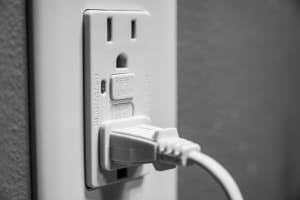
Ground Fault Circuit Interrupters are fast-acting circuit breakers that interrupt the flow of AC current through an unintended ground fault (short circuit). The most common type looks like a modified duplex electrical receptacle, and is used in place of one. It operates by sensing any difference in the electric currents carried by the hot and neutral conductors of a device plugged into the receptacle. The GFCI outlet makes sure that the current flowing in is the same as that flowing out. If the current is imbalanced, it means that electricity is going somewhere else – like through you.
GFCIs can be installed in place of ordinary receptacles on your boat, in which case they will protect that outlet as well as any outlets installed “downstream” of it. They are typically installed in locations where damp conditions are common and may provide a pathway to ground – the galley and the head are the two big ones on a boat – along with any outdoor electric outlets potentially exposed to the weather.
What Exactly is a Ground Fault?
A “ground fault” is an unintentional electric path between a source of current and a grounded surface. If you touch a non-insulated portion of the hot or neutral wire (or something connected to it) while also creating a low resistance conductive pathway to “ground” (a ground fault), the current in the conductors will no longer be equal since the current will preferentially flow through the fault instead of the wire – potentially causing you to be burned, severely shocked or even electrocuted.
For example: you plug in an electric tool or appliance in which a bare wire inside has come loose and is now touching its metal case. The outside of the case then becomes charged with electricity. If you touch the tool with one hand while another part of your body is touching a grounded metal object, such as a water faucet, you will get shocked. But if the appliance is plugged into an outlet protected by a GFCI, the power will be shut off before a fatal shock can occur.
How Does a GFCI Work?

When a GFCI outlet senses a ground fault, it will trip in as little as 0.03 seconds, and at currents as little as 4 milliamps – thus preventing the full current from flowing through your body. Once you've discovered the source of the problem and it's been corrected, function can be restored to the outlet by simply pressing the reset button on the outlet. GFCIs also have a test button that can be used to verify that this feature is working by creating a temporary artificial ground fault inside the device.
There are many types of GFCIs: the receptacle type described above, as well as portable, inline cord-connected, and circuit-breaker/GFCI combo styles which install in a circuit breaker slot in a main service panel – but they all operate on the same principle. If you are ever working with AC electrical devices in a questionable situation – carrying and using a portable GFCI is a great option as it provides on-the-spot ground fault protection.
Types of GFCI Outlets for Marine Use
Standard Marine-Grade GFCI Outlet
These basically look exactly like the GFCI outlets you see in your home, but while those outlets give the same ground fault protection, a marine-grade GFCI is built to handle the challenging marine environment. These marine-grade outlets have better waterproof and anti-corrosion features, which makes them a good choice for marine applications.
Marine-grade models often come with self-testing parts to meet strong safety rules. Their insides, like nylon plates, also do not rust as quickly as what you see in standard outlets. This difference shows why they matter in the world of boats and the marine industry.
| Specification | Standard GFCI Outlets | Marine-Grade GFCI Outlets |
|---|---|---|
| Durability | Limited to general conditions | Resistant to moisture and salt exposure |
| Compliance | Meets basic electrical codes | Adheres to marine-specific standards |
| Installation | Residential and commercial | Dockside, boat interiors, and exteriors |
Marine-Grade Weather-Resistant GFCI Outlets
A weather-resistant GFCI outlet is made specifically for the outdoor marine environment. Each one is tough enough to stand up to the wet and salty air outside. Their design helps keep people safe from ground faults, and the outlets still work well when exposed to water, salt, or debris. Besides handling moisture, these weather-resistant outlets also work well in extreme hot or cold climates, making them the best pick for docks and other wet places.
Portable GFCI Solutions for Marine Environments
For times when you need to be flexible, a portable GFCI outlet can help a lot in the marine sector. These are meant to be used when you're working out in the field and need protection for any of the electrical equipment you'll be using. These outlets connect inline before the equipment or to temporary setups, giving ground fault protection exactly where you need it. You can use them on docks during repair or maintenance work, inside for odd jobs, when you go camping, or anywhere else that you might need protection in wet weather.
Dual Function GFCI/AFCI Outlets for Enhanced Safety
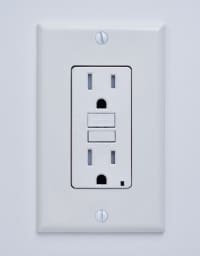
Dual function GFCI/AFCI outlets bring together ground fault protection and Arc Fault Circuit Interruption, or AFCI, in one unit to help stop two big dangers: ground faults and electrical arcs. This means you get an extra level of protection in places where you really need it. GFCI/AFCI outlets spot small electrical arcs that other outlets might miss, which can greatly reduce the chance of fires. Their self-testing feature helps make sure the outlets work well and meet safety rules, even after extended use.
All of these outlets potentially come with specific amperage or wattage ratings, so make sure when choosing an outlet for your boat or dock that you select the right rating for your usage requirements. This helps ensure the outlet will be strong enough to meet your needs while still keeping you safe.
Frequently Asked Questions
What makes a GFCI outlet suitable for marine applications?
Marine GFCI outlets are made with strong, waterproof parts and use materials that fight rust, like nylon plates. These materials help the outlets work well in places with a lot of moisture and salt, like on boats or at docks. They also meet the safety requirements for marine use, increasing the level of safety onboard.
How often should marine GFCI outlets be tested?
A marine GFCI outlet needs to be tested every month by simply pushing the built in test button to make sure it is still working correctly - especially in areas like the galley where it will see at lot of usage. Regular testing can help you find ground fault problems early - keeping the boat safer and helping you stay in line with safety rules.
Can a weather-resistant GFCI outlet be used indoors on a boat?
Yes, since these outlets are made to last in challenging wet areas outside, they can also be used inside the boat. That said, it's perfectly fine to use less expensive marine versions meant for indoor use, rather than these extra robust versions. At the end of the day, either option will help keep you safe as the main idea is to lower risk by making sure your electrical systems are working properly.
Are there specific codes or standards for marine grade GFCI receptacles in the U.S.?
Yes, the ABYC (American Boat and Yacht Council) regulation #E-13.3.5 requires receptacles located in the head, galley, machinery space or on deck to be protected by a "Type A Ground Fault Circuit Interupter (GFCI)". These codes are in place to keep mariners safe from being electrocuted. Currently this is only required on new builds, but it's still a good idea to increase your safety onboard by installing them on your own boat, no matter what the age.
Why are GFCI receptacles important for safety in boats?
A GFCI outlet is crucial for safety in boats as it prevents electrical shock by cutting off power when detecting ground faults. This is especially important in areas prone to moisture, like the galley or heads. Installing a GFCI outlet significantly reduces the risk of electrocution, ensuring a safer living environment.
Do GFCI outlets for marine use come in specific amp ratings?
Yes - depending on which type you choose, you will often need to assess how what the combined amperage of the devices you'll be using are, so that you can purchase the appropriate corresponding product. Common amp ratings are 15 or 20 amps.
What are common signs that a GFCI marine outlet needs replacement?
Some common signs are when the test or reset button does not work, the breaker keeps tripping when things are normal, there is visible damage, or it does not react when there is a ground fault. This is why it's a good idea to check the outlet regularly. The more familiar you are with them, the better chance you'll be able to spot an issue before a bigger problem occurs.
While a GFCI is an important protection device against ground faults, it's important to note that a GFCI is not a substitute for a fuse or circuit breaker. While GFCIs protect people, circuit breakers or fuses are still required to protect equipment and wires from overloads or short circuits that can result in fire or other damage.
We hope this helps you understand why GFCI breakers are an important part of boat safety. If you have any additional questions, feel free to contact our product experts at (800) 426-6930.