Understanding Shore Power:
How It Works and Safety Tips

Important Takeaways for Marine Shore Power Rules That Every Boat Owner Needs to Know
- Understand Your System Amperage: Most North American marinas offer either a 30 Amp (120V / 3,600W maximum capacity) or a 50 Amp split-phase (120/240V / 12,000W maximum capacity) connection. Always match your vessel's electrical requirements with the corresponding pedestal outlet.
- Follow Proper Connection Sequencing: To avoid dangerous electrical arcing, always turn off both the dockside and boat circuit breakers before plugging or unplugging cords. When connecting, plug into the boat inlet first, then the dock pedestal; reverse the order when disconnecting.
- Manage Cord Slack Carefully: Route your shore power cords neatly with sufficient slack to accommodate tidal swings and high winds. Never allow cords to become pinched or trapped between nearby pilings and the boat, which can create tension and cause overheating.
- Inspect Frequently to Prevent Fires: Worn or corroded shore power connections are a leading cause of boat fires. Check both ends of your cord monthly for discoloration, melting, or cracked insulation, and replace damaged components immediately.
- Use Marine-Rated Adapters Responsibly: While adapters (pigtail, straight, Y-splitters, and household-to-marine) provide flexibility, they must never be used to bypass your system's electrical limits. Avoid leaving non-weatherproof adapters exposed to the elements or utilizing standard household extension cords.
- Upgrade to Modern Locking Technology: Upgrading from traditional threaded rings to modern systems like Marinco’s EEL (jaw-clamp lock with built-in LED) or SmartPlug (straight-in multi-lock with internal safety thermostat) provides superior moisture seals and protects against catastrophic overheating.
- Never Swim Near Marinas: Invisible stray electrical currents from boats or docks can leak into the water, posing immediate, fatal shock risks to swimmers.
If you are new to boating, it's important that you have a good understanding of shore power since improper usage of AC power can be extremely dangerous. Shore power technology is the AC power being supplied by marina from the local electrical grid. It allows you to plug into the grid so you can charge your DC batteries and run the various appliances on your boat without depleting your boat's battery bank. In this article we will explain how shore power works, cover adapter types, discuss some of the newer cord options available, review safety considerations and answer frequently asked questions.
Components of a Marine Shore Power Cord Setup
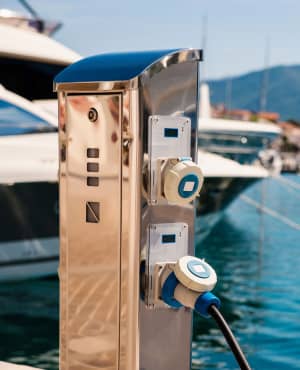
To make sure you have a safe and working shore power connection, the process uses a few key components:
- The AC electrical source (the dock power pedestal)
- A shore power cord, which comes in several different lengths and voltages
- Potential adapters that plug into the cord to transform the setup to what your boat needs
- A boat-side AC power inlet plug
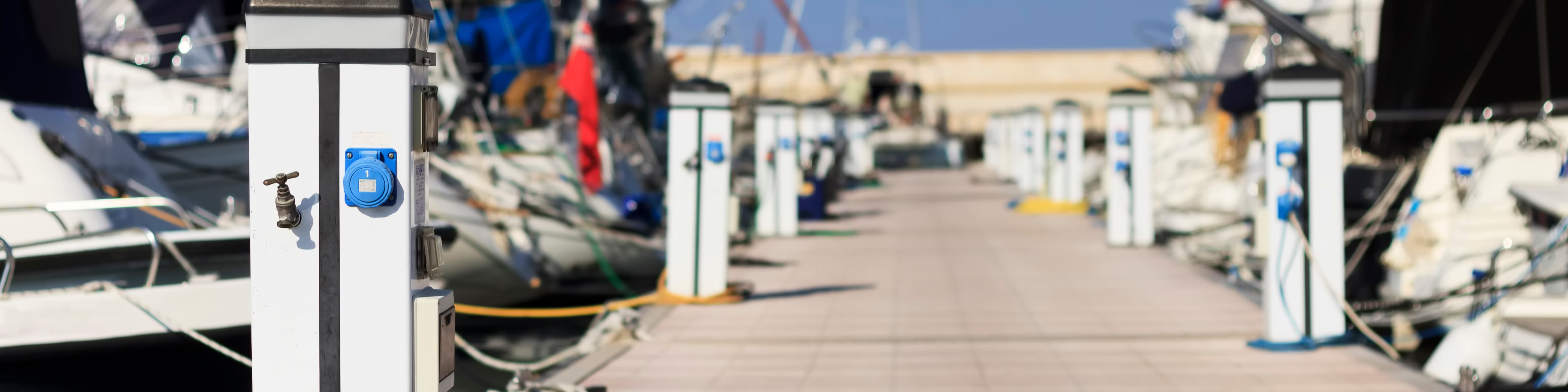
All of the parts above work together to bring power from the main electric grid to your boat. On your dock there should be a tower of sorts – known as the “power pedestal”. This is where the marina has provided an AC plug to which you can connect. Most marinas in North America will have a connection rated at either 30A or 50A, so make sure you look at the plugs provided and know which amperage your boat needs. There should also be a circuit breaker – which you will need to turn on after you've got your system set up and are ready to start using the power. This breaker should also be turned OFF when you are ready to unplug your system from the dock - so make sure you do so before unplugging your cord. The female receptacle may have a threaded ring, which when used, will ensure your plug stays securely attached with a waterproof connection.
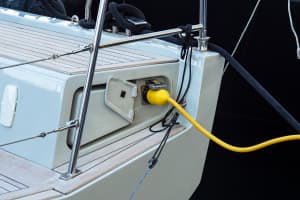
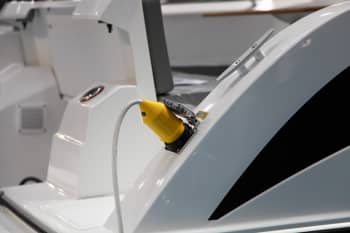
While marine cordsets come in a variety of lengths and configurations, for most boats you will likely have a cord that is yellow, 25-50 feet long, and rated for 30 amp service (while larger boats may have the same, but rated for 50 amp service). On a 30A cord, one end will have a 3-pronged male connector – which plugs into the female receptacle we mentioned on the dock, while the other end has a female 3-pronged connector that will plug into the male outlet located somewhere on your boat.
Common Shore Power Supply Voltage and Amperage
One of the most important parts of understanding the use of shore power is knowing what you boat is set up for and making sure that you are using the same type of power off the dock. If your boat is in the 35-45 foot range, you may end up in a slip that offers both 30A or 50A service - so make sure you're using the correct outlet (the outlets on both your boat AND the pedestal should also be clearly labeled). The following table outlines the differences between the two types of connections.
| Feature | 30 Amp, 120 Volt | 50 Amp, 120/240 Volt Split-Phase |
|---|---|---|
| Usage | Suitable for small to mid-size boats (typically up to 45ft) with limited electrical needs—lights, outlets, water heater, and basic appliances | Suitable for larger boats and yachts requiring more power-intensive appliances like air conditioning, stoves, multiple refrigerators, and heavy-duty systems |
| Voltage | Delivers 120V | Delivers 120/240V split-phase |
| Maximum Amperage | 30A | 50A |
| Maximum Power | 3,600W | 12,000W |
| Plug | Uses a 3-prong NEMA L5-30 locking plug (hot,neutral, ground) | Uses a 4-prong plug, most commonly NEMA SS-2 or NEMA L14-50 (two hots, neutral, ground) |
Clearly, a 50-amp system will provide much greater power capacity and flexibility for larger, more energy- demanding boats, while a 30-amp connection is usually suitable for smaller vessels with simpler electrical needs.
Common Shore Power Adapter Plugs
Marine shore power cord adapters allow boaters to connect "mismatched" power standards, plug types, and/or amperages when connecting to shore power at marinas, since sometimes they may not have the connection you need. Here’s a breakdown of common types:
- Pigtail Adapters – These adapters convert one plug type/size to another – such as a 30A male to 50A female, or vice versa. They are useful when a boat’s inlet is different from the dock’s outlet.
- Straight Adapters – These are simple plug adapters (only for use in dry locations) that adapt power plugs between 15A, 20A or 30A connections. Unfortunately they rarely offer weather protection so really should not be used outside.
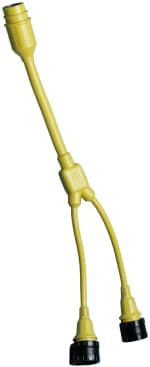
- Y-Adapters (“Splitter Adapters”) – Y-adapters allow connection of two dockside power sources (such as two 30A outlets) to one larger inlet. An example might be when a larger boat that normally uses a 50A plug is put in a marina slip that only has two 30A outlets, they can use this plug to get the total power they need.
- Household to Marine Adapters – These adapt a standard 15A or 20A household outlet to a locking marine connector — which would mainly be used to charge batteries at home, or to use a power tool on the boat using electricity directly from the dock. They are only good for modest power situations, and definitely are not suitable for heavy loads. While this type helps you connect to a household connection, never use household extension cords for shore power - only use adapters designed and certified for marine environments (look for CE, UL-Marine, or equivalent approvals). These adapters should never be left out in the weather.
Adapters enable flexibility but require strict adherence to safety, so always use proper marine-rated adapters, never overload circuits, inspect regularly, and follow best connection/disconnection practices. Avoid makeshift solutions—marine electrical safety is critical for preventing fires, shocks, and costly equipment damage.
Newer Technology
For years, the majority of these cordsets and inlets have been manufactured by companies like Hubbell and Marinco, whose technology had remained unchanged for many decades. But as the industry has become more safety conscious and boaters are becoming more educated, there has been pressure to develop systems that are easier to set up, that will not loosen or corrode over long periods, and have higher resistance to harsh marine environments.
The good news is there are now two systems that have been developed to combat these issues – the EEL System (developed by Marinco) and the SmartPlug (developed by SmartPlug Systems). These designs incorporate better connections, an improved locking system and increased water resistance with exposure to the elements.
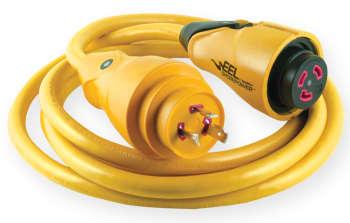
EEL (Easily Engaged Lock) System – This system from Marinco does away with the old threaded sealing ring – replacing it instead with a one-handed locking system. It has a jaw clamp design providing a secure waterproof seal, along with an integral LED to help you plug it in when you come in after dark. The EEL also incorporates a secondary finger-activated lock for added security – and when engaged, the jaws cannot be unclamped. It uses heavy-duty, super flexible, tinned 10 gauge corrosion resistant 3-conductor cable with nickel-plated contacts and there is a built-in LED indicator to show you the cord is active and that power is flowing – so much better than their old design.
SmartPlug – this innovative company decided to start from scratch with a completely new design. The SmartPlug employs locks on both sides of the connector that snap into the inlet so you can both feel and hear the positive connection being made; no twisting required. To release, simply squeeze the two side levers. The connector and inlet bodies nest together so aligning the pins is a snap and since there is only one plug-in orientation, it's intuitive to use – even in the dark. The molded plug has three weatherproof seals, which eliminate the possibility of water and moisture intrusion, ensuring a safe and dry connection.
Like the EEL – the SmartPlug also uses heavy-duty, flexible 10-gauge , 3-conductor cable with nickel-plated contacts. In addition, it has very large contact pins and a built in thermostat. Why's that important? Larger contact pins mean a larger area creating the connection, so less chance for poor contact – which is one of the leading causes of overheating. In addition, if for some reason the plug does start to heat up, the trip-style thermostat will sense it and shut off the connection – keeping your boat safe from overheating. While converting to SmartPlug will require you to switch out the old style receptacle on your boat, they've made sure to size it as a direct replacement – so it's relatively easy to do and well worth the added safety it brings.
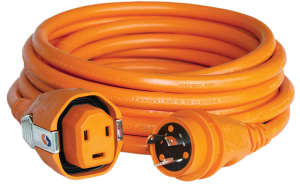
Both the EEL and the SmartPlug have a regular connection dockside, so you will be able to use these products no matter what marina you are staying at. These connectors ensure a much more solid connection to the shore power and
we highly recommend either of these products as a valuable safety upgrade for your boat.
Safety Tips and Best Practices for Using Shore Power
One of the biggest causes of boat fires is older shore power cords plugged into AC for months – maybe even years – without being inspected by the boat owner. Since your boat is always moving, even at the dock, it's important to check your cord regularly – making sure it is still properly connected and hasn't become so tight as to act as an additional dock line! Even when set up correctly, it's still possible that with age and UV damage, water could intrude into the connection causing the prongs of your plug to corrode. Eventually, this creates a poor connection – which leads to potential overheating and possibly even arcing – scary stuff when dealing with 120 volts of power! That's why it's critical that you inspect your connections (both on the boat and at the dock) to make sure this kind of corrosion isn't happening.
It's important to follow certain safety and use considerations when hooking up to shore power, so here's some tips to keep both you and your boat safe!
- Check Compatibility - Always match voltage, amperage, and plug configuration precisely on both cords and adapters. Never try to force connections or exceed the rated load of the smallest component.
- Circuit Breakers - Turn off both dock and boat main breakers before connecting or disconnecting a cord or adapter. Connect the boat end first, then the dock end, then turn on the circuit breakers; reverse the steps to disconnect.
- Weatherproofing - Ensure all connections are protected from water (many adapters are made for wet or dry environments specifically, so choose the right one). Use locking rings to prevent accidental unplugging and ensure a tight, waterproof seal.
- Avoid Overloading - Don’t use adapters to bypass the electrical limits of your boat or cables. If your boat requires more amperage, upgrade your system rather than using multiple adapters.
- Dry Only - Never plug in a cordset or adapter that is wet, or even damp. Allow them to dry thoroughly before use.
- Cord Placement - Do not leave adapters or cords on the deck or dock in coiled or pinched positions, as this may cause overheating. Always make sure you run your shore power cord neatly in such a way as to allow free movement during tidal swings or higher winds, while not allowing it to get trapped between a nearby piling and the moving dock (a classic rookie mistake). A tight cord puts undue tension on your connection at either end, which can easily lead to overheating – so make sure you have enough slack in the line, but not too much. It's important to take the time and get this right.
- Accidental Water Drop - If you accidentally drop your cord in the salt water, immediately turn off the breaker at the pedestal, disconnect the plugs and rinse everything thoroughly with fresh water. Marinco recommends you dry it off and then give it several days to make sure it's completely dry before using it again. Remember to check for corrosion after a few months to be extra safe.
- Inspection and Maintenance - Whenever you disconnect your cord from the boat, examine both the end of the cord and the inlet. If there is any discoloration at all, or any evidence of melting around the male blades of the plug or the slots of the female end it is critical that you replace the damaged portion before plugging back in. You should also keep an eye out for any corrosion, worn insulation or broken blades. Replace anything that looks damaged immediately—never attempt repairs on marine adapters or cords unless you are an ABYC qualified technician.
- Dockside Inspection - Perform the same inspection dockside. If there is any problem, immediately contact the marina management to have it fixed – do not plug back in until the issue has been resolved.
- Monthly checks - If you plan to leave the boat plugged in for long periods of time (such as during the winter months), make it a priority to stop by once a month and perform the checks above. It's always a good idea to check on your boat regularly as you'll catch issues before they become bigger problems – protect your investment!
- Stray Current and Shock Risks - Lastly, stray electrical currents in the water around docks can be fatal. Never swim in marinas as a general rule as you never know where stray currents may be happening - the are invisible after all.
Frequently Asked Questions
What is marine shore power and how does it work on a boat?
Marine shore power is AC electricity supplied by a marina from the local electrical grid, delivered through a dockside power pedestal. A shore power cord connects the pedestal to the boat's AC inlet, allowing boaters to run onboard appliances and charge DC batteries without draining the vessel's battery bank.
What is the difference between 30 amp and 50 amp shore power service?
A 30 amp, 120-volt shore power connection delivers a maximum of 3,600 watts, suitable for small to mid-size boats with basic electrical needs. A 50 amp, 120/240-volt split-phase connection delivers up to 12,000 watts, designed for larger vessels running air conditioning, multiple refrigerators, and heavy-duty onboard systems.
What is the correct order to connect and disconnect a shore power cord at a marina?
Always turn off both the boat and dock circuit breakers before touching any connections. When connecting, plug into the boat's AC inlet first, then the dock pedestal, then switch on the breakers. To disconnect, reverse the sequence: breakers off, unplug the dock end first, then the boat inlet.
Can I use a shore power adapter to connect my boat to a different amperage outlet?
Yes, marine-rated shore power adapters — including pigtail, Y-splitter, and straight adapters — allow connections between mismatched pedestals and cordsets. However, adapters must never be used to exceed your boat's rated electrical capacity. Always match voltage and amperage, use only UL-Marine or CE-certified marine adapters, and never substitute standard household extension cords.
What are the signs that a shore power cord needs to be replaced?
Replace a shore power cord immediately if you notice discoloration, melted insulation, cracked or frayed wires, corroded or broken blades, or if the cord becomes unusually hot during use. These conditions indicate a failing connection that can cause arcing, electrical fires, or serious personal injury. Never attempt DIY repairs unless you are an ABYC-certified marine electrician.
What happens if I accidentally drop my shore power cord in saltwater?
If a shore power cord falls into saltwater, immediately turn off the circuit breaker at the dock pedestal before touching the cord. Disconnect both plugs and rinse every component thoroughly with fresh water. Per Marinco's guidelines, allow several days of complete drying before reconnecting, then inspect for corrosion again after a few months.
Is it safe to swim near a marina where boats are connected to shore power?
Swimming near marinas is dangerous and strongly discouraged. Stray electrical currents from improperly grounded boats or faulty dock wiring can leak invisibly into the surrounding water, creating a risk of Electric Shock Drowning (ESD). These currents are undetectable by sight or touch until it is too late, making marina swimming potentially fatal.
Why does my shore power connection keep tripping the breaker at the dock pedestal?
A tripped breaker at a marina power pedestal typically indicates a voltage mismatch, an overloaded circuit, or a damaged cord or inlet allowing moisture intrusion. Unplug both ends immediately, inspect the cord, plug, and boat-side inlet for damage or water, verify you are using the correct amperage outlet, then reset the breaker only once the cause is identified and resolved.
What is the difference between a marine shore power cord and an RV power cord?
Marine shore power cords are engineered specifically for wet dock environments, featuring superior weatherproofing, corrosion-resistant materials, and locking connectors that comply with ABYC and UL-Marine standards. RV power cords are built for dry campground use and lack the moisture resistance and marine-grade construction required for safe, long-term use at a boat slip.
We hope you've enjoyed this article and have learned the importance of maintaining and inspecting your shore power equipment – but if you have any additional questions, please feel free to contact our product experts at (800) 426-6930.