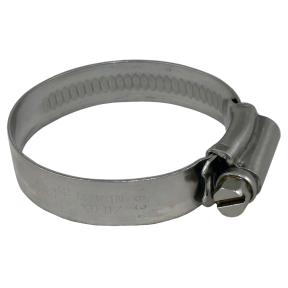
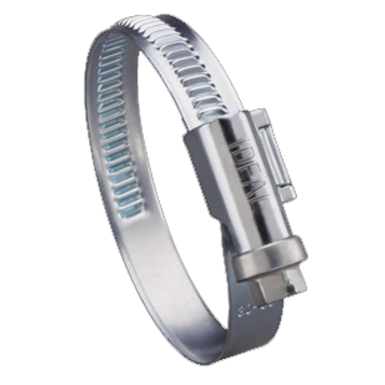
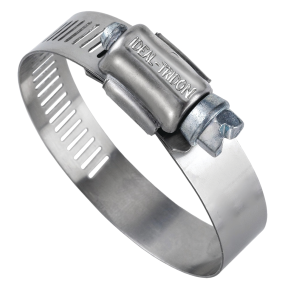
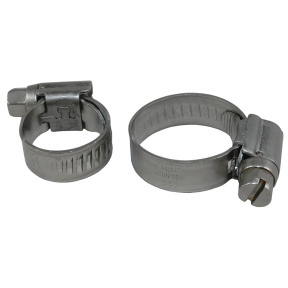
Secure your boat’s hose connections with marine hose clamps from Fisheries Supply
Key Takeaways
- Marine hose clamps prevent leaks that can damage engines and onboard systems by maintaining uniform sealing pressure in demanding, saltwater conditions.
- Stainless steel 316 resists chloride pitting better than 304 due to added molybdenum (˜2–3%)—a smart choice for seawater exposure.
- Match clamp type to the job: worm-gear/hex-head for general service, T-bolt for high load and vibration, and exhaust clamps for wet-exhaust systems.
- Size clamps to the hose OD, use quality liners/jackets on soft hose, and avoid over-torque that can damage hose or fittings.
Why use marine-grade hose clamps?
Unlike general-purpose clamps, marine-grade hose clamps are engineered for saltwater and high-vibration environments. Their corrosion resistance comes primarily from chromium content (=10.5%) forming a passive oxide layer, with nickel and molybdenum additions further improving performance in chloride-rich seawater.
Clamp types and when to use them
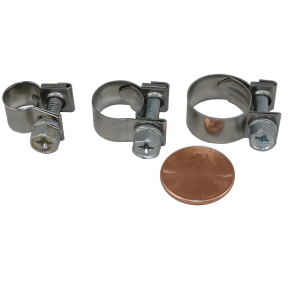
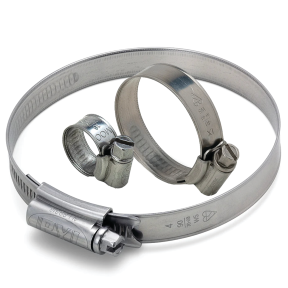
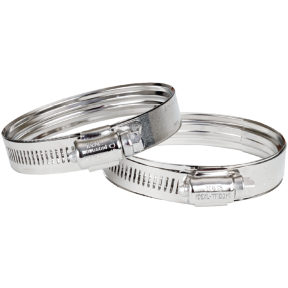
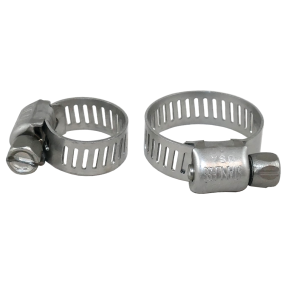
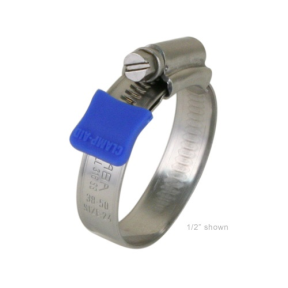
- Stainless steel worm-gear (band) clamps — Versatile, widely used across onboard systems; available with hex-head housings for easy socket tightening and consistent torque.
- Hex-head hose clamps — A worm-gear clamp with a hex drive for serviceability in tight engine compartments.
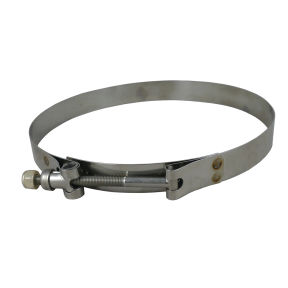
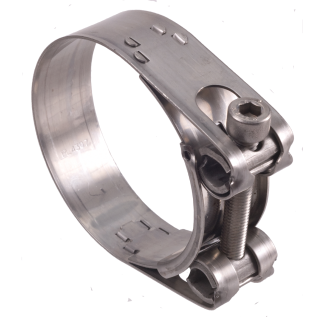
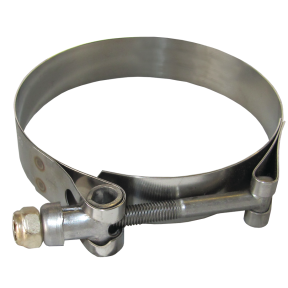
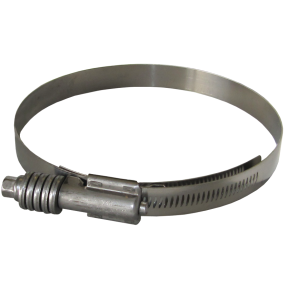
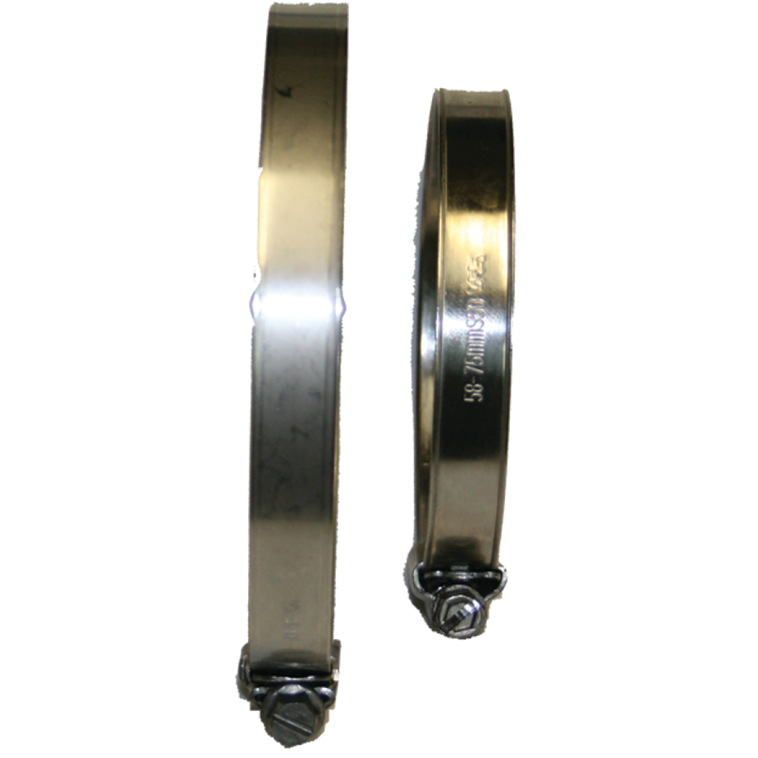
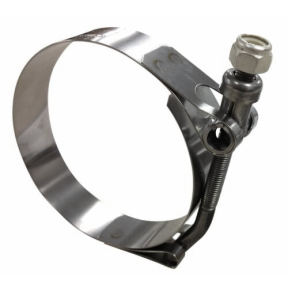
- T-bolt clamps — High-strength, 360° sealing for applications subject to vibration, pulsation, and thermal cycling (e.g., charge-air or heavy-duty coolant lines). Conforms to industry specs such as SAE J1508.
- Exhaust hose clamps — Built for wet-exhaust service; use with marine exhaust hose and appropriate sleeves/liners to manage heat and condensation.
How to choose the right marine hose clamp
- Match material to environment. Use 316 near salt spray or bilges; 304 can be suitable in protected areas.
- Select the correct type. General service ? worm-gear/hex-head; high load/vibration ? T-bolt; wet-exhaust ? exhaust-rated clamp.
- Size accurately. Confirm the hose’s outside diameter (OD) on the fitting; choose a clamp whose range centers around that OD for optimal adjustment room.
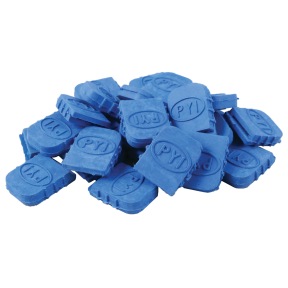
- Protect soft hoses. Consider clamp jackets/liners to prevent band edges from biting into rubber, especially on sanitation and exhaust hose.
- Tighten to spec—don’t over-torque. Over-tightening can distort hose or crush fittings, causing leaks or premature failure.
Fisheries Supply: your one-stop shop for marine clamps
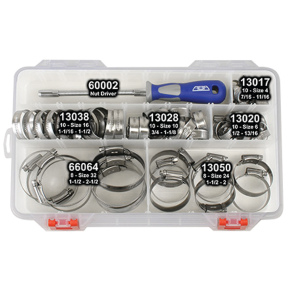
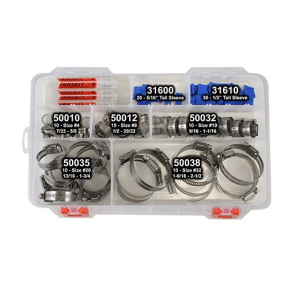
We stock a wide selection of boat clamps from trusted brands including Ideal Clamps, Scandvik, and Trident Marine. Choose from stainless worm-gear, hex-head, T-bolt, and exhaust clamps—plus jackets and kits to cover common sizes.
Don’t risk sub-par clamps that may fail under load. Browse high-quality marine-grade options at competitive prices—and complete your installation with marine exhaust hose and marine sanitation hose.
Frequently Asked Questions
What type of hose clamp is strongest?
Heavy-duty T-bolt clamps provide high clamping force and uniform 360° sealing for applications with vibration and thermal cycling.
What is the difference between 304 and 316 hose clamp materials?
316 stainless contains ˜2–3% molybdenum, which improves resistance to chloride-induced pitting compared with 304. For seawater exposure, 316 is generally preferred.
Are spring clamps better than worm-gear clamps?
Each has trade-offs. Spring (constant-tension) clamps maintain tension as hose materials expand/contract, while worm-gear clamps offer broad adjustability and serviceability (including hex-head drive). On soft hose, use liners to prevent cutting.
When should I use two clamps?
On critical connections (e.g., certain wet-exhaust or thru-hull runs) where redundancy and added sealing are desired, installers often use two properly sized clamps, oriented with screws 180° apart. Always follow your equipment manufacturer’s guidance.
How tight should I make a hose clamp?
Tighten to the manufacturer’s recommended torque for the clamp size/type. Stop once the leak path is sealed and the band does not cut or deform the hose; over-torque can damage the hose and/or the clamp.