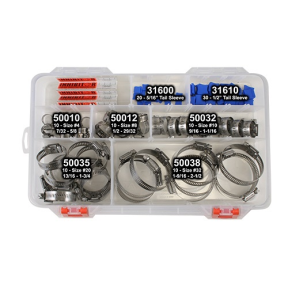
Marine Hose Clamps: Types, Materials, and Fit
Marine hose clamps secure hose connections in onboard cooling, sanitation, and wet-exhaust systems. Choose a clamp suited to the application and corrosion exposure, then match its adjustment range to the hose's outside diameter on the fitting.
Why Material Matters for Marine Hose Clamps
Saltwater exposure and vibration make corrosion resistance and secure fit important considerations. Stainless steel resists corrosion through a protective passive oxide layer; alloy composition affects its performance in chloride-rich environments.
316 stainless steel contains molybdenum, which improves resistance to chloride-induced pitting compared with 304. Consider 316 for seawater or salt-spray exposure; 304 can be suitable in protected dry areas. Ensure the entire clamp assembly—including the band, housing, and screw—is 100% marine-grade stainless steel to prevent localized galvanic corrosion from carbon steel components.
Hose Clamp Types and Applications
| Clamp Design | Typical Application | What to Check |
|---|---|---|
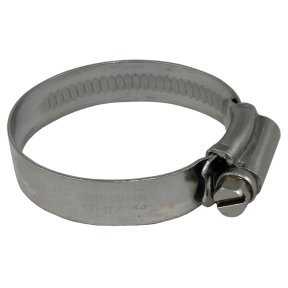
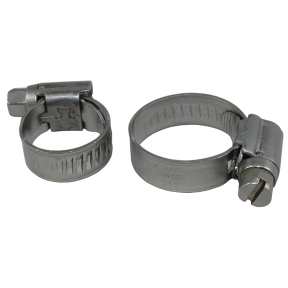
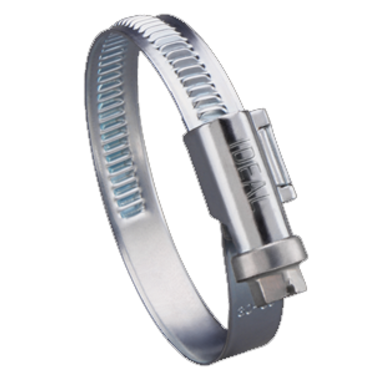
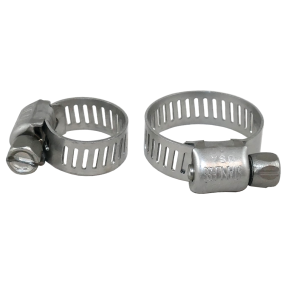
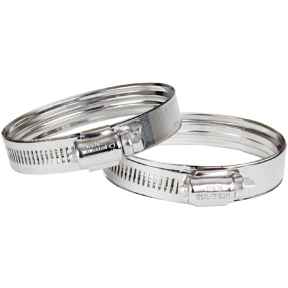
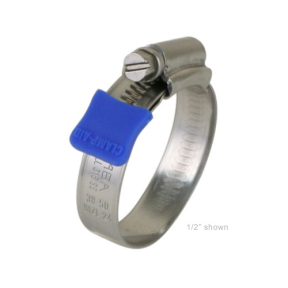
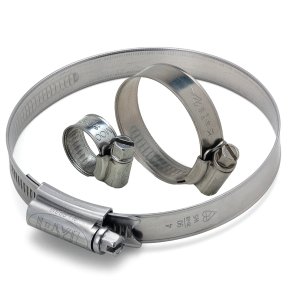
| Non-perforated stainless steel worm-gear clamps | General onboard hose connections and plumbing above or below the waterline. | 100% stainless construction, smooth embossed band edges, and adjustment range. |
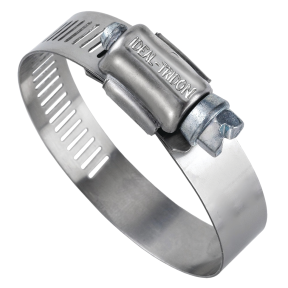
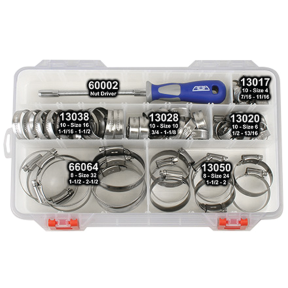
| Hex-head worm-gear clamps | Connections where socket access helps with tightening and servicing. | Tool clearance, drive size, and the manufacturer's tightening instructions. |
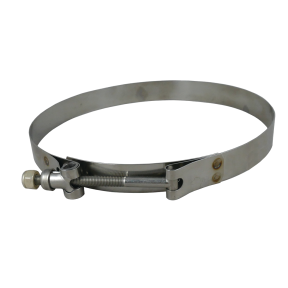
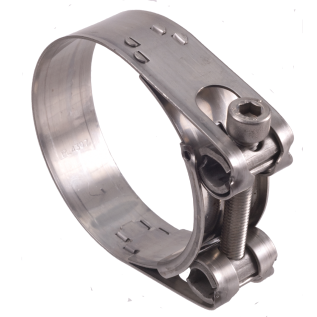
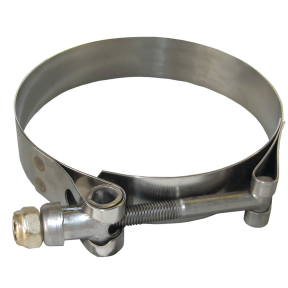
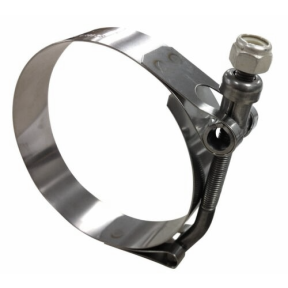
| T-bolt clamps | Heavy-duty connections, such as engine coolant lines and high-vibration systems. | Compatibility with the connection, hose wall thickness, and operating torque. |
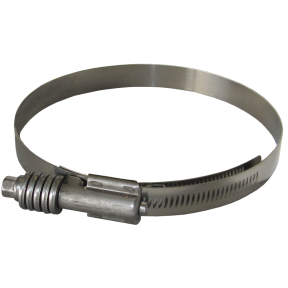
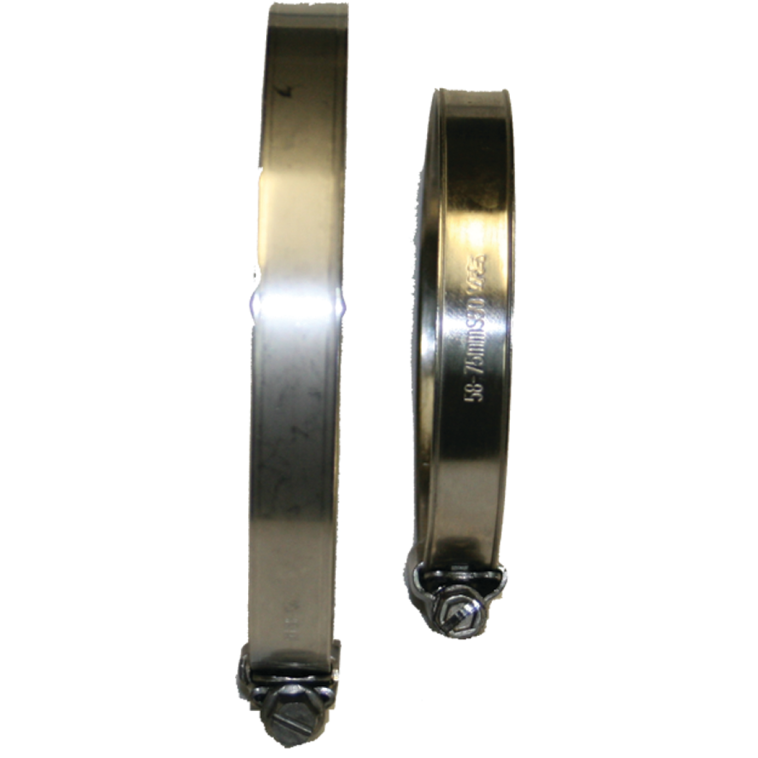
| Wet-exhaust hose clamps | Connections using marine exhaust hose. | Suitability for high-temperature wet-exhaust service and equipment manufacturer specifications. |
How to Choose and Fit a Marine Hose Clamp
- Identify the application. Select a clamp suitable for general service, heavy-duty connections, or wet-exhaust service, as applicable.
- Match the material to exposure. Choose 100% 316 stainless steel for raw-water, bilges, and salt-spray locations. Reserve 304 stainless steel for protected dry cabin areas.
- Measure the fitted hose. Check the hose's outside diameter (OD) while it is fully seated on the barb or fitting stem. Choose an adjustment range that accommodates that diameter with room for adjustment.
- Protect soft hose. Select clamps with smooth, non-perforated (embossed) bands or integrated liners to prevent the band from biting into soft silicone, vinyl, or sanitation hoses.
- Follow the specified torque. Tighten to manufacturer torque ratings—typically 25–35 in-lbs for standard marine worm-gear clamps and 50–75 in-lbs for heavy-duty T-bolt clamps. Over-tightening can distort the hose, damage the clamp, or crush fittings, causing leaks or premature failure.
Browse Marine Hose Clamp Brands and Related Hose
Explore hose clamps from Ideal Clamps, Scandvik, and Trident Marine. Compare individual product descriptions for clamp design, material, sizing, and application suitability.
For related installations, browse marine exhaust hose and marine sanitation hose.
Frequently Asked Questions
How do spring clamps differ from worm-gear clamps?
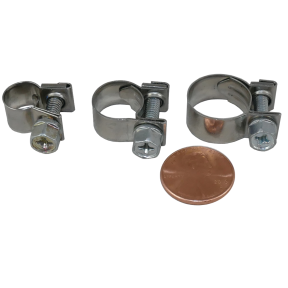
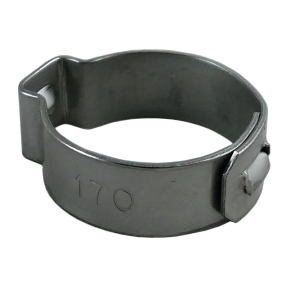
Spring clamps maintain constant tension as hose materials expand and contract with temperature, while worm-gear clamps provide an adjustable band tightened manually. Standard worm-gear or T-bolt clamps are preferred for critical raw-water and fuel lines, whereas spring clamps are used primarily in closed automotive-style cooling loops.
When should I use two hose clamps?
In accordance with ABYC standards (including H-27 and P-1), double-clamping is required on raw-water intakes, thru-hulls below the maximum heel line, and wet-exhaust connections where sufficient hose stem length exists. Position clamp screws 180° apart or offset, ensuring neither clamp rests over the edge of the barb stem flare.