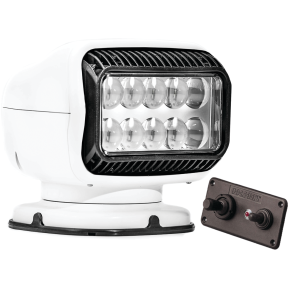
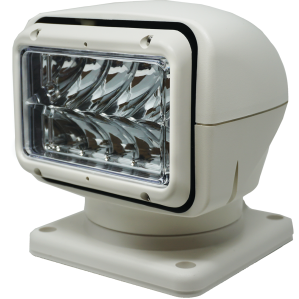
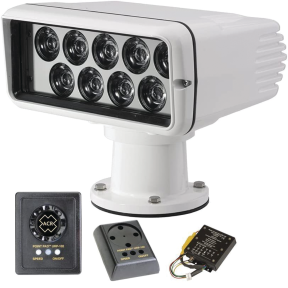
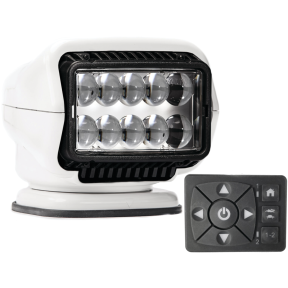
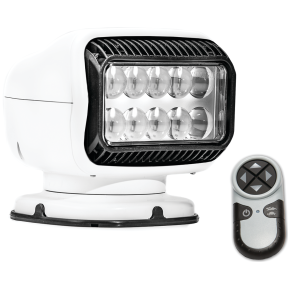
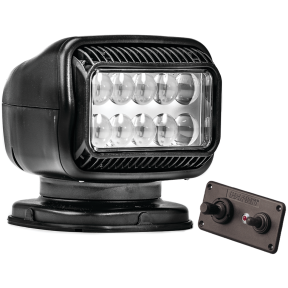
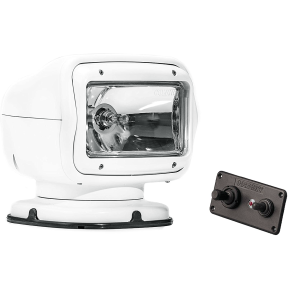
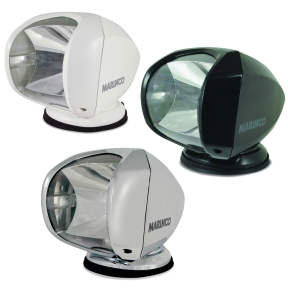
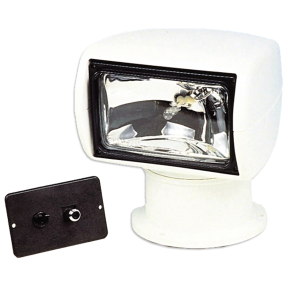
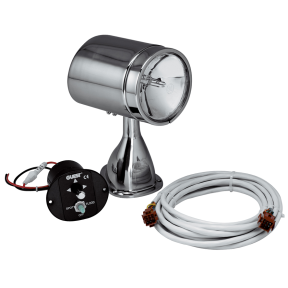
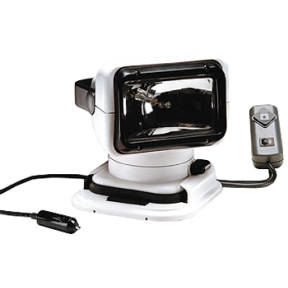
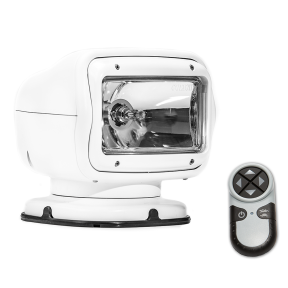
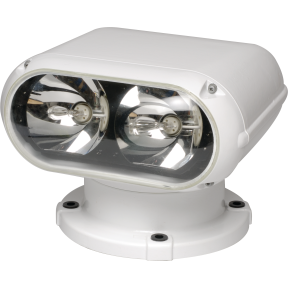
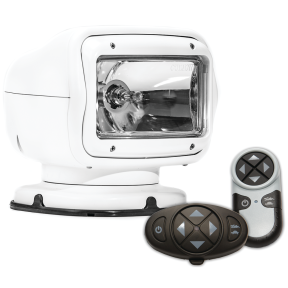
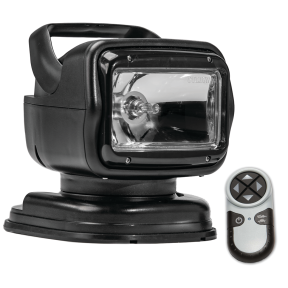
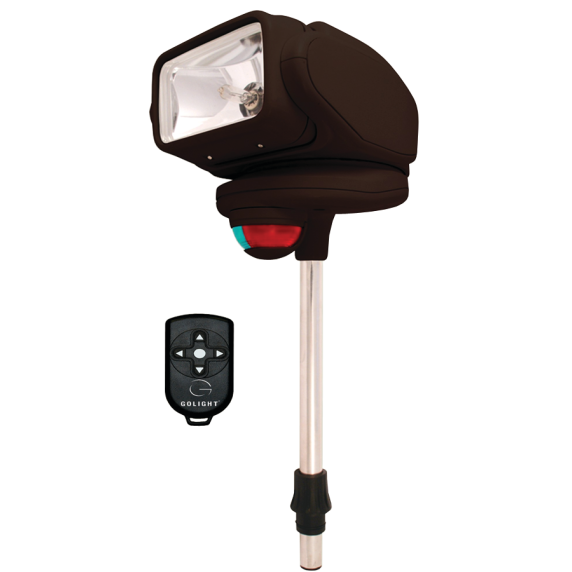
Handheld & Mounted Boat Spotlights from Fisheries Supply
This category helps recreational boaters, DIYers, and professional installers choose and use marine searchlights and boat spotlights for safer night operations, better visibility, and practical onboard lighting.
At a Glance
- Enhance safety by illuminating buoys, markers, shorelines, and hazards at night.
- Use marine spotlights to supplement, not replace, required navigation lights.
- Match LED, halogen, or xenon technology to your range, power, and duty-cycle needs.
- Evaluate power draw, integration with helm controls, and ease of maintenance.
- Look for remote control, corrosion resistance, and rugged housings for marine service.
- Plan on roughly 1,000 lumens and a 1,000-foot beam for many small boats.
What Boat Spotlights and Marine Searchlights Do
Boat spotlights and marine search lights serve several critical roles on board: improving short-range visibility, supporting navigation in low-visibility conditions, and providing light for search and security tasks.
These lights can also be used to search for people or boats in distress, providing intense, focused illumination that supports search-and-rescue style operations until professional responders arrive.
Types of Marine Searchlights
Marine searchlights are available in a variety of technologies and beam patterns from trusted brands such asACR,PerkoandJabsco. Choosing the right type means matching the light to how you actually use your boat.
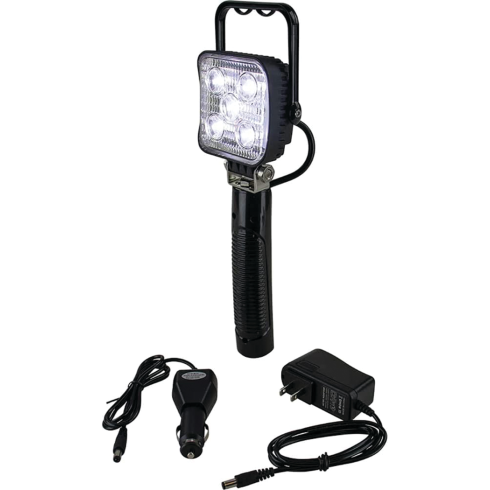
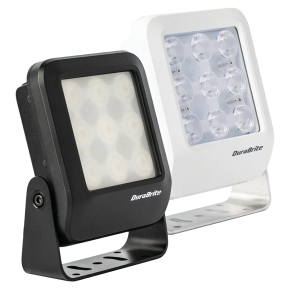
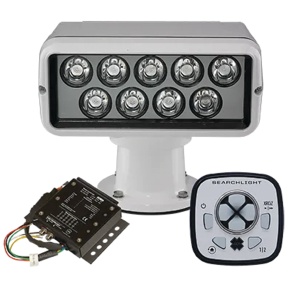
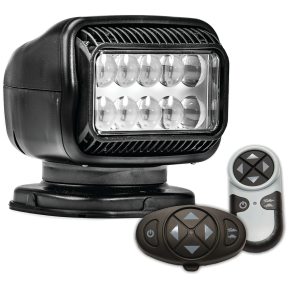
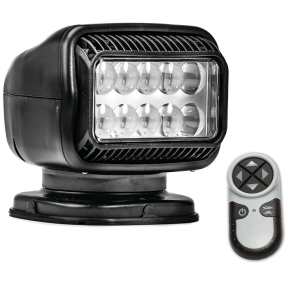
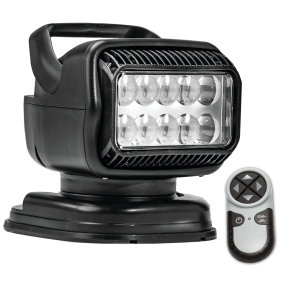
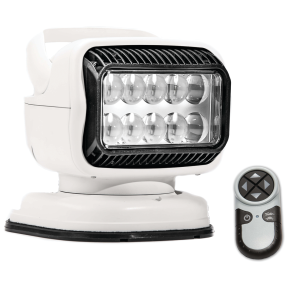
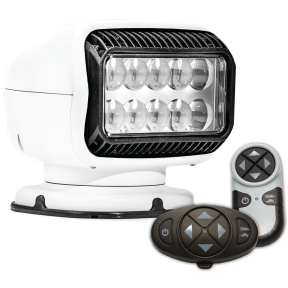
- LED Searchlights– LED search lights offer excellent energy efficiency, very long service life, and quick on/off performance. They are well suited for frequent use, limited onboard power, and operators who want minimal bulb replacement.
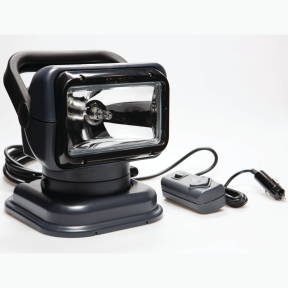
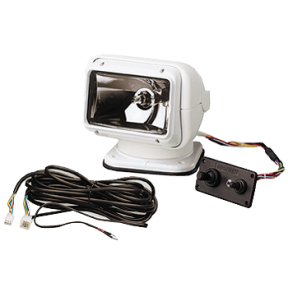
- Halogen Searchlights– Halogen searchlights are a proven option for general-purpose illumination around the immediate vicinity of the boat, including docking and close-quarters maneuvering.
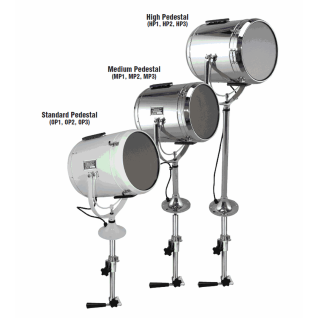
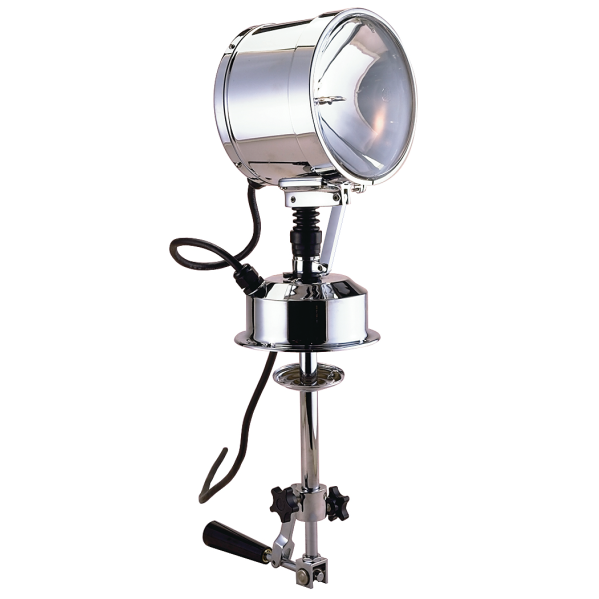
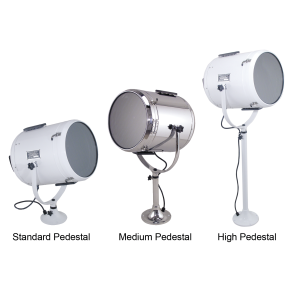
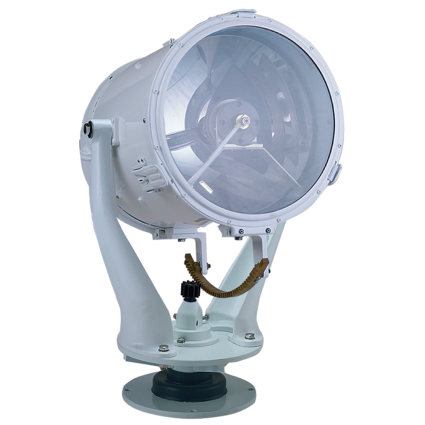
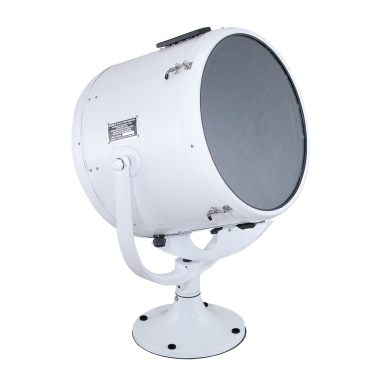
- Xenon Searchlights– Xenon searchlights typically provide a very bright, narrow beam with long effective range, making them popular for longer-distance spotting on larger recreational and commercial boats.
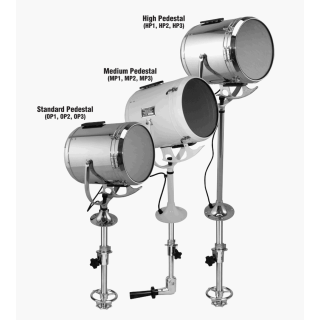
- Flood, Spreader, and Deck Spotlights– Flood spotlights, spreader lights, and deck lights are designed to illuminate wide areas. Flood and spreader lights cast a broad beam over working decks or cockpits, while focused deck spotlights provide task lighting where you rig lines, handle ground tackle, or work on equipment.
- LED Technology in Marine Searchlights– Modern LED marine spotlights are increasingly common thanks to their efficiency, durability, and long life, which reduce maintenance and power demands over the long term.
How to Choose the Right Marine Searchlight
Selecting the correct marine searchlight starts with clearly defining how and where you plan to use it, then balancing performance against power, integration, and maintenance needs.
- Purpose and Application– Decide whether your primary need is navigation support, security monitoring, search-and-rescue assistance, work-deck lighting, or a combination of these.
- Power Consumption– Evaluate the current draw and power budget for the light, especially on smaller boats or when running on batteries alone. LED units typically draw less power for a given output compared to halogen.
- Integration with Navigation or Helm Systems– Consider whether the searchlight will be remotely controlled from the helm, integrated with existing controls, or operated manually from the deck.
- Ease of Maintenance– Look for lights with easily accessible lamps, lenses, and seals so that routine inspections and repairs are straightforward even in a marine environment.
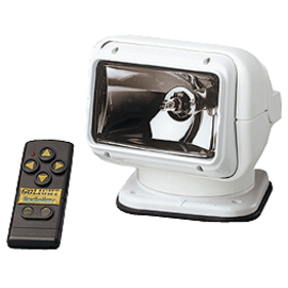
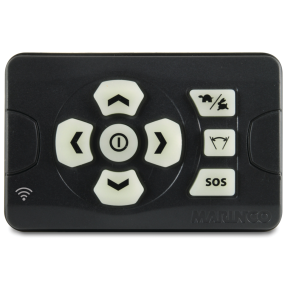
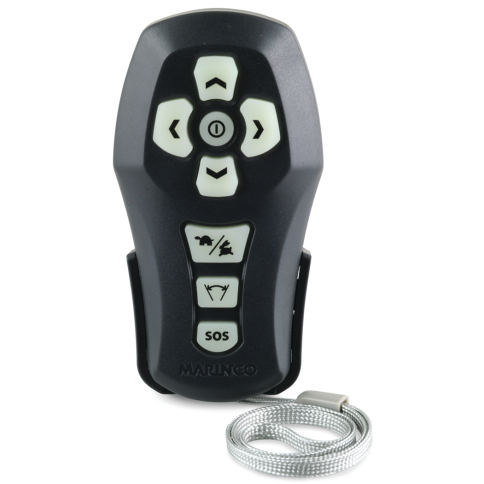
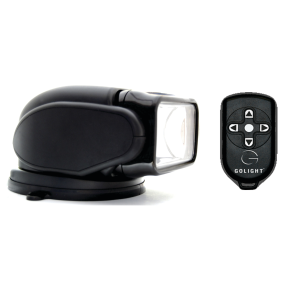
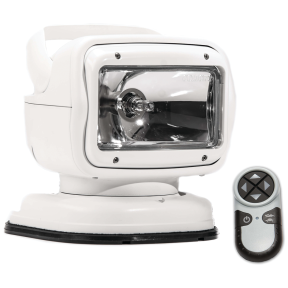
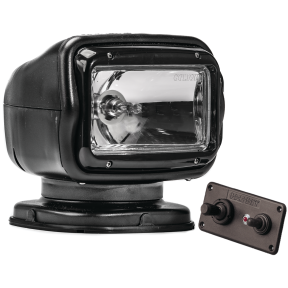
- Remote Control– Many boat search lights offer remote control from the helm station, allowing the operator to sweep the beam, track targets, or quickly aim at hazards without leaving the controls.
- Durability and Environmental Resistance– Marine searchlights should be designed to withstand saltwater corrosion, spray, vibration, and UV exposure. Robust housings, quality seals, and marine-grade finishes help extend service life.
- Regulatory Awareness– While searchlights themselves are typically supplemental, their use should not interfere with required navigation lights or other boats’ ability to see your nav lights. Always operate in a way that remains consistent with current navigation rules and good seamanship for your area.
If you later add product images or installation photos to your page, use descriptive alt text such as “12-volt LED marine searchlight mounted on bow rail at night” to improve accessibility and clarity for all users.
Frequently Asked Questions
What do boat spotlights and marine searchlights do?
Boat spotlights and marine search lights serve a variety of purposes, primarily aimed at enhancing safety, visibility, and navigation. These lights are important for boaters, especially when navigating at night or in low-visibility conditions. They can be used to spot buoys, landmarks, and other navigational aids in low-visibility conditions and to search for people or boats in distress.
What types of marine searchlights are commonly used?
Common types of marine searchlights include LED searchlights, halogen searchlights, xenon searchlights, and flood, spreader, or deck spotlights. LED search lights contribute to energy savings and are known for their longevity. Halogen searchlights are commonly used for regular use, including illuminating the immediate vicinity of the boat. Xenon searchlights are often chosen for longer distances and have a narrow beam with a very high range. Flood, spreader, and deck spotlights are designed for wide-area illumination or focused lighting on decks.
What should I consider when choosing a marine searchlight?
When choosing a marine searchlight, you should consider the purpose and application, power consumption, integration with navigation systems, and ease of maintenance. Purpose and application determine whether the light will primarily support navigation, security, or surveillance. Power consumption matters on boats where power resources are limited. Integration with navigation systems enables automated control, and ease of maintenance ensures routine inspections and repairs are practical.
Which features are most important in a marine searchlight?
Key features include remote control from the helm, durability and resistance to saltwater corrosion and UV exposure, and awareness of relevant maritime regulations. Some boat search lights offer remote control so operators can adjust the direction of the light from the helm station. Durable designs withstand the marine environment, and proper use helps maintain compliance with navigation rules and good seamanship.
How much do marine searchlights typically cost?
The price of marine searchlights varies depending on factors such as size, power, and features. You can expect to pay anywhere from $100 to $2,000 for a marine searchlight, ranging from basic models to high-output, feature-rich units.
How many lumens should my boat spotlight produce?
When boating or navigating in marine environments, it is recommended to target at least 1,000 lumens and a beam distance of about 1,000 feet. This level of brightness is suitable for a wide range of boat activities in low-visibility or nighttime conditions.