Applying Bottom Paint to Your Boat
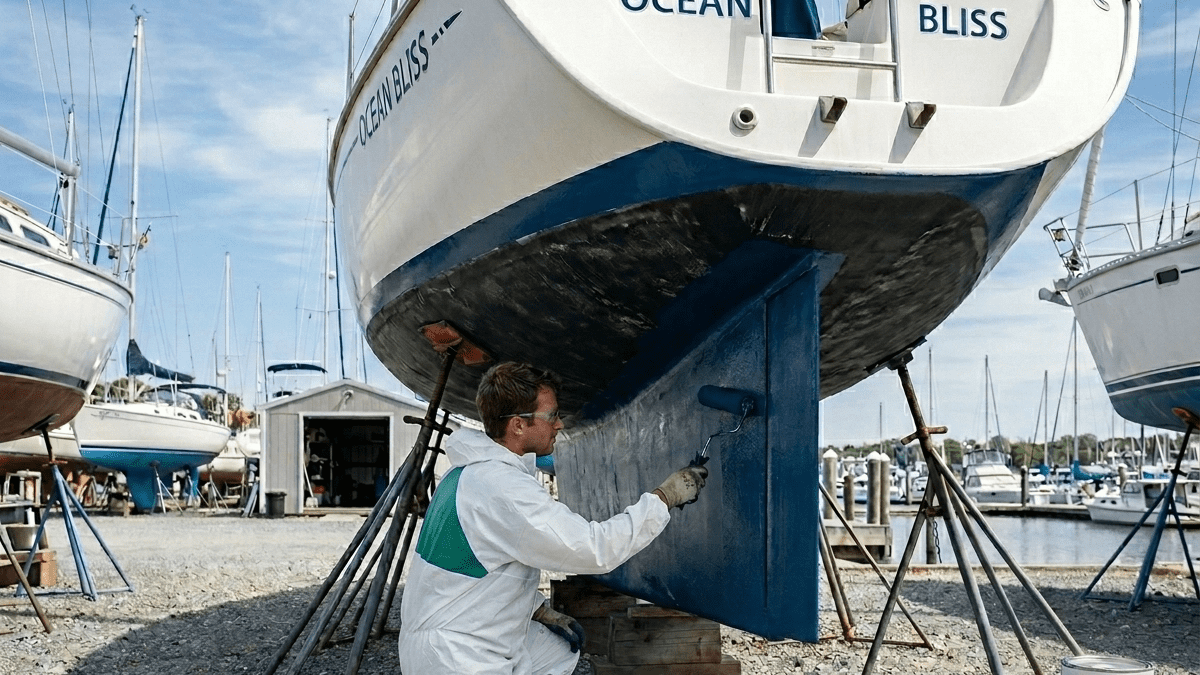
Pro Tips for DIY Boat Bottom Painting
- Verify Yard Policies: Always confirm your boatyard allows owner-performed maintenance and strictly adhere to local environmental regulations to avoid fines.
- Prioritize Prep: Thoroughly pressure wash the hull immediately after haul-out to remove growth while it is still fresh and easy to clean.
- Sand Safely: Use a vacuum-fitted random-orbit sander with 80-grit disks to create surface "tooth," and always wear appropriate protective gear (mask, goggles, gloves, and skin coverage) to avoid inhaling toxic dust.
- Taping Matters: Use high-quality, UV-stable masking tape designed for multi-day use to protect the waterline and hardware like transducers and anodes.
- Mix Thoroughly: Use an industrial or drill-powered mixer for at least 5 minutes to ensure biocides (like cuprous oxide) are evenly distributed; manual stirring is insufficient.
- Use Proper Tools: Avoid household painting tools; use professional-grade paint trays, solvent-resistant liners, and 3/8” nap rollers to prevent equipment failure from harsh solvents.
- Optimize Application: Paint in ideal conditions (50°– 85°F and below 65% humidity) and apply two full coats, with a third coat on high-wear/turbulent areas like the leading edges and bow.
- Choose the Right Paint: Understand your hull type — ablative paint wears away over time, while hard paint is better for high-speed boats but may require future stripping.
- Check Compatibility: Consult manufacturer charts before switching paint types; you can often apply ablative over hard paint, but you generally cannot apply hard paint over ablative.
- Maintain the Barrier: Ensure your fiberglass hull has an intact two-part epoxy barrier coat to prevent water absorption and osmosis; be careful not to sand through this layer during prep.
If you are a boat owner, you are well aware that regular maintenance is crucial for keeping your boat in top condition. One important aspect of this maintenance is applying antifouling paint to the bottom of your boat. This chore prevents marine growth and enhances the speed and ease of your boat's movement through water. While many boaters prefer to have professionals handle this task at a local boatyard, if you have the time and interest, you can try it by following this 10-step guide — including detailed information for each step to assist you in successfully completing the job on your own. By doing so, you can achieve both personal satisfaction and cost savings. As a general estimate, for a 26-foot boat, between antifoulant, sandpaper, tape, painting and cleaning supplies, the cost can range from $500 to $1000 for a high-quality finish. Additionally, keep in mind that you will need to repaint the bottom of your boat every few years - so doing it yourself will save you some money in the long run.
The Detailed 10-Step Guide for Applying Hard or Ablative Paint to the Hull Below the Waterline
Know the Rules – ensure the work area is properly prepared according to boatyard regulations. Once your boat has been pressure washed, the yard will block (support) the boat as appropriate. Before this happens, make sure you have communicated your plans to the boatyard manager and that you fully understand the yard's rules and regulations on doing this work on their property. You might be surprised to find that some yards do not allow owners to do their own work, so make sure the yard you select does. In addition, most states now have strict laws governing boatyard work, and if you don't follow the regulations, you may be liable for some hefty fines and may also get the boatyard into trouble, so it's imperative you understand and comply with the yard's rules.
-
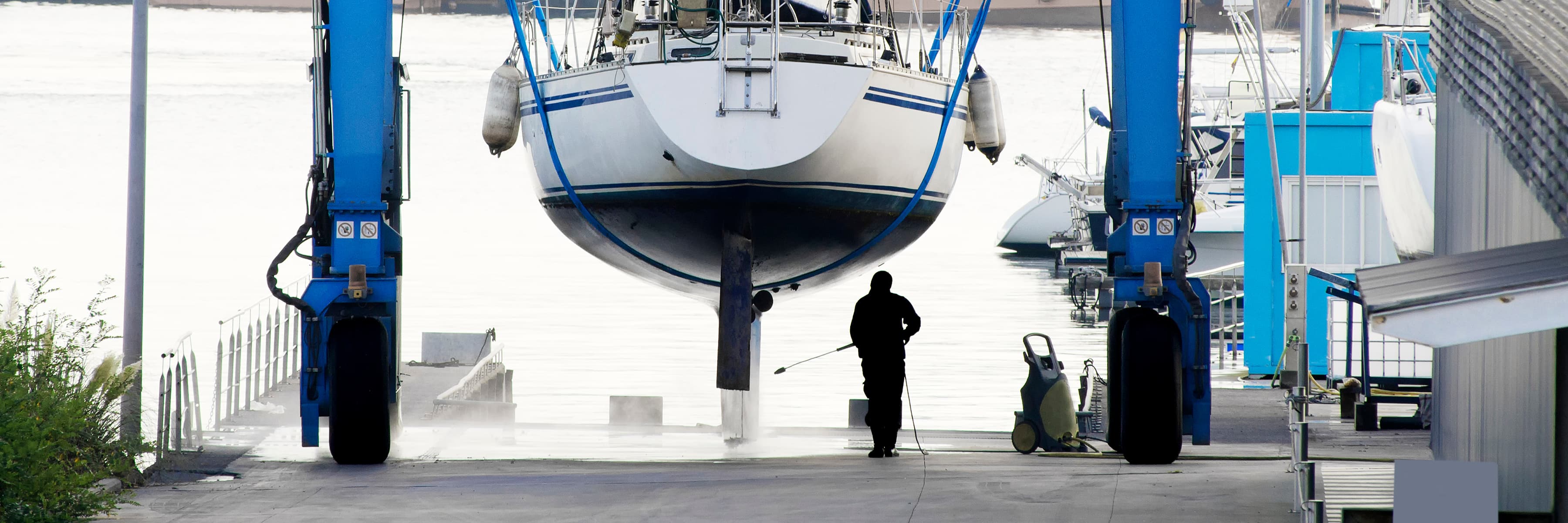
Pressure Washing – Immediately after hauling out, pressure wash the bottom of the boat. It's extremely important that you prep your boat properly BEFORE applying any product. The first step is to pressure wash the bottom as soon as you come out of the water (this is normally done by the yard when hauling out, but ask to be sure). The yard should knock off any hard growth with a scraper and use the pressure washer to remove any soft growth and/or loose paint. Trust us that it is significantly easier to remove this growth when the hull is fresh out of the water before it all turns to concrete.
-
Remove Loose Paint – Remove any loose or flaking paint with a scraper and/or 80-grit sandpaper. After the hull has been pressure washed and has thoroughly dried, check it for loose paint and carefully chip any off with a scraper. Make sure to follow the slope of the hull and don't gouge too deeply into the surface – just chip off anything that is flaking off easily.
-
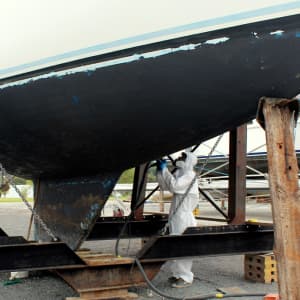
Sanding – Sand the entire bottom paint area using a vacuum sander fitted with 80-grit disc. The next step is to sand the entire bottom, which gives the surface the “tooth” that helps the new antifoulant adhere properly. Most yards require you to use some form of dust-free sanding and may even be able to rent you the proper equipment if you inquire. Since most bottom paint is toxic, it's also important to take proper measures to protect yourself, including covering your skin, shielding your eyes, wearing gloves and a mask. All the main sanding should be done using 80-grit sanding disks on a random-orbit sander with a vacuum hose connection to collect the dust. When sanding, be careful not to apply too much pressure in one place for too long as you may remove more paint than necessary and also risk damaging your barrier coat. Move slowly and remove just enough of the old surface to produce a slight texture. If your boat has multiple old layers and you want to remove everything - it is best to leave the sanding to professionals who understand this process and will protect your barrier coat as sanding through it can be a very expensive mistake.
-
Wash the Hull – Wash away all sanding dust and wipe with cotton rags and solvent wash. When done sanding, rinse off the hull, let it dry, and then wipe down the entire hull with a solvent wash and rags to make sure you've removed any loose residue and have a clean surface on which to apply the new product. We also recommend you check the label on the paint you will be applying to ensure you've complied with any special instructions the manufacturer may recommend.
-
Taping – Tape off the waterline, prop shaft, anodes, knot meter, and depth transducers. Mask off the waterline and any items you should not coat, including transducers, prop shaft, anodes, knot meter, etc. – anything you don't want to get antifoulant on. If you don't cover it now, it's highly likely to end up with some splatter on it – even if you're being careful. Rollers can spray a surprising amount of paint if you're not paying attention. Please note - if you've removed your anodes, don't paint over their location; they need to have direct contact with the metal they are protecting to be effective, so tape over their location too. When choosing your tape, keep in mind that this can be a multi-day process (weather-dependent) – so choose a tape that is designed to be left on for more than 24 hours and has some sort of UV stabilization. Use a fresh roll, carefully following the water line a foot or two at a time, making sure the bottom edge adheres fully to the boat so no paint will seep underneath. Using one long piece makes it much easier to remove at the end of the process.
-
Mix the Paint – Use an industrial shaker or a drill-powered mixer to mix the antifoulant for at least 5 minutes. Since antifouling paints often contain cuprous oxide (which is heavy and sinks to the bottom of the can), or some sort of non-toxic biocide, it's extremely important to ensure the product is well-mixed. Stirring it with a wooden paint stick is NOT sufficient to evenly disperse the biocides – so, put it on an industrial shaker or use a drill-powered mixer. You should mix the product for at least 5 minutes to make sure the biocides are properly disbursed, and nothing is stuck at the bottom of the can.
-
Painting – Paint detail work with a chip brush, then use a roller (3/8” nap is typically recommended) for the hull. Most manufacturers recommend painting when the outside temperature is 50°– 85°F and humidity is below 65%. Having the right conditions is a big part of proper application, so if the weather isn't cooperating – you should put the project on hold. It's important to have the proper tools for bottom paint application – do NOT use household painting tools as they are not usually meant to be used with the solvents used in bottom paints and could quickly burn through the containers. Purchase a proper paint tray, a solvent-resistant liner, a good metal roller with 3/8” nap solvent-resistant roller-covers, and a couple of different sizes of chip brushes for those hard-to-reach areas. Once again – make sure your skin, clothing, and shoes are covered, that you're protecting your eyes, and that you wear a respirator to avoid breathing in the hazardous fumes. Start by painting any difficult areas with your chip brush, working from the bottom up so you don't brush against the paint. Once you have a coat on all the harder spots, wet your roller with the paint and then roll it over the tray ramp to remove the excess – otherwise, the product will splatter everywhere the minute you start rolling. Roll the antifoulant on a little thick (especially for ablative paint) – working from the bottom up. As the roller starts to dry, roll over the area again to smooth out any bubbles that may have formed. Do not try to stretch the paint by painting a thin coat, as this will not provide proper protection in the long run.
-
Coverage – Apply 2 complete coats of bottom paint with an additional coat on all leading edges/high-wear areas. Apply 2 full coats to all surfaces and then apply a third coat to any “high turbulence” areas, such as the leading edges on the bow and keel along with the first foot or two of the waterline. By the time you finish the first coat, the product will likely be dry enough to start the second coat – but check the manufacturer's label to be sure. Remember, times will vary with the temperature, so you can't always go by past experience. Each time you add more paint to your tray, make sure the paint is still properly mixed. Using an extension handle on your roller is also a good idea, as it can make the job much easier and helps keep you farther away from any splattering paint. If your boat is on stands, ask the yard manager if they can adjust the stands after the antifoulant has dried so that you can prep and paint those areas too. If they are unwilling to do so, paint those areas while the boat is in the travel lift.
-
Launch – Allow appropriate dry time before re-splashing per the manufacturer's specifications. Once finished with all coats, remove the tape and check the manufacturer's specifications to ensure you can organize your launch while allowing the recommended dry time.
What is bottom paint anyway?
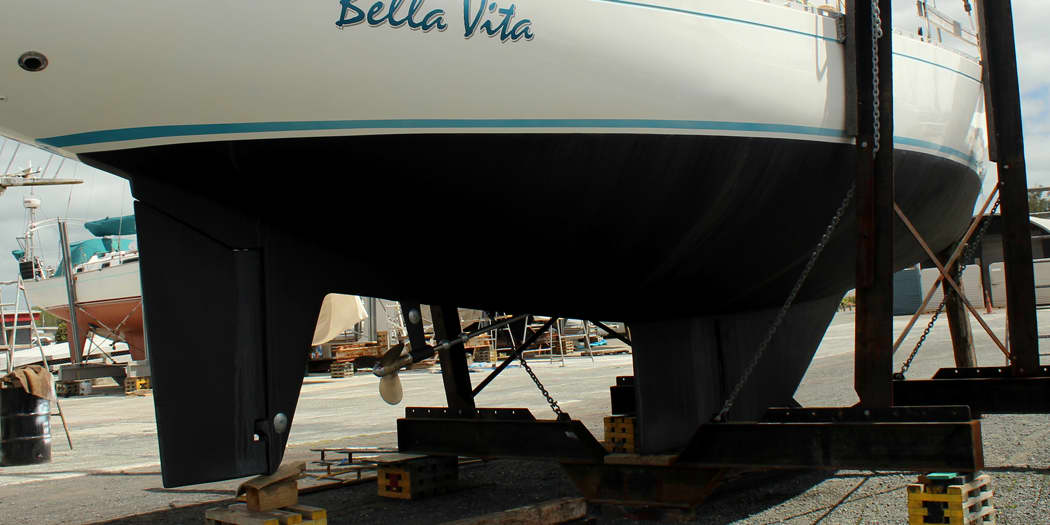
Also known as antifouling bottom paint, boat bottom paint is specially formulated to keep marine organisms such as barnacles, plant growth, zebra mussels, and algae from growing on the bottom of your fiberglass, wood, or aluminum boat. This is done through the controlled release of biocides – most commonly cuprous oxide (copper) or the more environmentally friendly Zinc Omadine™ slime fighter, Biolux® zinc pyrithione and/or the hard shell deterrent Econea™. Antifouling bottom paint helps prevent hard and soft marine growth from attaching to the bottom of your hull, slowing you down, affecting your ability to maneuver safely, and costing you more in bottom cleaning, blister repair, and fuel bills. There are several categories of bottom paint:
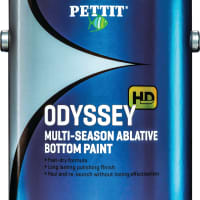
Ablative (also referred to as self-polishing) gradually wears away, exposing fresh biocide every time you move your boat and eliminating heavy build-up over time. It's not recommended for fast boats (moving at over 15 knots in most cases) as the coating can wear away too quickly, for boats that sit at the dock for extended periods of time (the paint won't wear away, exposing new biocide) or boats that spend a lot of time out of the water. When applying new copolymer ablative paints, it's helpful to change the color, allowing you to easily see when it's time to repaint as the original color begins showing through. This can also help you identify high-wear areas that may need an extra coat. Sanding bottom paint also creates toxic dust, so use a dustless sander. And protect your exposed eyes, skin, and lungs with high-quality protective equipment before you begin sanding.
Hard bottom paint (also referred to as a modified epoxy coating) slowly leaches biocides over the life of the product. When the antifouling agents are gone, the paint is still present on your boat – it does not slough off like ablative products. This hard coating is a better choice for fast-moving boats or for racers who desire a super smooth surface. It is also good for boats that sit at the dock for extended time periods. The downside is that since it doesn't wear away, each new coat means added weight, and eventually, there will be enough build-up that the entire bottom will need to be stripped down to the epoxy barrier coat. Hard bottom paint is recommended for any type of boat, including pontoon boats and fiberglass boats, as it helps prevent oxidation and discoloration of the hull. Regularly applying bottom paint is crucial to protect your boat from the corrosive effects of salt water.
Hybrid bottom paints usually incorporate the best of both styles into one product by being lightly ablative and resistant to buildup but still providing a smooth, hard surface – a great option for high-speed boats.
Do I need a primer or epoxy barrier coat before painting a boat bottom?
It is very important to have a proper barrier coat applied over a fiberglass hull before applying antifouling paint - but unless your boat just came out of the mold, this step has likely already been accomplished. Fiberglass boats must have some sort of two-part epoxy barrier coating to protect their hulls from water absorption, to prevent osmosis, and to reduce the potential for damage caused by prolonged exposure to moisture. Without this coating, water can seep into the laminate of the hull, causing the resin to break down over time. This osmosis can lead to blisters, which can eventually weaken the structure of the hull. Please note - during the sanding step of preparing your boat for bottom paint application, it's very important to only remove the bottom paint and to not sand down so far that you accidentally remove part of the barrier coating. If this happens, you will need to re-apply barrier coat to any of the affected areas as they will no longer be fully protected from water ingress.
Selecting Your Bottom Paint
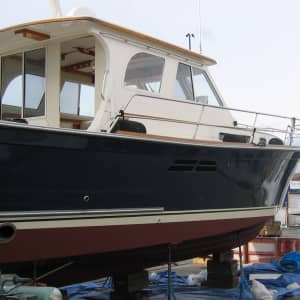 Now that you know the different categories, which one is right for your boat? Your decision will be greatly affected by what product you currently have on the boat. Since not all products are compatible – it's important to study
the manufacturers' compatibility charts before youbuy. In general, you can apply ablative paint over a properly prepared hard paint, but you can NOT apply a hard paintover an ablative paint since the hard paint will not adhere
properly. If you want to switch from ablative to hard,you will need to remove all of the previously applied ablative product before proceeding.
Now that you know the different categories, which one is right for your boat? Your decision will be greatly affected by what product you currently have on the boat. Since not all products are compatible – it's important to study
the manufacturers' compatibility charts before youbuy. In general, you can apply ablative paint over a properly prepared hard paint, but you can NOT apply a hard paintover an ablative paint since the hard paint will not adhere
properly. If you want to switch from ablative to hard,you will need to remove all of the previously applied ablative product before proceeding.
If you're unsure of the manufacturer or what type of paint you currently have, you can at least identify whether it's ablative or hard by checking to see if it rubs off easily. If it does, it's likely ablative – if it doesn't, it's probably a hard or semi-hard hybrid paint. We highly recommend consulting with the boatyard manager if you have any doubts about your options. They know and understand the unique challenges of the area you operate your boat in and can likely provide excellent guidance on your best options, including how much and what type of product you'll need to do the job.
We should also note that in some areas, copper-based paints are in the process of being phased out – so make sure to check your local regulations before choosing your paint. Fisheries Supply is proud to offer a variety of copper-free alternatives from several of our ablative manufacturers.
A successful job is only as good as the prep you put into it – so make sure to do the work upfront, and you should get up to two seasons of protection (depending on the paint) for your hard work, along with the satisfaction of doing it yourself. Following the recommended number of coats is important. If the existing bottom paint is in good condition, you may want to just re-coat the bottom with a maintenance coat. If the existing barrier coat has noticeable cracks or blisters, you may want to apply a new barrier coat before applying the bottom paint.
Follow all label directions carefully. When painting the bottom of your boat, it's important to pay attention to details such as masking around underwater metals to protect them from contact with any copper-based antifouling paint. Choosing the right type of masking tape may not seem too important in the grand scheme of things, but if you select the wrong one, you’ll spend a lot of time trying to get it off your boat. We recommend using a “long-mask” tape, such as 3M’s 2090 Scotch Blue Painter’s Tape, which is not only UV-stable but can also be left on for up to 14 days.
Frequently Asked Questions
What precautions should I take when I bottom paint a boat to avoid environmental damage?
When painting a boat bottom, it's highly important to take precautions to avoid environmental damage - both for the good of the environment and to avoid getting fined by the yard. Make sure you get instructions from your chosen yard on their local regulations and follow them religiously, as each location may have different rules and not following them can be a very expensive mistake if you get fined.
Is it okay to use antifouling paint containing metals like copper?
We often recommend using a antifoulant that is specifically designed for marine use and is eco-friendly, such as some of our copper-free options. Make sure to follow proper disposal guidelines for waste, and clean up any spills or drips immediately to prevent contamination of local water sources.
What materials do I need for applying antifoulant?
To do this job you will need the following materials:
- Antifoulant of your choice
- Paint thinner or solvent
- A roller and brush
- A tray
- A scraper or sandpaper to remove old paint
- Masking tape to protect surrounding areas
- A primer if necessary
We hope you've enjoyed this guide. Fisheries Supply sells a wide variety of antifouling paints from brands like SeaHawk, Pettit and Interlux. We also offer accessories, like drop cloths, rollers, and trays. If you have any further questions about selecting the right product for your boat or how to properly apply a fresh coat, please don't hesitate to contact our experts at (800) 426-6930.