Creating a Rope to Chain Splice: A Step-by-Step Guide
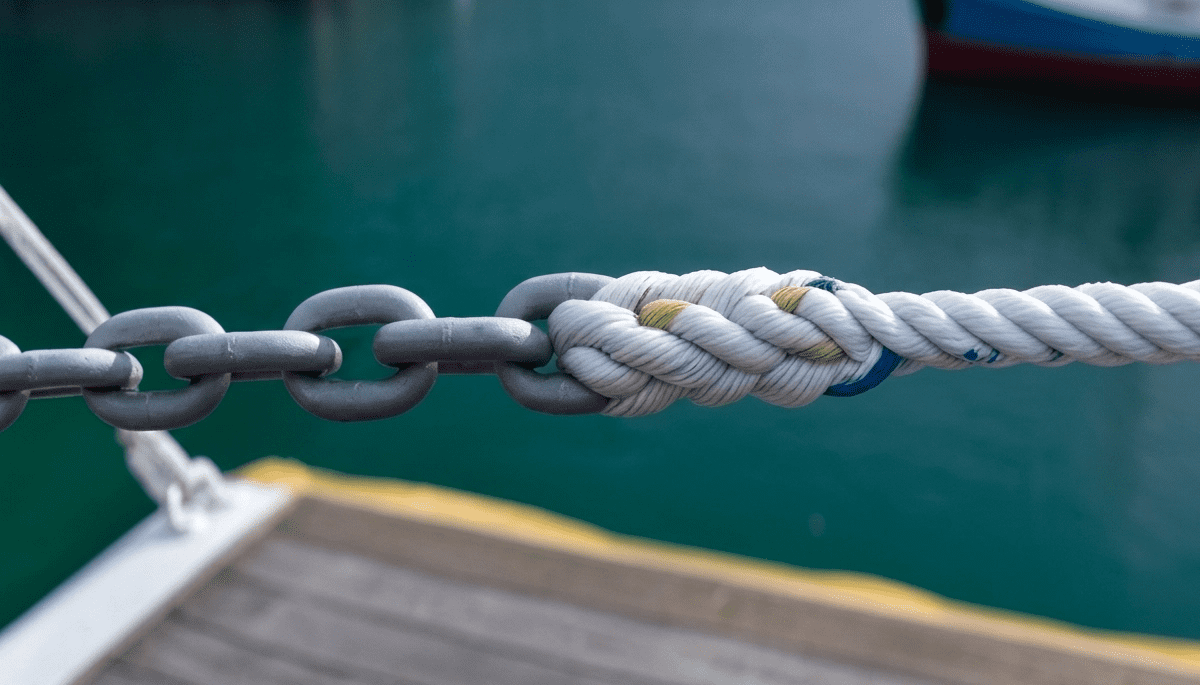
Mastering the Rope-to-Chain Splice: Key Tips for a Secure Anchor Rode
- Maintains Windlass Functionality: A rope-to-chain splice connects a 3-strand nylon or polyester anchor rope to a marine chain link seamlessly, allowing the anchor rode to run smoothly through a boat's windlass or chain gypsy.
- Essential Tools Required: Completing the splice requires whipping twine, a hot knife or butane torch, a splicing fid or marlinspike, sharp scissors/rigging knife, and painter's tape.
- Alternative Rope Options: An 8-plait line can be used instead of 3-strand rope because it offers equivalent tensile strength and coils better in compact anchor lockers, though it is more difficult to splice.
- Narrow Chain Solution: For ISO or metric chains with smaller links where a 3-strand splice won't fit, a specialized two-strand variation can be used. However, this method retains only about 2/3 of the rope's original strength.
- Regular Maintenance is Critical: Because the splice bears substantial heavy loads at anchor, it should be inspected regularly for wear, chafe, or unraveling, and completely remade if any signs of damage appear.
Whether you're out fishing or spending the night in a great little cove you discovered, chances are you will want to anchor your boat. To keep overall weight down, most boats choose to anchor using a shorter piece of chain with a longer piece of rope (often referred to as “anchor rode” or “anchor warp”). But how do we attach that rope to the chain in a way that is safe, strong and can still easily run through our windlass? Thankfully, the answer is pretty simple – a Rope to Chain Splice – which is what we will cover in this article.
Preparation
Splicing with 3-strand rope is one of the easiest splices there is to do – so this is a great place to start if you're a beginner. That said – it's important to make sure that your technique is good to preserve the rope strength of the splice. Make sure you keep all your strands nice and tight as you go and that the tucks lie neatly since the rope can lose strength if the strands are twisted or laid incorrectly.
Splicing Tools and Accessories
Before you start, it's a good idea to gather everything you will need. Along with the anchor rope and chain you intend to join, you will need some splicing tools.
Here's a list of essential items to help
you with your splicing project:
| Tools | Description |
|---|---|
| Whipping Twine | This is perfect for securing the ends of your splice and preventing unraveling over time. |
| Hot Knife or a butane torch | A hot knife is invaluable for sealing the ends of your rope and the strands for your splice, ensuring they do not fray. |
| Fid or marlinspike | A fid helps in tucking the strands of the rope through the splicing work, making the process smoother and more efficient. |
| Scissors or a sharp knife | Sharp scissors are necessary for trimming the rope to the desired length and for cutting the whipping twine as needed. |
| Tape | Use tape to mark the beginning of the splice on the rope and keep it from unravelling past that point. |
Having these tools at hand will make the splicing process easier and more effective, ensuring your splice is both strong and reliable.
Ready….Set….Splice!
-
Prepare the Rope: From the end of your rope, count back approximately 16-20 “twists” or strands from the end of the rope – it's always better to have a little extra than to run out of line – so don't skimp here (figure 1 below). Apply tape at that point and then un-lay the strands from the bitter end back to this point. You should have 3 strands – tape the bitter end of each strand (to prevent it from unraveling) and label each one with the sharpie marker as 1, 2 and 3 (figure 2 below).
-
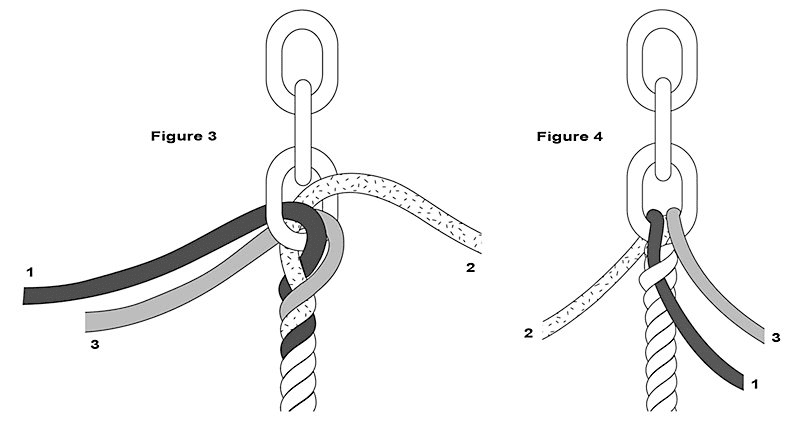
Threading the Chain: Line up the rope to the last link of the chain link, as shown in the illustration. Take strand #2 and pass it through one side of the chain link, while passing strands #1 and #3 through the link from the opposite side, staying on the outside of strand #2 (figure 3 below).
-
Begin the Splice: Begin tucking the strands in an “over 1, under 1” pattern (figure 4 above). The first tuck involves tucking strands #1 and #3 (figure 5 below), then turn everything over and tuck strand #2 (figure 6 below) – remembering to count over 1 and then slide the strand under one.
-
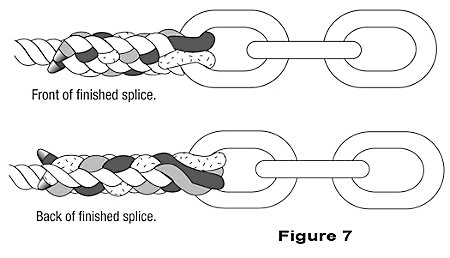
Continue Tucking: Once you've done the first 2 full tucks, go back and make sure your line is nice and tight against the chain link and that each strand flows smoothly through each tuck. All tucks should taper from right to left, so it may help to keep flipping everything over to avoid confusion. Repeat the sequence with the first strand, second strand, and third strand. Complete a minimum of 5 full tucks – keeping each one nice and tight, but not so tight that you distort the lay of the line (figure 7). It's also important to keep the natural twist in each strand as you are tucking – so don't let them untwist or unravel!
-
Finish the splice: Sometimes it can help to lightly roll the splice back and forth while pressing down with your hand to smooth it out a bit. Once you've completed all your tucks, trim off the excess strand that's left, and you're officially done! Some folks also like to use a hot knife tool or a butane torch to lightly melt the end of each strand to help keep the strand in place. It's also a good idea to taper the end of the splice by adding an extra tuck with the second and third strand, and a final tuck with the third strand. This taper will help the splice through a windlass chainwheel.


Splice Maintenance
While this splice is designed to minimize chafe between the rope and the chain, it's taking a fair amount of load while you are at anchor – especially in rough conditions. Since the safety of your boat at anchor is dependent on the condition of this splice, we highly recommend you check the splice regularly to make sure it's in good condition, and remake the splice if there is ANY evidence of chafe, wear or unraveling. As you've just learned, it's pretty easy to complete – so check and remake as often as needed!
Frequently Asked Questions
What tools do I need to complete a rope-to-chain splice?
Completing a rope-to-chain splice requires a splicing fid or marlinspike, whipping twine, a hot knife or butane torch, sharp scissors or a rigging knife, and painter's tape. Gathering all tools before starting helps maintain consistent strand tension throughout the splice.
What type of rope is best for splicing to an anchor chain?
3-strand nylon or 3-strand polyester anchor rope is best for splicing to marine anchor chain. Both materials offer high tensile strength and are soft enough to tuck cleanly. Nylon adds shock-absorption at anchor; polyester stretches less and resists UV degradation better.
Can I use 8-plait anchor line instead of 3-strand rope for a chain splice?
Yes, 8-plait anchor line works as a rope-to-chain splice alternative and delivers equivalent tensile strength at the same diameter. While its square-braided construction coils more compactly in a tight anchor locker than 3-strand rope, the splice itself is more technically demanding to complete.
How do I make a rope-to-chain splice feed smoothly through a windlass chain gypsy?
Taper the finished splice by completing one extra tuck with the second and third strands, then a final tuck with only the third strand. This graduated taper reduces the splice's diameter progressively, allowing the anchor rode to pass cleanly through a windlass chain gypsy without jamming.
Does a rope-to-chain splice weaken the anchor line?
A correctly executed 3-strand rope-to-chain splice retains close to the full rated breaking strength of the anchor line. Strength loss occurs when strands are over-tightened, twisted incorrectly, or given fewer than five full tucks.
How often should I inspect and replace an anchor rode rope-to-chain splice?
Inspect the rope-to-chain splice before every anchoring season and after any storm event or heavy-load situation. Replace the splice immediately if any strand shows chafe, fraying, or unraveling. Because the splice bears the full anchor load, deterioration at this junction directly compromises the safety of the vessel at anchor.
Can a beginner learn to complete a 3-strand rope-to-chain splice?
Yes, a 3-strand rope-to-chain splice is considered one of the most beginner-friendly marine splices. The technique requires no specialized machinery and uses only basic splicing tools. Consistent strand tension and at least five clean tucks are the two most important factors for a strong, durable result.
What is the difference between anchor rode and anchor warp?
Anchor rode and anchor warp are interchangeable terms for the complete line system connecting a vessel to its anchor. A typical anchor rode consists of a length of galvanized or stainless steel anchor chain at the anchor end joined via a rope-to-chain splice to a longer section of nylon or polyester anchor rope.
Should I heat-seal the strand ends after finishing a rope-to-chain splice?
Lightly melting the trimmed strand ends with a hot knife or butane torch after completing a rope-to-chain splice is recommended but not mandatory for 3-strand nylon or polyester rope. Heat-sealing fuses the cut fibers, preventing individual strands from unraveling under load or through repeated passage over a windlass.

If interested, please read our articles on how to create a 3-strand eye splice or a double-braid eye splice.
We hope you've enjoyed this guide on Rope-to-Chain Splicing with 3-Strand Line, but if you have any questions – please don't hesitate to contact our splicing experts at (800) 426-6930.