Understanding Bow Thrusters and Their Use
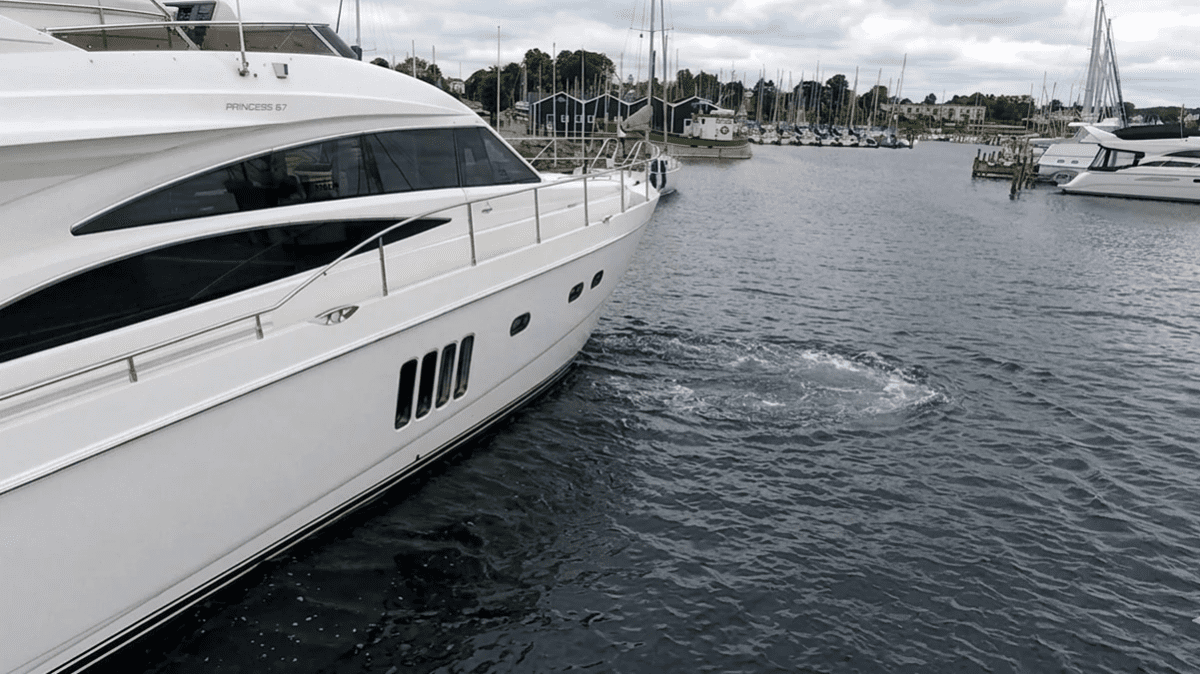
While some old salts might feel that bow thrusters are only for inexperienced boaters, you'd be hard pressed to find a boater who hasn't wished they had one at some point while they were trying to dock their boat.
What Is a Bow Thruster?
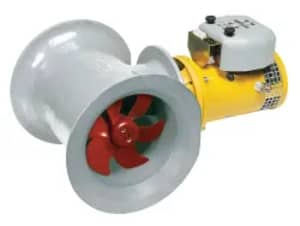
As boats get bigger and docks stay the same, the space left to land our boat seems to get smaller all the time, making that cross-wind and tidal ebb ever so challenging! Sometimes you just need a little peace of mind, and a new bow thruster could be just the thing to provide it. A thruster gives you positive control of your vessel when docking in high wind or strong current, during tight maneuvering, or in slow-speed/poor-steerage situations. Thrusters are laterally operating propellers that move a boat sideways, enhancing overall maneuverability. As the name implies, they are installed at the bow, since this is inevitably the most difficult part of the boat to control without forward motion. In some cases, maneuvering capabilities are enhanced when an additional thruster is mounted at the stern, giving larger vessels the potential to practically pivot in place.
How do Bow Thrusters Affect Boat Maneuverability?
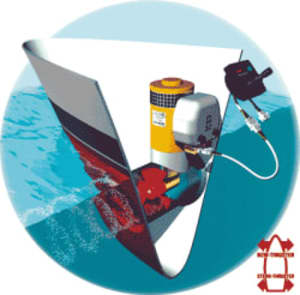
Bow thrusters operate by using lateral propellers that provide sideways thrust. This allows for easier boat maneuvering, especially in tight docking scenarios. When activated, the thruster pushes water sideways, effectively moving the vessel in the desired direction with the convenience of a joystick.
The thruster's propulsion system is designed to work in conjunction with the boat's rudder, enhancing overall steering and control. This collaborative action allows for precise movements, making it easier to navigate through challenging conditions, such as strong currents or high winds, where adjusting the rudder is essential for maintaining the vessel's course. Additionally, the effective use of the rudder ensures that the boat can turn accurately and safely during maneuvers.
In essence, thrusters are a valuable addition to any vessel, providing enhanced control and maneuverability in various conditions.
Types Of Bow Thrusters
Bow thrusters may be electrically or hydraulically driven. Hydraulic thrusters offer significant weight savings, extended motor running times and increased thrust over comparable electric units, making them suitable for larger boats. However, they need to be run from an external hydraulic power source, usually a pump coupled to the boat's main engine, potentially making installation more complex. A complete thruster system includes the thruster, a tubular “tunnel” which penetrates the hull and contains the propeller, a control panel, over-current protection, and a power source with connecting cables. These items, plus a number of accessories including footswitches, remote panels, retraction devices, and noise reduction kits are all available through Fisheries Supply from popular manufacturers like Lewmar, Vetus and Side-Power.
What Size Bow Thruster Do I Need?
With so many variables involved in thruster selection for different types of boats, including the hull shape and other specifications, it may be best to rely on the "typical" installation recommendations supplied by manufacturers. These are generally based on the capacity (horsepower or Watts) of the unit's motor, which impacts thruster performance. The prudent purchaser, however, will make allowances for any exceptional characteristics of the yacht or moorage situation, particularly those relating to windage.
Some important installation considerations in thruster system performance, including thruster performance, are adequate voltage at the motor (correctly sized wires) and skilled tunnel installation – this is one thing worth having done by an expert. When applicable, install the tunnel so it is above the waterline when the vessel is on a plane, but at rest, the top of the tunnel should be at least half a diameter below the waterline (preferably 1½ times the diameter below); optimum tunnel length is approximately 2 to 4 times its diameter. When sizing for a stern thruster, the general rule is to go one size smaller than your bow thruster. Make sure that the drive unit is within arm's reach for maintenance purposes.
Water Jet Thrusters
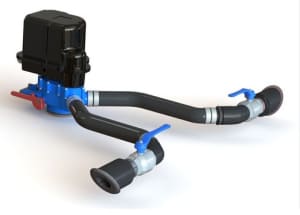
Water jet thrusters provide an innovative approach to maneuverability,
utilizing high-pressure water jets for thrust. This system enhances the responsiveness of larger boats and yachts, ensuring exceptional control even in tight spaces. With their efficient design, jet thrusters minimize drag and
offer significant advantages in terms of maneuverability, especially during docking. They are a good solution for shallow draft boats that may not have enough space for a tunnel below the waterline and do not want the extra cost
of a retractable bow thruster. Waterjet thrusters have no risk of damage from debris and they make less noise compared to traditional propeller-based thrusters.
On the downside, maintenance may necessitate access to hard to
find parts, which could affect operational efficiency if not readily available. They also have a higher power consumption due to the need for strong pumps.
Retractable Thrusters
Retractable thrusters offer significant advantages by allowing for streamlined hull designs without protrusions. However, the complexity of installation and maintenance can be a downside, as the hydraulic components require regular checks to ensure optimal performance. While they provide excellent thrust control, the overall cost of these thrusters can be higher due to specialized parts. Weighing these pros and cons helps owners decide if a retractable solution fits the unique needs of their boats.PROS of Retractable Thrusters
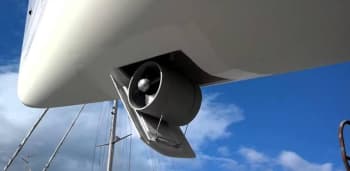
When retracted, the thruster is completely enclosed within the hull. This maintains a smooth hull profile, minimizes drag, and preserves sailing performance, which is important for racers and performance cruisers.
Because the unit is tucked away when not in use, it’s less exposed to marine growth, debris, or accidental grounding. Retractable thrusters keep the hull looking clean and streamlined, with no visible tunnels or protrusions below the waterline. They can be mounted further forward in the bow than tunnel thrusters, providing better leverage and more effective thrust in many cases. This allows installation on narrower bows where tunnel thrusters won’t fit.
CONS of Retractable Thrusters
Retractable systems are significantly more expensive than tunnel models, both for hardware and installation. Due to their complexity, spare parts and repairs can also be more costly.
More parts (motors, actuators, seals) mean more things can go wrong. Required routine maintenance of the retraction mechanism in addition to the thruster itself.
The unit needs interior hull space for the entire housing and deployment mechanism, and may compete with other systems or storage areas inside the bow.
Unlike fixed tunnel thrusters, which are always ready, retractable units need to extend before activation, which adds a few seconds of delay. Unless pre-deployed, they are not ideal for emergency maneuvers.
Stern Thruster vs. Bow Thruster
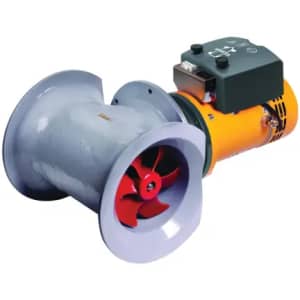
As we mentioned earlier, a bow thruster moves the boat sideways through the bow of the boat, below the waterline. When activated, it provides sideways thrust, allowing for easier maneuvering at low speeds, especially during docking or navigating tight spaces.
A stern thruster is a similar unit located at the back of the boat. It provides sideways thrust at the back of the vessel, aiding in backing into slips, controlling the stern's movement in wind or current, and assisting in quicker, more precise turns when used in conjunction with a bow thruster.
In essence, bow thrusters primarily control the front of the boat, making docking and tight turns easier, while stern thrusters offer better control over the rear, particularly when reversing or fine-tuning maneuvers. Many larger recreational boats opt for both to achieve maximum maneuverability and control in various situations.
At a glance:
| Feature | Electric | Hydraulic | Retractable |
|---|---|---|---|
| Best For | Boats under 45' | Boats over 45' | High-Performance Sailboats |
| Main Benefit | Cost-effective | More Powerful | Zero Drag when Sailing |
We hope you've enjoyed this Navigator, but if you still have questions, please don't hesitate to contact our product experts at (800) 426-6930.