Your Guide to Boat Navigation Lights Rules and Safety
Which Navigation Lights are Required on My Boat?
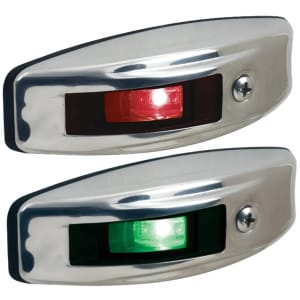
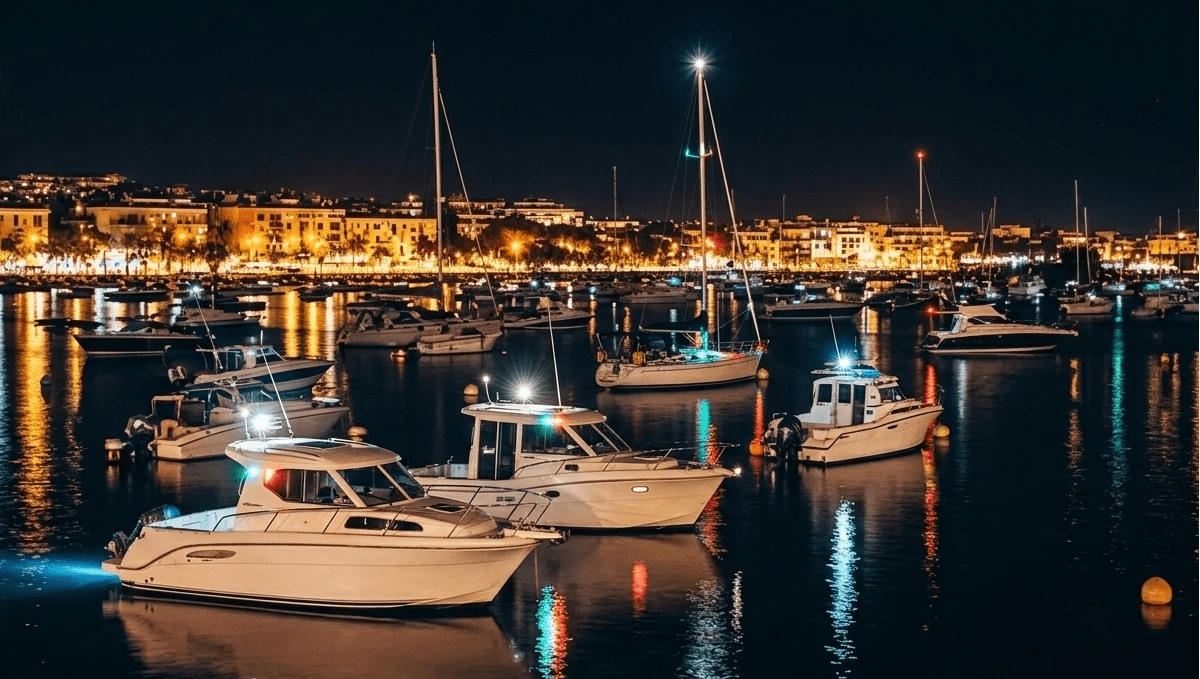
Established as a mechanism to avoid collisions at night, navigation lights not only make your boat visible to others at a distance, they also allow an observer to determine your arc of illumination and direction of travel relative to themselves, as well as whether you are under power or sail.
If you are new to boating, as a boat owner, it's important to know that the USCG has specific requirements that all boats need to meet – often depending on the boat size and the overall size of the vessel. Below is a summary of the requirements for navigation lights and the rules of the road if you are operating your vessel between sunset and sunrise, as well as common compliance issues to keep in mind to avoid a fine.
Please note that each state may have additional laws above and beyond these federal requirements, and we do not go into those here. To ensure compliance with state boating laws, you should contact the appropriate official government organization or boating agency in your state.
Powerboats:
Powerboats less than 164 feet (50 m) but longer than 39.4 feet (12 m)
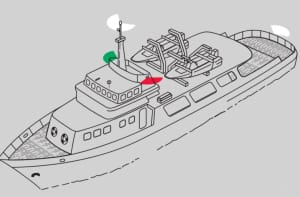
While underway, these vessels must display a green sidelight at the starboard side and a red sidelight at the port side. These sidelights should show an unbroken light from dead ahead to 112.5 degrees on either side and should be visible at a distance of 2 nautical miles (NM). This setup is important because power vessels less than 65.6 ft (20 m) in length may combine the sidelights in a single ("bi-color") fixture carried on the fore-aft centerline of the boat, positioned at least 39 inches above the deck.
You must also carry an aft-facing white stern light, as nearly as practicable at the stern, so its beam is an unbroken arc of 135 degrees showing 67.5 degrees on each side of the vessel (typically mounted on the centerline). This light must also be visible at a distance of 2 NM.
A forward-facing white "masthead" light must be carried on the centerline of the boat. Often mounted on a pole or the front of the bridge, the masthead light must show an unbroken beam of 225 degrees (112.5 degrees on either side of the boat) with a visibility of 3 NM, and should not be obscured by any equipment while underway. Not mounted literally at the top of the mast, the masthead light has specific height requirements which depend on the length and beam of the vessel, and places this light higher than the side lights. Refer to your copy of the USCG Navigation Rules and Regulations Handbook (legally required on all boats of this size, and often referred to simply as the "Rules"), Annex I, Section 84 for specific height requirements for your vessel.
Powerboats less than 39.4 feet (12 meters)
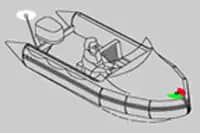
While underway, these vessels must display the same side and stern lights as above, but these lights are only required to have a visibility of 1 NM along with a masthead light with a 2 mile visibility.
On power-driven vessels (only) less than 39.4 feet, the masthead and stern functions may be combined into a single all-round white masthead light (225° plus 135°). If used, make sure the all-round white light is at least 3.3 feet (1 meter) above your sidelights. When not underway, this all-round combination light can also be used as an anchor light, see below.
For power boats less than 23 feet (7 meters) that do not exceed 7 knots boat speed, you may display just one all-round white light. However, sidelights are recommended.
| Visible Range in Nautical Miles (NM) | |||
|---|---|---|---|
| Light | Less than 39.4 feet | 39.4 feet or more | Arc in Degree |
| Masthead Light | 2NM | 3NM | 225° |
| All-Round Light | 2NM | 2NM | 360° |
| Sidelights | 1NM | 2NM | 112.5° |
| Sternlight | 2NM | 2NM | 135° |
Sailboats:
Sailboats less than 65.6 feet (20 meters)
While under sail, you have several options for displaying the right lights for navigation:
-
Display a green light at the starboard side, a red light at the port side (or a bi-color light) that combines both), and a white light off your stern – all with the same beam angle and distance visibility requirements as for powerboats, above; or
-
Display a tri-color light off the top of your mast. This light includes a red light to port, a green light to starboard and a white light aft – all in a single light creating a full circle. This light can only be used when under sail. If under power, or motor-sailing with your sails set, regular navigation lights must be displayed – including a steaming (masthead) light, see below. A tri-color light increases the boat's visibility to others at sea, and can also conserve electrical power when all three lights are illuminated by a single bulb; or
-
Display a green light off your starboard bow, a red light off your port bow, a white light off your stern with the option to display addition red and green all-round lights at the top of your mast, 1 meter above the uppermost sail. The upper light should be red and the lower light should be green. This option is rarely used today, but is still accepted. Again, the red and green all-round lights at the top of the mast can only be used while under sail.
Visibility of navigation lights for sailboats this size should be as follows:
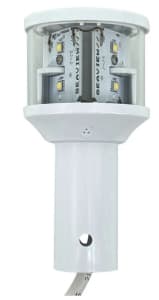
- Masthead light – 3 NM
- Sidelights/Bi-color light – 2 NM
- Stern or all-round light – 2 NM
NOTE: A sailboat operating under power at night - whether the sails are set or not – is required to follow the same rules as a power boat, as outlined above, since they are no longer entitled to the sailboat's usual right-of-way privileges due to restricted maneuverability. For this reason, most sailboats will often comply with option 1 above, and will mount a masthead (or "steaming") light on the front of the mast. Although called a "masthead" light, this light is not literally carried at the top of the sailboat's mast. Instead, there are specific minimum height requirements for various length sailboats, which will be found in Annex I, Section 84 of the Navigation Rules and Regulations Handbook.
It's also important to note that the function of an all-round white light located at the top of a sailboat mast is an anchor light, not a masthead light. A masthead light shines forward (225°), while an all-around white light shines in all directions (360°). The anchor light should not be used when sailing or powering at night – it should only be used at anchor.
Sailboats less than 23 feet (7 meters)
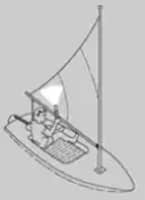
While under sail, if possible, you should display lights as stated in options 1 or 2 above for the greatest visibility and directional awareness to others. If that is not possible, the Rules state, "the vessel, whether under sails, oars, or a small outboard motor, shall exhibit an all-round white light or have ready at hand an electric torch or lighted lantern (flashlight) showing a white light which shall be exhibited in sufficient time to prevent collision." If you are in this situation, it's best to shine the light against your sail to make the biggest impression possible to avoid collision.
Dinghies and Rowboats
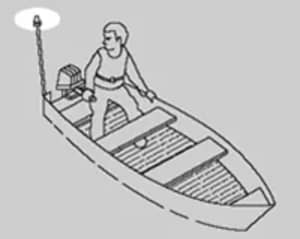
When it comes to small inflatable boats, sailing dinghies, rowboats, canoes, and kayaks, the navigation light requirements are somewhat more relaxed compared to larger vessels. A single white light (such as a lantern, flashlight, or portable all-round light) must be displayed when operating between sunset and sunrise or during periods of restricted visibility. There is no specific legal requirement for the single white light (flashlight or lantern) to be visible from a certain distance for these small vessels. The rule is focused on having a visible white light ready to show as needed, rather than specifying a minimum visibility range.
The emphasis is on safety and visibility. While it's not a strict requirement to have navigation lights, having a white light on hand can significantly enhance your visibility to other boats during low-light conditions. Displaying separate red and green sidelights (112.5° each) and a white stern light (135°) is not required by law, but it is considered a good practice for improved visibility and safety.
Ultimately, the goal is to ensure that, regardless of size, your vessel remains visible and safe during nighttime operations or in scenarios with reduced visibility. Always prioritize safety and ensure that your unpowered boat is equipped with the necessary measures to stay visible and avoid collisions.
Anchored Vessels
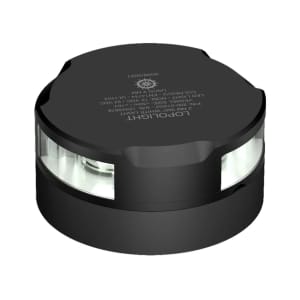
While it is not technically required for recreational vessels to exhibit an anchor light unless they are outside of a designated anchorage, or anchored in a narrow channel or anchorage where other vessels normally navigate, the Rules state that "a vessel of less than 50 meters in length may exhibit an all-round white light where it can best be seen".
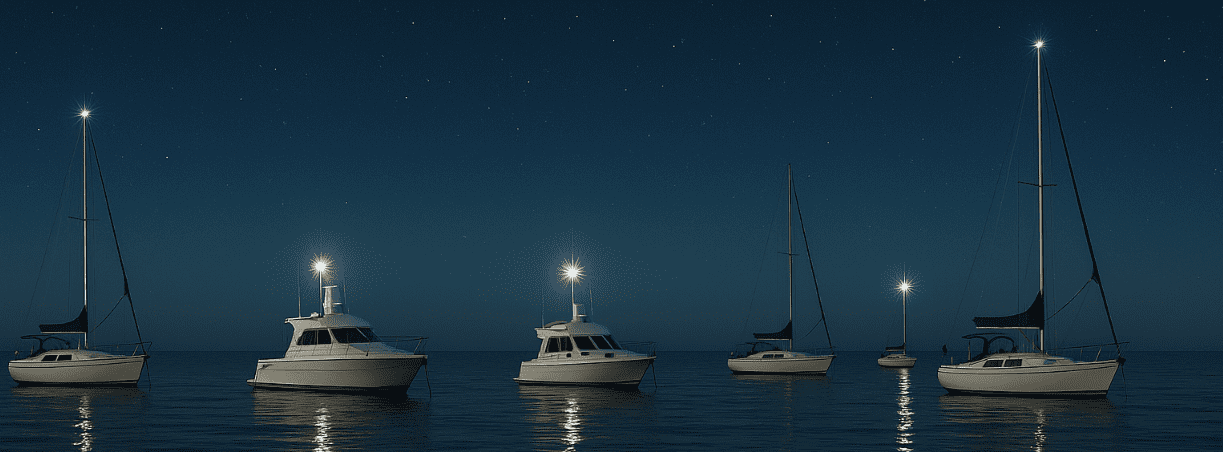
At Fisheries Supply, we are firm believers that showing an all-round white light at the highest possible point on your vessel is an important safety measure. You never know when another boat might be on the move and will need to see you on a dark night, so why not make it easier on everyone and let them know you are there?
When anchored in a crowded anchorage with its attendant high-speed vessel traffic, some skippers opt to show a light at deck level – perhaps a cabin or cockpit light – in addition to their anchor light, to alert speedboat operators who might not notice a light at the top of a tall mast. If you are concerned about the overnight power draw of lights displayed while at anchor, there are now plenty of LED options available – some of which even turn themselves off when the sun comes up.
Potential Compliance Issues for Navigation Lights
The following items are often causes for the issuance of citations by U.S. Coast Guard field inspectors:
-
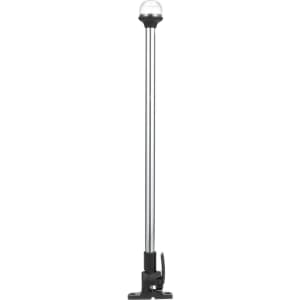
On power-driven vessels less than 12m (39.4 ft) in length, when choosing the option to replace the masthead and stern lights with a single all-round light, the most common problem is that they are mounted on a staff that is too short. Make sure the all-round light is at least 3.3 feet (1 meter) above the sidelights and is high enough to be visible from ahead in spite of the rise of the bow when underway. It should not be obscured by equipment or canvas tops - even if this means having to mount it on something longer than 1 meter.
-
Sidelights that are mounted on the hull below the gunwale do not meet the International Rules requirement, which requires that they be mounted above the "uppermost continuous deck."
-
Inland Rules allow for side lights mounted on the hull below the gunwale, but they must be visible from dead ahead with the beams not crossed (mounted too far forward) or separated (mounted too far aft). These lights must also be mounted so they are "vertical."
You can find all the relevant specifications for the navigation lights we sell on the Fisheries Supply website, as well as in our store. We stock lights from a wide variety of manufacturers, including Aqua Signal, Hella, Lopo Light, NaviSafe, Weems & Plath, Perko and Sea-Dog.
If you are simply replacing or upgrading an existing light fixture, your task is relatively straightforward. If, however, you are designing a new installation, you should be forewarned that the complete set of Rules is complex and somewhat difficult to interpret without experience. We recommend consulting a professional to ensure that your installation is both safe and compliant with relevant laws and regulations.
Diving Lights and Special Use Cases
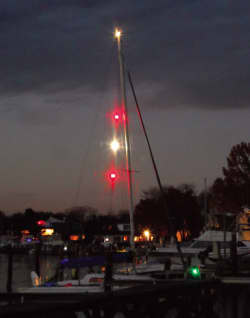
When it comes to navigation lights for specialized activities like diving, understanding the unique requirements is crucial for ensuring safety and compliance. Divers often use specific lighting to enhance visibility both above and below the water's surface. For instance, it is common practice for dive boats to display a blue light on the vessel to signal their activity, indicating that divers are in the water. This blue light helps to alert other boat operators of the potential presence of divers beneath, minimizing the risk of accidents. Additionally, dive boats should utilize all-round white lights when stationary, especially after the sun sets, to enhance visibility to passing boats. Special use cases might also include the deployment of underwater lights when operational, particularly in darker waters, to increase visibility for divers while also shedding light on the surrounding marine environment. It is essential for boat operators to recognize and implement these lighting conventions to maintain safety while participating in diving activities.
Other cases, such as a vertical row of two red lights indicates the skipper has no control of the boat, maybe because of a broken rudder. Ships, fishing boats, tugs, and dive boats are just some of the vessels that have masts dedicated for lights to alert nearby ships of their status, and to signal situations that might prevent them from maneuvering to avoid collision.
Frequently Asked Questions
Can I use LED lights for navigation?
Yes, LED navigation lights are widely available and approved, provided they meet USCG certification and visibility requirements.
What are common navigation light installation mistakes?
Common mistakes include incorrect positioning, inadequate visibility, using non-certified lights, and poor maintenance, all of which can lead to safety risks or fines.
How do I know if my navigation lights are USCG approved?
Look for USCG approval, ABYC certification stickers or Google the manufacturer/model info and look for specs.
We hope this article helps you determine what type of navigation lights you need for your boat, but if not, feel free to contact one of our product experts for clarification at (800) 426-6930.