
| Selection Factor | What to Consider |
|---|---|
| Project Scale | Consider the painted surface area and how frequently the equipment will be used. |
| Coating Type | Check whether the spray system supports the selected topcoat, primer, liquid marine paint, or aerosol product. |
| Finish Quality | Choose fine atomization for visible topsides and higher-output equipment for broad hull coverage. |
| Workspace | Account for portability, ventilation, overspray control, and access around the vessel. |
| Substrate | Match the nozzle, pressure, and coating instructions to fiberglass, steel, or wood hull surfaces. |
Marine Paint Spraying Equipment
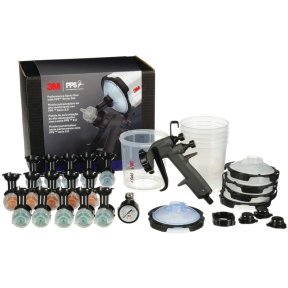
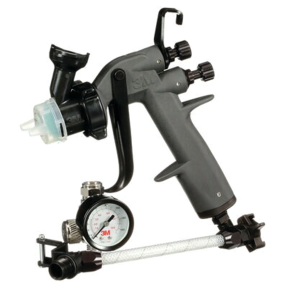
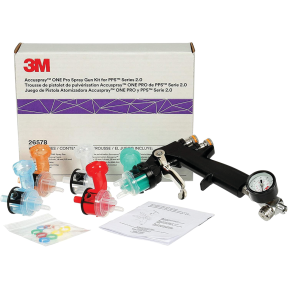
Marine paint spraying equipment applies boat paint to hulls, topsides, curved surfaces, and hard-to-reach areas with consistent coverage. Boat owners, professional refinishers, and shipyard crews can choose HVLP, airless, or conventional spray systems according to the coating, project size, workspace, and required finish.
Marine Paint Sprayer Quick Facts
Benefits of Marine Paint Sprayers
A boat paint sprayer can cover large or complex marine surfaces faster than a brush or roller. Correct atomization, equipment setup, and spray technique support a smooth finish and consistent coating thickness.
- Faster application across hulls and other large surfaces
- Even paint distribution with fewer brush marks and less roller stipple
- Better access to curved, uneven, and confined areas
- Fine atomization for smooth, uniform marine finishes
- Consistent film application when the sprayer is matched to the coating
HVLP, Airless, and Conventional Marine Paint Sprayers
| Sprayer Type | Primary Application | Key Benefits | Selection Considerations |
|---|---|---|---|
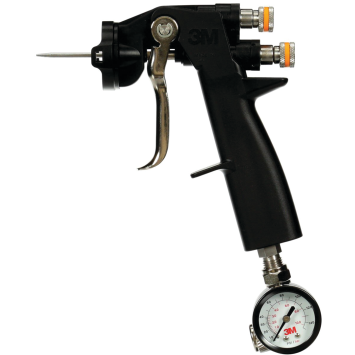
| HVLP spray gun | Topside refinishing, detailed work, and fine marine finishes | Fine atomization, reduced overspray, and efficient paint transfer | Requires a compatible compressor with sufficient airflow and pressure |
| Airless sprayer | Large hulls, shipyard work, and commercial marine painting | Fast coverage and application of thicker coatings | Requires the correct pump pressure and nozzle for the coating and substrate |
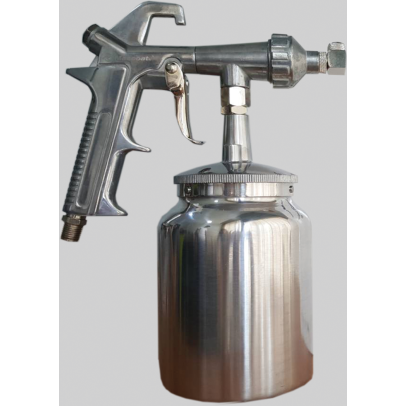
| Conventional spray gun | General-purpose boat painting and varied maintenance work | Versatile operation across a range of marine paint tasks | Higher atomization pressure can produce more overspray than HVLP equipment |
How to Select Marine Paint Spraying Equipment
Review the marine paint manufacturer’s application instructions before selecting a spray gun, nozzle, reducer, solvent, or pressure setting. Compressor demand varies by spray-gun design, and airless equipment uses a high-pressure pump instead of compressed air.
Marine Paint Spray Application Steps
- Prepare and clean the marine surface according to the coating manufacturer’s instructions.
- Wear the specified protective equipment for the paint and solvent system. Note that spraying two-part polyurethane topcoats requires a supplied-air respirator system to protect against health risks from airborne isocyanates.
- Set up the correct nozzle, pressure, coating viscosity, and spray pattern.
- Test the pattern before applying paint to the prepared boat surface.
- Maintain a consistent distance, angle, and movement during each pass.
- Apply thin, even coats to limit runs, sags, dry spray, and uneven film thickness.
Spray Gun Cleaning and Maintenance
- Flush the spray gun with the solvent or cleaner specified for the coating.
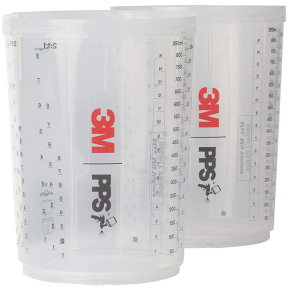
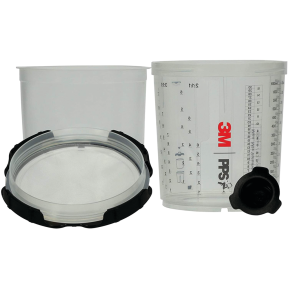
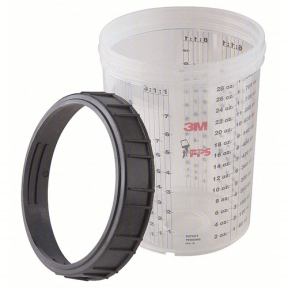
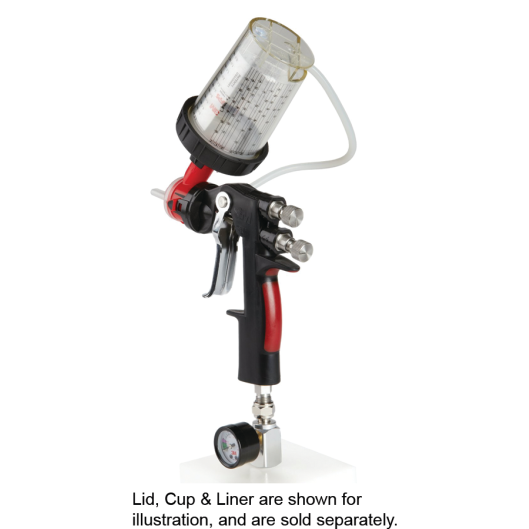
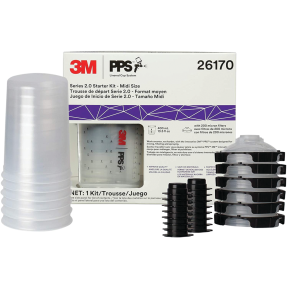
- Clean the nozzle, fluid passages, cup, liner, and lid as applicable.
- Inspect seals, tips, filters, hoses, and pump components for wear or blockage.
- Replace disposable liners and worn service parts when needed.
- Store clean, dry equipment in a protected location.
Frequently Asked Questions
Which spray gun is best for applying marine paint?
An HVLP spray gun is commonly preferred for fine marine finishes because it provides controlled atomization with reduced overspray. An airless sprayer is better suited to large hulls and thicker coatings, while a conventional spray gun provides versatile performance for general boat painting and maintenance tasks.
What compressor does an HVLP marine spray gun require?
The compressor must meet the airflow and pressure requirements published by the spray-gun manufacturer. Spray guns typically require about 10–15 CFM at 25–30 PSI inlet pressure, which regulates down to 10 PSI maximum at the air cap to meet HVLP transfer efficiency standards. Confirm both specifications before purchase because insufficient airflow can reduce atomization and finish quality.
What spray-tip size should I use for marine primer and topcoat?
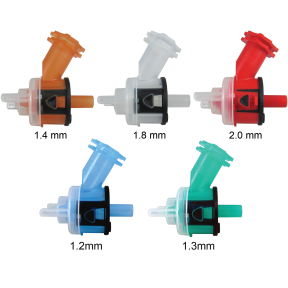
Pneumatic marine spray guns commonly use fluid tips within a 1.2–2.2 mm range, depending on paint viscosity. A smaller tip (1.2–1.4 mm) suits fine topcoats, while larger tips (1.8–2.2 mm) are used for thick high-build primers and heavy bottom coatings. Airless sprayers typically require tip orifice sizes between 0.015 and 0.021 inches or larger. Always follow the paint and spray-gun manufacturers’ published requirements.
Can an airless sprayer paint fiberglass, steel, and wood hulls?
Yes, an airless sprayer can apply compatible marine coatings to fiberglass, steel, and wood hulls. The operator must match the nozzle, pump pressure, surface preparation, and coating system to the substrate. Airless equipment is particularly useful when fast coverage or a thicker coating layer is required.
How do I clean a spray gun after applying marine paint?
Flush the spray gun with the cleaner or solvent specified for the marine coating immediately after use. Clean the nozzle, fluid passages, cup, liner, and lid, then inspect seals and replace worn components. Store the cleaned equipment dry and protected from dust, moisture, and contamination.
Is spraying boat paint better than using a brush or roller?
Spraying is often faster on large boat surfaces and can produce a smoother finish without brush marks or roller stipple. Brushes and rollers may remain practical for small areas or restricted workspaces. The right method depends on coating instructions, ventilation, overspray control, project scale, and finish requirements.