
Efficient Marine Exhaust Systems
This category is intended for boaters to understand, specify, and source boat exhaust components for safe, quiet, and reliable operation—backed by trusted brands and expert support from Fisheries Supply.
Key Takeaways
- Correctly designed marine exhaust systems reduce backpressure, control temperature/noise, and protect passengers and equipment.
- Core components: manifolds, risers, elbows, hose, mufflers, and fittings.
- Wet exhaust mixes cooling water to lower temperature and noise; dry exhaust remains uncooled for heavy-duty/commercial applications.
- Choose reputable manufacturers and match parts to engine output, diameter, temperature, and run length to keep backpressure within spec.
Why Marine Exhaust Design Matters
A properly engineered exhaust system safely expels combustion gases, manages heat, and reduces noise and vibration. The result is better engine performance, fewer fumes aboard, and longer service life for surrounding components. Fisheries Supply offers expert guidance and a wide selection to meet both DIY and professional requirements.
Comprehensive Range of Exhaust Components
We stock a full selection to build or service your system:
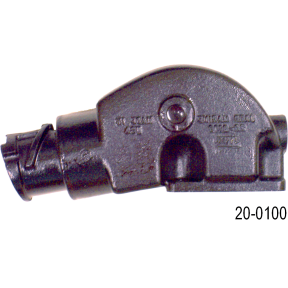
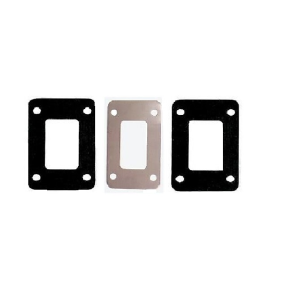
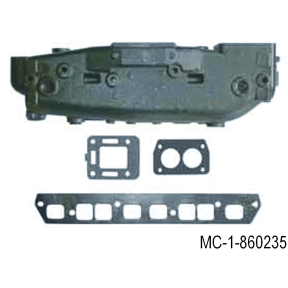
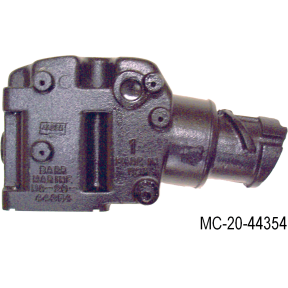
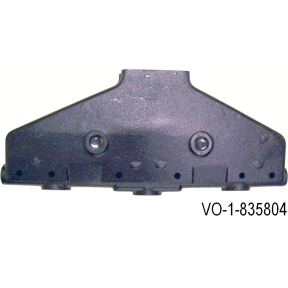
- Marine exhaust manifolds and risers.
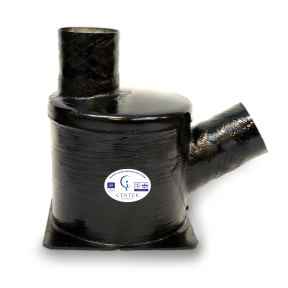
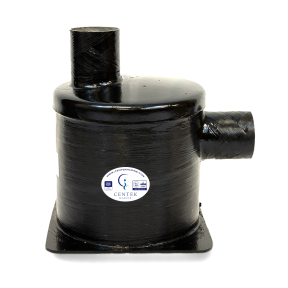
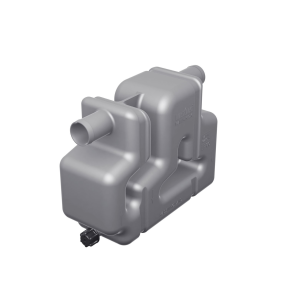
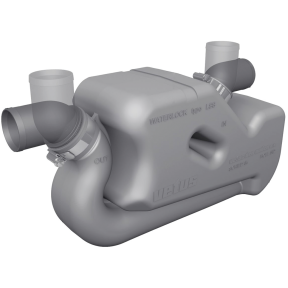
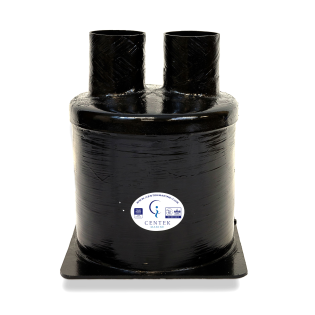
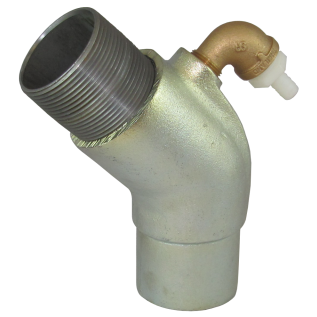
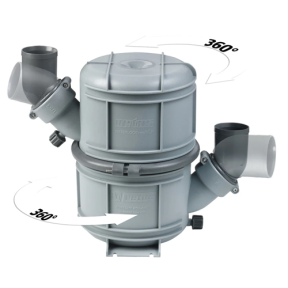
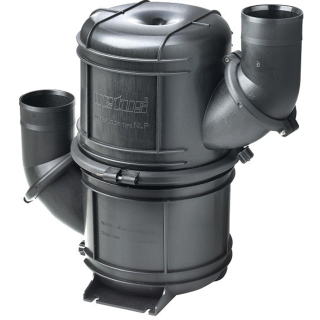
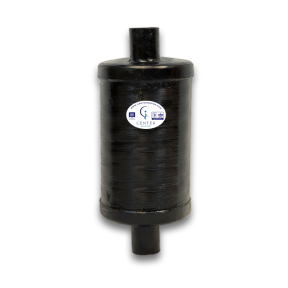
- Wet exhaust systems (waterlocks, goosenecks, separators).
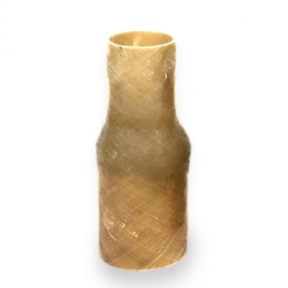
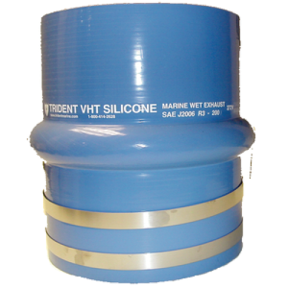
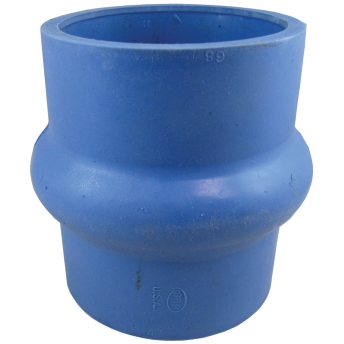
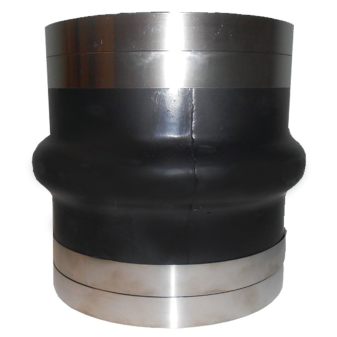
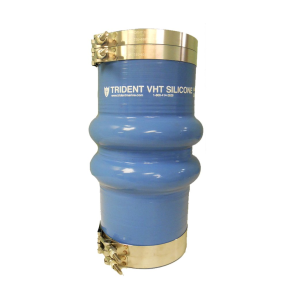
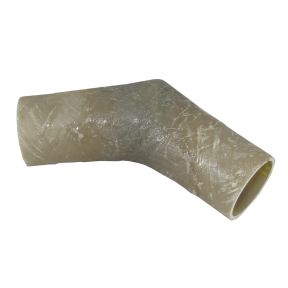
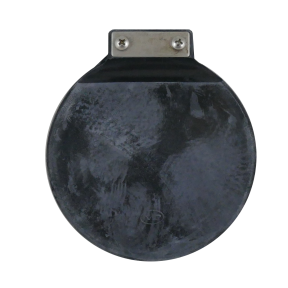
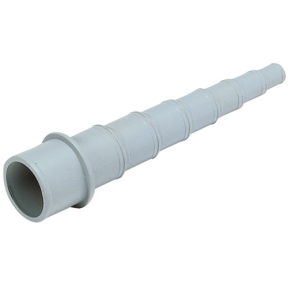
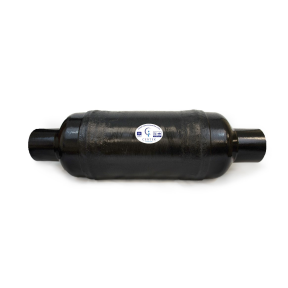
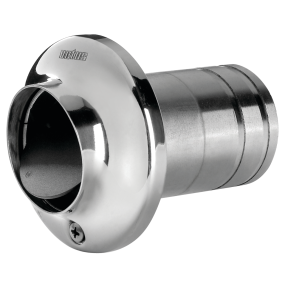
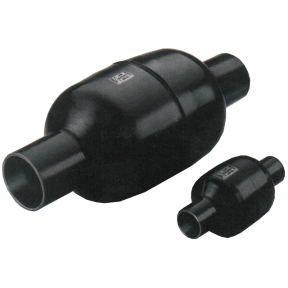
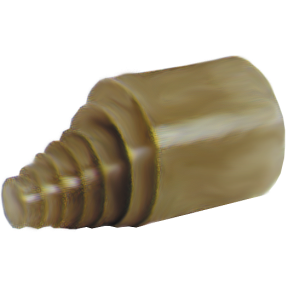
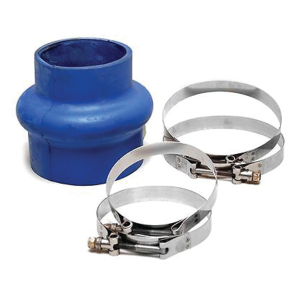
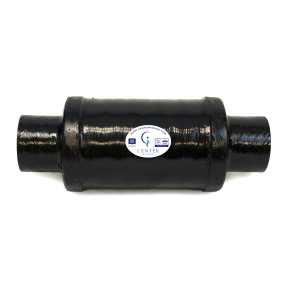
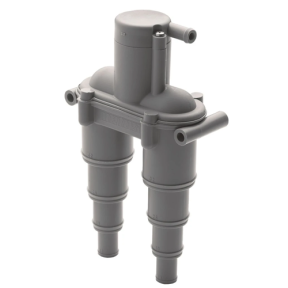
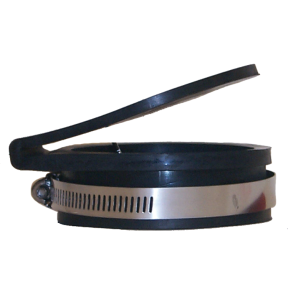
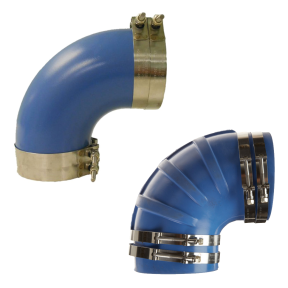
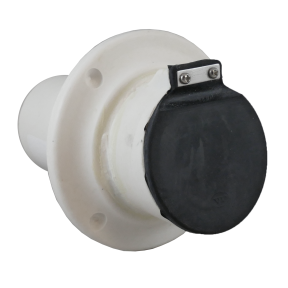
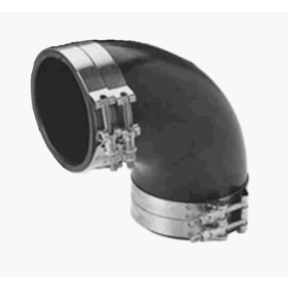
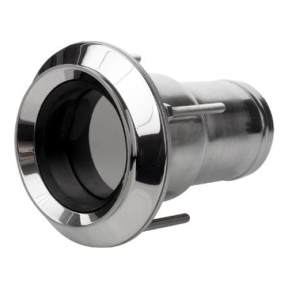
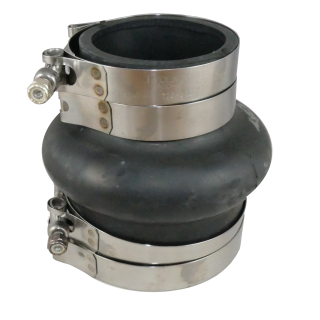
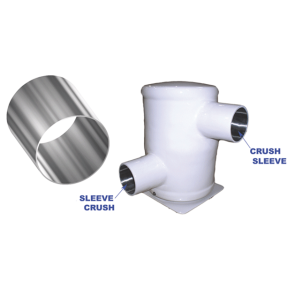
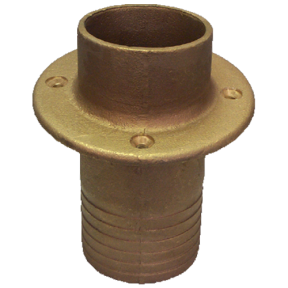
- Elbows, mufflers / waterlocks, hose, bellows, and transom fittings.
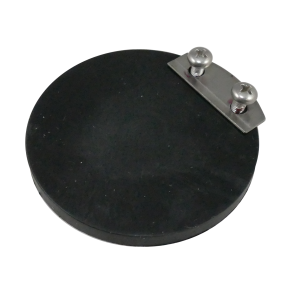
- Accessories for underwater discharge and specialized layouts.
Trusted Brands & Quality Assurance
We carry leading manufacturers recognized for marine exhaust engineering and materials quality:
Wet vs. Dry Exhaust: Selecting the Right Approach
- Wet Exhaust
- Mixes engine cooling water with exhaust gases to reduce temperature and noise.
- Common components include waterlocks, goosenecks, and water separators.
- Requires correct hose diameter and routing to manage backpressure and prevent water backflow.
- Dry Exhaust
- Uncooled exhaust remains hotter and noisier, but avoids some corrosion and water-backflow risks.
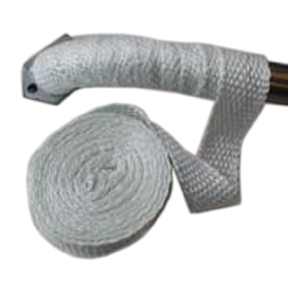
- Used with insulated piping, expansion joints, and dedicated silencers; often routed to a stack.
Specification, Sizing & System Layout
- Match components to engine output, exhaust diameter, and run length to keep backpressure within manufacturer limits.
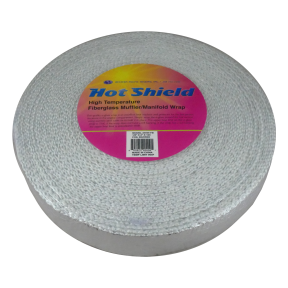
- Use high-temperature marine exhaust hose and corrosion-resistant fittings compatible with cooling water and fuel byproducts.
- Design to minimize low points that can trap water and ensure adequate support for all components.
- Perform periodic inspection for soft hoses, salt deposits, rust, cracks, or unusual smells—signs that service is due.
Frequently Asked Questions
What are the key parts in a typical marine exhaust system?
The main parts include manifolds, risers, elbows, mufflers / waterlocks, hoses, and fittings.
How do wet and dry exhaust systems differ?
Wet systems mix cooling water with exhaust to lower temperature and noise—common in pleasure craft. Dry systems operate uncooled, typically on commercial boats; they run hotter and louder but reduce certain corrosion concerns.
When should I service or replace exhaust components?
Investigate increased noise, leaks or salt deposits, excessive fumes, or unusual smells. Routine inspections help catch soft or cracked hoses, deteriorated bellows, and corroded metal parts before failure.
What sizing considerations help control backpressure?
Choose hose and component diameters that match engine output and total run length. Keep bends gentle, runs supported, and water traps minimized to maintain manufacturer backpressure limits.
Which brands are commonly used for marine exhaust systems?
Popular choices include Centek, Barr Marine, Sierra, and Vetus for hose, mufflers/waterlocks, manifolds/risers, and fittings.