Flare Usage and Safety Instructions for Boaters
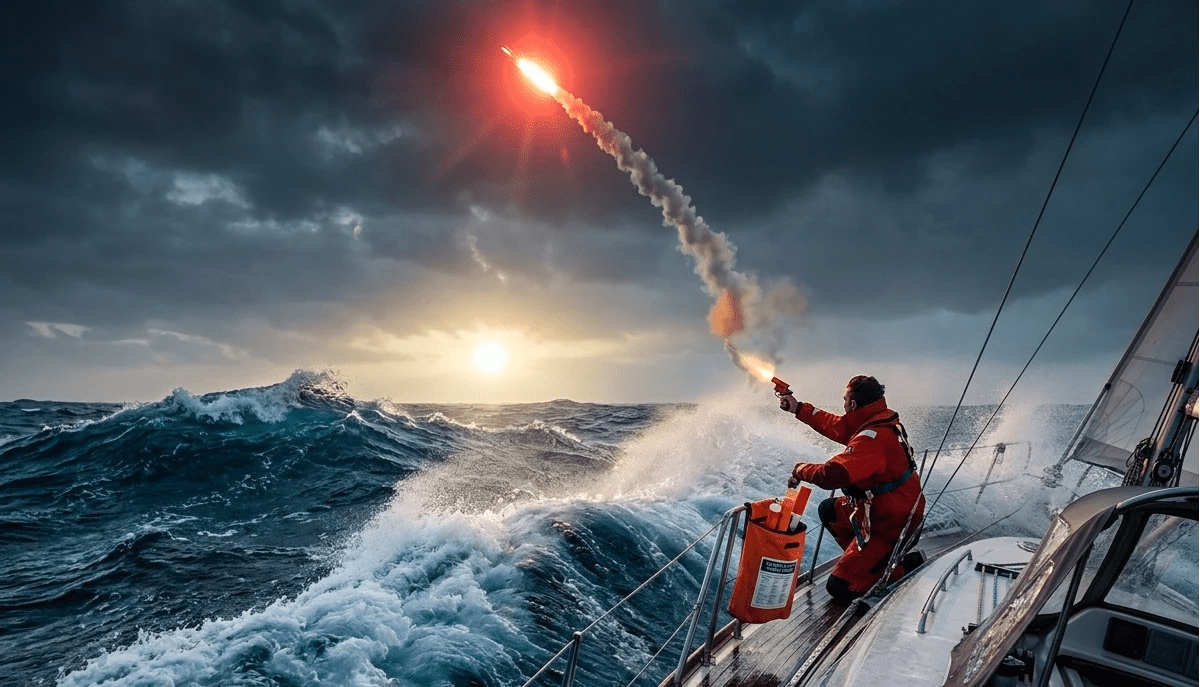
Key Takaways on Marine Flare Safety and USCG Requirements
- USCG Compliance: Most boats operating on coastal waters, offshore, or the Great Lakes are legally required to carry U.S. Coast Guard-approved visual distress signals (VDS).
- Minimum Requirements: If required, you must carry at least three signals approved for both day and night use.
- Pyrotechnic vs. Non-Pyrotechnic: Boaters can use pyrotechnic devices (flares, rockets) or non-pyrotechnic options (LED strobes, orange distress flags, sea marker dye) to meet safety standards.
- Usage: Always stay with your boat. Conserve aerial flares until a potential rescuer is sighted, then fire two in quick succession to confirm your position.
- Homing Signals: Use handheld flares to help rescuers pinpoint your location once they are within range.
- Expiration and Maintenance: Marine flares expire 42 months after the date of manufacture.
- Proper Storage: Flares should be stored in a cool, dry place (40°F to 90°F) and kept away from heat sources, sparks, and moisture.
- Safe Disposal: Never throw expired flares in the trash or overboard. Instead, give them to the Coast Guard Auxiliary for training or contact local law enforcement for hazardous waste disposal.
- Reporting Distress: If you see a distress signal from another vessel, immediately notify the Coast Guard via VHF Channel 16.
How Marine Flares Work
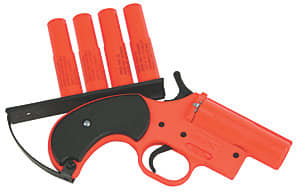
Marine flares function through a combination of pyrotechnic and optical technologies designed to create a highly visible distress signal. Utilizing bright colors, such as red or orange smoke, these flares serve to alert potential rescuers, including the Coast Guard, of your location during distress situations. In distress situations, upon activation, a pyrotechnic flare emits a brilliant light or loud noise, effectively attracting attention. Ensuring the proper usage and maintenance of these devices is crucial for optimizing visibility and enhancing safety on coastal and offshore waters.
What are the USCG Requirements?
By law, a visual distress signal, such as an electric distress light, must be carried “on all boats that are operated on the high seas, coastal waters (including the Great Lakes), the territorial seas, and all bodies of water directly connected to the Great Lakes or the territorial seas up to a point where the waters are less than two miles wide.” The following vessels are not required to carry day signals, but must carry night signals when operating from sunset to sunrise to address potential danger.
-
Recreational boats less than 16 feet in length
-
Boats participating in organized events, such as races, regattas, or marine parades
-
Open sailboats less than 26 feet in length that are not equipped with propulsion machinery
-
Manually propelled boats
If required, you must have a minimum of three signals for both day and night usage, and they must be approved by the U.S. Coast Guard. Since some signals meet both day and night use requirements (see below), having three of this type would mean you are legal. That said, most experts recommend that you have a minimum of six to make sure you have enough to handle a real emergency.
Understanding the federal regulations surrounding visual distress signals is crucial for recreational boaters. Federal regulations require that vessels carry appropriate pyrotechnic visual distress signals, such as rocket flares or handheld orange smoke signals, to ensure safety on coastal waters. Each flare must meet specific requirements, including a clear expiration date and adherence to Coast Guard standards. It is vital to check the date of manufacture for all distress signals, ensuring they remain in good condition and ready for use during potential danger or distress situations.
What Kind of Flare Should I Use?
Different flares are good for different purposes:

-
Red Parachute Rocket Flare – approved for both day and night use, this high-powered aerial signal is designed to capture attention and provide a visual location. These typically launch a 30,000 candlepower meteor nearly 1,000 feet into the air, which will stay aloft and burn for up to 40 seconds.
-
Red Meteor – approved for both day and night use, these flares are also designed to draw attention and help provide a visual location. There are several types, but the two main types are 12-gauge aerial flares (used with a 12-gauge launcher) that will launch up to 500 feet and provide a 16,000 candlepower meteor that will stay aloft for about 7 seconds; or 25mm aerial flares (used with a 25mm launcher) that launch up to 375 feet with a 33,000 candle power meteor that will stay aloft for up to 7 seconds. A 25-gauge aerial can often be seen from over 25 miles away!
-
Handheld Red Flare – approved for both day and night usage, these flares are used to help the rescuer pinpoint your location once you've been seen. They provide about 700 candlepower for approximately 3 minutes. For more information, please read our article on how to activate a hand-held flare.
-
Orange Handheld or Floating Smoke Signals – approved for daytime use only, these are also used to help rescuers pinpoint your location. The average burn time for a hand-held is 1 minute, and approximately 4 minutes for a floating canister.
As you can imagine, which flare you choose should be dictated by what you are trying to do (attract attention or pinpoint your location), and by how far away help may be located.
Combinations of Visual Distress Signals
Understanding the acceptable combinations of visual distress signals is crucial for recreational boaters to ensure safety on the water. Pyrotechnic devices, such as red flares and parachute flares, can be effectively paired with non-pyrotechnic signals, such as an orange distress flag or handheld orange smoke signals. Utilizing a combination of day signals and night use signals, including an orange distress flag, enhances visibility during distress situations. Adhering to federal regulations and Coast Guard requirements can significantly improve the chances of a timely rescue.
| Type of Visual Distress Signal | Description | Pros | Cons |
|---|---|---|---|
| Handheld Flares (Red) | Small flares ignited by hand, producing a bright red flame visible from a distance. |
|
|
| Aerial Flares | Includes meteor flares, parachute flares, and rocket flares. Launched into the air, these flares deploy a bright red or orange flare (possibly suspended by a parachute), burning high in the sky. |
|
|
| Orange Smoke Flares | Emit dense orange smoke to signal distress, especially useful during daytime. |
|
|
| Floating Smoke Flares | Smoke flares designed to float on water, producing orange smoke to mark location. |
|
|
| Sea Marker Dye | A device that releases colored dye (typically fluorescent green or orange) into the water to create a visible slick. |
|
|
| Day Signal Mirrors (Heliograph) | Mirrors used to reflect sunlight to attract attention. |
|
|
| Electronic Visual Signals (e.g., LED Strobes) | Battery-operated flashing lights designed to attract attention. |
|
|
| Signal Flags (Day Only) | Orange Distress Flag with Black Square & Ball |
|
|
I’m in Trouble – How Soon Should I Activate My Flares?
-
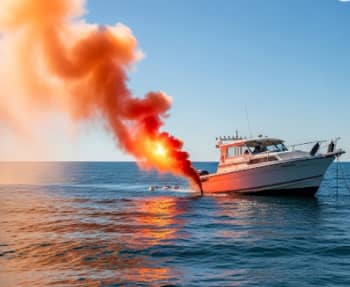
First off, always stay with your boat if it is safe to do so. A boat is much easier to spot than a swimmer, so don't jump ship unless you are in immediate danger. This is a crucial aspect of emergency preparedness in boating, which is critical for ensuring safety during unforeseen situations.
-
Conserve your aerial signals until you are reasonably sure of being sighted. Wait until you see or hear a vessel or aircraft before using "one-time" signals.
-
Once you've sighted help, the U.S. Coast Guard recommends that you fire two aerial flares – one immediately after the other – so rescuers can confirm the sighting and the direction of the signal. If using a parachute flare, one is fine as it has an adequate burn time to confirm sighting and position.
-
Once your aerial flare has been seen, you must make sure your rescuer can pinpoint your location by using hand-held flares. The surface-to-surface sighting range on water is approximately 3 to 5 miles, depending on boat elevation. If a rescuer is 5 miles away and running at 20 miles per hour, it will take 15 minutes to reach you. Therefore, you should have a minimum of 12 minutes of signal burn time for a strong homing signal. Hand-held flares last approximately 3 minutes – so we recommend you have 6 to be on the safe side as not all boats travel that fast.
-
Make sure to familiarize yourself with your signals before you leave shore. Time is important in any emergency and it shouldn't be spent reading instructions.
How Do I Store My Flares?
While pyrotechnic flares are classified as flammable, they are generally safe and stable if stored correctly in a safe place away from young children. There is no threat of mass explosion, nor is there any threat of an individual flare exploding. They should be stored in a cool, dry, and safe place away from excessive heat (above 167 degrees F) and away from sparks or flames. The recommended storage temperatures are 40°F to 90°F. Do not expose flares to water for periods longer than 10 minutes.
Types of Visual Distress Signals Explained
Visual distress signals are essential tools for ensuring the safety of recreational boaters. These signals come in a variety of forms, each designed to attract attention and indicate that a vessel is in distress. The two primary categories of visual distress signals are pyrotechnic and non-pyrotechnic devices.
Pyrotechnic signals include flares that produce bright lights and smoke, making them effective for both day and night use. On the other hand, non-pyrotechnic signals such as distress flags and electric distress lights serve a similar purpose without the use of fire, providing a safer alternative in certain situations. Understanding the various types of visual distress signals is crucial for effective emergency response on the water.
Pyrotechnic vs. Non-Pyrotechnic Devices
When it comes to visual distress signals, understanding the difference between pyrotechnic and non-pyrotechnic devices is crucial.
-
Pyrotechnic Devices: These include handheld flares and aerial flares, which utilize combustion to produce bright light and smoke. They are ideal for signaling during both day and night emergencies. For instance, a handheld red flare can provide approximately 700 candlepower for about three minutes, making it an effective means of attracting attention.
-
Non-Pyrotechnic Devices: These signals, such as orange distress flags, signal mirrors, sea-marker dyes, and electric SOS distress lights, do not rely on combustion. They are often used for daytime signaling and can be safer in certain situations. For example, electric distress lights automatically flash the SOS signal and are visible up to 10 nautical miles without the risks associated with fire.
-
Combination Use: Many boaters choose to carry a mix of both types of devices to ensure they are prepared for various emergency scenarios. This combination approach allows for flexibility in signaling, depending on the specific conditions and time of day.
Day and Night Use of Visual Distress Signals
Visual distress signals can be categorized based on their effectiveness during different times of day. During the day, signals such as handheld orange smoke signals and floating smoke signals are essential for visibility. Handheld orange smoke signals can produce smoke that is easily seen against the blue sky, making them an effective option for daytime emergencies. The orange distress flag, with its distinctive color and markings, is also recognized as a day signal, particularly when waved from a high point.
At night, on the other hand, pyrotechnic devices like red flares and electric distress lights become vital. Red flares are designed for nighttime use and can reach heights of up to 1,000 feet, providing a bright signal visible for miles. Electric distress lights, which flash the international SOS signal, are also effective for nighttime use, ensuring that boaters can signal for help when visibility is limited. Having a proper mix of day and night use signals ensures that boaters are prepared for emergencies at any time, enhancing safety on the water.
If You See a Distress Signal from Another Vessel
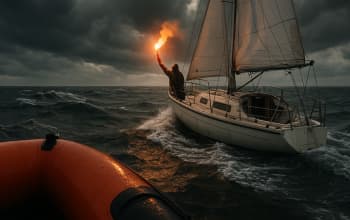
Recognizing a visual distress signal from another vessel is a call to action for all boaters to come to the aid of a mariner in trouble. First and foremost, if you see a distress signal, it is essential to notify the nearest Coast Guard station or local authorities immediately. Channel 16 on VHF marine radio is the recognized emergency channels for reporting such incidents. Promptly communicating the location and nature of the distress can significantly expedite the response efforts. If it is safe and feasible to assist the stricken vessel, you should approach cautiously. Always prioritize your safety first; if approaching the distressed boat poses a risk to you or your crew, it is best to maintain a safe distance while awaiting help from the nearest Coast Guard unit. Lastly, remember that assisting a fellow mariner in distress is not only a maritime tradition but also a legal obligation under the Good Samaritan laws. By taking appropriate action, you can potentially save lives and contribute to a safer boating community.
What Do I Do With My Expired Flares?
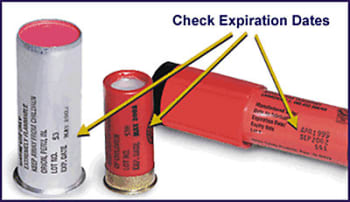
Marine flares expire 42 months after the expiry date of manufacture in accordance with the Coast Guard requirements, so check the expiration dates on your old flares and signals as shown below. If they have expired or will expire during the boating season, you must replace them…it's the law!
To dispose of expired flares, Orion recommends the following methods:
-
Donate expired flares, including pyrotechnic signals, to the local Coast Guard Auxiliary or Power Squadron for use in their training classes.
-
Contact a local law enforcement or the fire protection agency for their advice on proper visual distress signal disposal.
-
NEVER activate marine flares or floating orange smoke signals in a non-emergency situation on or near regulated water.
-
NEVER jettison visual distress signals, including the orange distress flag, overboard.
-
NEVER activate marine flares in a non-emergency situation on or near regulated water.
-
NEVER dispose of flares in household trash.
For disposal in the Seattle area
King County residents may dispose of their expired flares at four recycling locations. They will accept 10 ordinances per person. Kitsap County Sheriff will accept all flares that are individual (non-business). Other local counties have policies that vary by the situation, so please contact local law enforcement for further information.
Enhancing Marine Safety with Communication Tools
Combining visual distress signals with effective communication tools significantly enhances maritime safety. The use of VHF marine radios alongside pyrotechnic devices, such as red flares and rocket flares, ensures swift communication during distress situations.
Additionally, floating orange smoke signals are beneficial in alerting nearby vessels, particularly in coastal waters. Maintaining good condition and understanding the tools at your disposal are essential for emergency preparedness. Being equipped with multiple layers of communication, including clarity in communicating with the Coast Guard or other rescue boats, is crucial for ensuring the safety of any recreational boater.
FAQs
What are the penalties for not carrying the required distress signals?
The Coast Guard may impose a civil penalty up to $1,100 for non-compliance. Beyond the financial penalties, not having required distress signals puts your safety and the safety of those on board at risk in the event of an emergency.
Can I use expired flares in an emergency?
Not recommended, as performance may be unreliable. However, in a real emergency, expired flares may still function and can be used as backup signals.
What should I do if my flares get wet?
If exposed to water for longer than 10 minutes, they may be compromised and should be replaced. Do not attempt to dry damaged pyrotechnic flares—moisture can degrade chemicals and create a safety hazard.
We hope you've found this article on flare usage and safety helpful, but if you have any additional questions, please don't hesitate to contact our safety experts at (800) 426-6930. Fisheries Supply carries a wide range of marine flares - so if your flares have expired, replace them right away!