Upgrade Your Sailing Experience with a Sailboat Furler

What if sailing your boat could be easier? For the last decade furling systems for sailboats have had big design improvements and have now become standard on most modern cruising sailboats – especially on boats that only have one or two sailors onboard vs. a whole team of sailors on a racing boat. By installing a sailboat furler you can easily deploy a sail, reef it in, or put it away completely – all from the comfort of your cockpit. So if you are looking to make sailing easier and want to add a brand new furler on your boat (or upgrade your current furler), read on to learn more about the current types available, installation and maintenance tips and answers to common questions.
What are furling systems and how do they work?
A sailboat furler lets you roll your sail neatly around a special pole or wire (like a forestay) right from the cockpit, so you don’t have to go out on deck in rough weather. You can quickly set your sail, take it down, or reef it (make it smaller) when the wind picks up, all with just a simple pull or release of the furler line. It keeps everything tidy and under control on deck, making sailing safer, more fun and much less stressful.
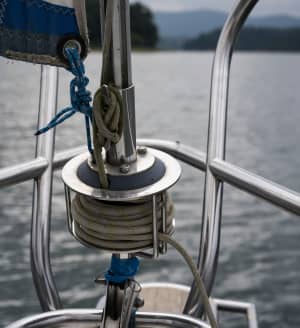
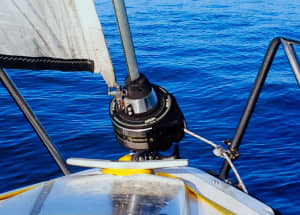
Most roller furling systems work by using a swivel at the top and a drum at the bottom. The furling line is wrapped around the drum and moves the sail by deploying the sail when you release the furling line (and pull in on your headsail sheets) or by rolling it up when you pull the furling line in (and release your headsail sheets). One of the biggest reasons to convert to a furler is they make it much easier to handle handle heavy sails like a 150 genoa. It keeps the sail on deck neatly wrapped up, but ready to deploy at a moments notice by just releasing the furling line – so no more hauling heavy sails on deck.
What are the benefits of using a furler on a sailboat?
Using a sailboat furler simplifies sail handling, allowing for easier and faster reefing and sail deployment. This enhances safety, as sailors can adjust sails quickly in changing conditions. Additionally, a furler reduces wear on sails by minimizing exposure to harsh elements when not in use, prolonging their lifespan.
The Main Types of Sailboat Furlers
In-Mast, In-Boom, and Headsail
Sailboat furlers come in a bunch of variations, but the three main types are in-mast or in-boom (for mainsails), and headsail furlers.
In-mast furlers keep the mainsail rolled up inside the mast. Sailors have full control of how much sail area they want by how much sail they release (pull out) of the mast. One of the biggest advantages is that you can reef the main without crew members having to go on deck – a huge safety feature if the sea-state starts to get rough. The downside of in-mast sailboat furlers is you don't have quite as much control over sail shape because you can't have horizontal battens.
In-boom furlers wrap the sail inside the boom - so you raise as much sail as you need for the conditions from the bottom up – just like a normal (non-furled) main sail. This furler type keeps a better sail shape for performance because you can still use horizontal battens. It's also safer than in-mast furling because if it jams, in an emergency you can simply drop the sail down and tie it up at the boom.
Headsail furlers are the most common type of furler on sailboats these days - furling and unfurling the head sail easily from the cockpit, while keeping sailors off the deck. Gone are the days of hanking on the genoa and handling heavy sails during adverse conditions because one of the best features of a furling headsail is the ability to reef the sail at any point. This allows you to pick the appropriate amount of sail area for the specific conditions and quickly reef the sail if the weather starts to change rapidly.
Code Zero / Gennaker Furlers

Code zero and gennaker furlers give you an easy way to manage big downwind sails. Unlike a headsail furler, these use a torsional cable instead of a foil. The sail’s luff is usually sewn around a flexible, anti-twist torsional cable that transmits rotational force from the furling drum to the head (for top-down) or tack (for bottom-up) of the sail. They will have a drum mounted at the tack, which is turned by a furling line led to the cockpit. Some systems use a continuous loop line, while others use a single line that must be rewound after each use. They also have a top swivel, which connects the halyard to the torsional cable, allowing the sail to rotate independently as it furls or unfurls. Many of them also come with a quick-release attachment to enable fast rigging and removal of the sail.
Traditionally, a bottom-up furling system is used for code zero sails as it's more effective for straighter-luffed sails. Top-down furling is more common for gennakers/asymmetric sails because they are significantly fuller in design and these make it less likely that air will get trapped in the middle of the sail.
| Type | Code Zero | Gennaker/Asymmetric |
|---|---|---|
| Furling Direction | Bottom-up (tack starts to furl first, roll moves up the luff) | Top-down (furl starts at the head, roll moves down) |
| Sail Luff | Straight, with cable in a luff tape pocket | Free-flying luff, cable inside but not sewn into the sail |
| Reefing | Not possible—sail is either fully out or fully furled | Not possible—sail is either fully out or fully furled |
| Typical Use | Reaching, light upwind | Downwind, broad reaching |
Top Down Furlers for Spinnakers
Managing a spinnaker is now much easier because of top-down furlers. These furlers start furling at the head of the sail and go down towards the tack. This helps keep the sail from getting tangled or twisted.
A big part of how this works is the halyard swivel - which allows the sail to spin freely and does not stick to the forestay. The furling setup makes it simple to put your spinnaker up and bring it down fast, no matter its size or what the wind is like. Many people like to use a top-down sailboat furler, especially with asymmetrical spinnakers, as the controlled way it furls means better tension, less trouble on deck and no more spinnakers in the water.
Continuous Line Furlers
Continuous line furlers work with no clear end, so you always get smooth furling of your sails. The furling mechanism has a furling line, a spool that turns, and a specially made drum. This drum keeps the line from getting too crowded.
The key part of this system is the furling line, which forms a loop with no start or finish. Because of this, you can make the line as long or as short as you need, and it is very easy to adjust. When you are in the cockpit, you get full control of your sail - including the ability to reef.
A continuous line sailboat furler is versatile and can be adapted for both top-down and bottom-up furling depending on the hardware. People who use gennakers, spinnakers, and some other sails will find this furling system works very well for them because it's easy to use, allows for flexibility and also works fast.
Top-down vs. bottom-up furlers

As previously mentioned, a top-down sailboat furler rolls the sail down starting at the top. The sail’s luff is free-flying (not attached to a cable), the head is fixed to the top swivel, and the tack is attached to an independent swivel allowing it to rotate freely. This makes it easy to handle bigger sails. Top-down furlers are designed for asymmetric spinnakers, gennakers, Code Zero, and other light-wind sails with free-flying luffs that cannot be attached along the entire luff length.
A bottom-up sailboat furler rolls the sail from the bottom - the sail’s luff is attached along the torsion cable, with the tack fixed to the drum and the head to the top swivel. Bottom-up furlers are typically used with sails similar in shape to a genoa. Common examples include Code Zero sails, reaching sails, and some gennakers that are designed for close reaching angles.
Underdeck Furlers
An underdeck sailboat furler is made to keep the drum mechanics out of sight under the deck. This helps keep the the deck neat and clean, but you still get all the features you need.
These systems use stainless steel ball bearing swivel units, which make sure the furling works smoothly for a long time. The forestay guard protects the furling line from wearing out, so it lasts longer and stays efficient. Underdeck furlers are a good pick for sailors who want a simple look and want to make it easy to move around on their yachts – but they are very difficult to install after the boat has been built. They are usually specked during a build rather than after the fact due to that complexity.
Choosing the Right Furler for Your Boat
Choosing the best furling system for your boat comes down to a few key things.
- Boat Size – Start by looking at the size of your boat and the sail area. The size of your boat has to match the furler specifications so it will fit your mast and the forestay guard - so do your research.
- Use – How do you use your boat? A racer, a blue-water cruiser or a weekend sailor will have very different needs.
- Type of Furler – Outfitting in-mast or in-boom furling is a very big deal - so consider very carefully before committing. Installing a headsail furler for your genoa is easier and can be a hugely positive change, making it more likely you'll sail more often.
- Light Wind Sails – how many times have you considered putting up the spinnaker and then thought about how much work it is and decided to forget it, leaving it moldering away below deck. Adding a top down furler for your spinnaker or gennaker could allow you to use that sail WAY more than you ever have in the past.
- Budget – none of these furling systems are light on the wallet so definitely consider how much you're willing to spend. That said, buying a quality roller furling system may seem costly at first, but they allow sail handling to become significantly easier – making it an excellent investment for the long term.
Comparing Popular Furler Brands
Several brands stand out when it comes to sailboat furlers. Each brand offers different things to match the many needs that sailors have. Harken and Schaefer, for example, use strong stainless steel ball bearing swivel units and easy-to-use roller systems. Furlex also offers user-friendly designs that both hobby and race sailors can use.
| Brand | Continuous Line | Top-Down | Bottom-Up | Code-Zero/Gennaker | Special Features |
|---|---|---|---|---|---|
| Ronstan Furlers | ✓ | ✓ | ✓ | ✓ | Lightweight, corrosion-resistant |
| Harken Furlers | ✓ | ✓ | ✓ | ✓ | Manual/electric, various sizes |
| Schaefer Furlers | ✓ | ✓ | ✓ | Torlon bearings, robust build | |
| Profurl Furlers | ✓ | ✓ | ✓ | ✓ | NEX flying sail series |
| Karver Furlers | ✓ | ✓ | ✓ | ✓ | Carbon construction, modular |
| Colligo Furlers | ✓ | ✓ | ✓ | Maintenance-free, titanium parts |
Installation and Operation Tips
When installing a sailboat furler, it’s important to take your time and plan carefully to ensure you pick the right system for the job, so here's some quick tips for before, during and after the installation:
- Ensure you've sized the furler correctly for your boat and sail plan before making any purchase.
- Make sure that all of the parts are compatible with your rig and that the furler design will fit your forestay properly.
- Depending on the furler type, you’ll want to securely attach the furler at both the top and bottom, checking that it spins freely without binding. Too much space between the halyard shackle and the top swivel can cause the halyard to wrap around the forestay, a highly frustrating issue.
- As the furling line exits the drum, the angle of the line is super important to a successful furling setup. Make sure to route the furling line perpendicular to the drum, and then back to the cockpit through fairleads and blocks to reduce friction. It's imperative the furling line runs smoothly and stays taut, avoiding any snags, twists or awkward angles for the furler to work as intended.
- Before sailing with your new system, test furling and unfurling the sail several times to make sure everything works easily and the sail rolls evenly and smoothly without too much effort. You should never need to wrap the furling line around a winch to furl or unfurl it.
- If you're having trouble releasing the line to unfurl the sail, check that your headsail sheets are not caught or hung up on something. If it's too hard to pull in, try turning a little more into the wind to release heavy tension. Maintaining a bit of tension on the sail when furling helps to prevent jams - but too much can potentially damage your rig – so make sure you lead your furling line as directed by the manufacturer.
Maintenance Tips
Once you've been using your sailboat furler for a while, there are some key things to watch for to keep it operating at peak performance:
- Check the furling line leads to make sure the angles are still good and nothing has slipped.
- Make sure there are no tangles or jams, especially around the swivel and the drum – and that the furling line still exits the drum at the correct angle.
- Check the furling line and the leads/blocks for wear and replace as needed.
- Before leaving the dock, always check that the roller furling system has no items or problems on deck and that the halyard tension is still good.
- At the beginning of each season, check the ball bearings in the drum for wear, examine the drum itself for damage or rust, and check that the halyard swivel and forestay guard are still working well and are not worn out.
Doing these checks will help the furling line, halyard, roller furling, swivel, and all other roller furling parts last longer and work smoothly - keeping your furling system running smoothly for years.
Frequently Asked Questions
What are the signs that my furler needs maintenance or replacement?

Here are some signs that you may need to do maintenance or even replace your sailboat furler.
- You notice it's become harder than normal to furl or unfurl the sail.
- You see damage to the parts or rust on the drum.
- You hear strange noises when you use it.
- The furling line looks worn or frayed
By checking your furler often, you can find problems early and keep everything working smoothly - which also keeps everyone safe while sailing.
Can I reef with a furler in heavy winds?
Yes, a furler gives you the ability to quickly and easily change the amount of sail you keep out, helping to keep the boat stable and under control as the wind speed increases. It also makes sailing much safer in tough situations by keeping you off the deck when wind and wave size increase to the point where you need to bring the sail in completely.
Are furlers structural components of the rig?
Most furlers are not structural and rely on the forestay or stay to support the mast. Only specific stay furlers and structural flying sail furlers contribute to mast support.
What are the advantages of electric or hydraulic furlers?
Electric and hydraulic furlers provide effortless sail handling with just the push of a button. While more complex to install, they are especially useful on larger boats that have big sails that are heavy to work with - reducing crew workload or allowing larger boats to be sailed by fewer people. In addition, while manual furlers make sail deployment and retrieval easier and safer on smaller to mid-size boats, there may come an age when even that action is beyond our level of strength. In these cases, electric or hydraulic furlers can give us a few more years sailing our beloved sailboat.

While it's a lot of information to take in, hopefully you feel more prepared to move forward and make a decision on whether adding a sailboat furler to your boat is a good idea. If you decide it is, Fisheries Supply is proud to offer most of the brands previously mentioned – including Harken, Schaefer, Ronstan, Karver, Colligo and Profurl.
if you still have additional questions, please don't hesitate to contact our sailboat experts at (800) 426-6930.