Boat Dock Lines Guide: Everything You Need to Know
By Olivier Onorato, Last updated: 4/9/2026
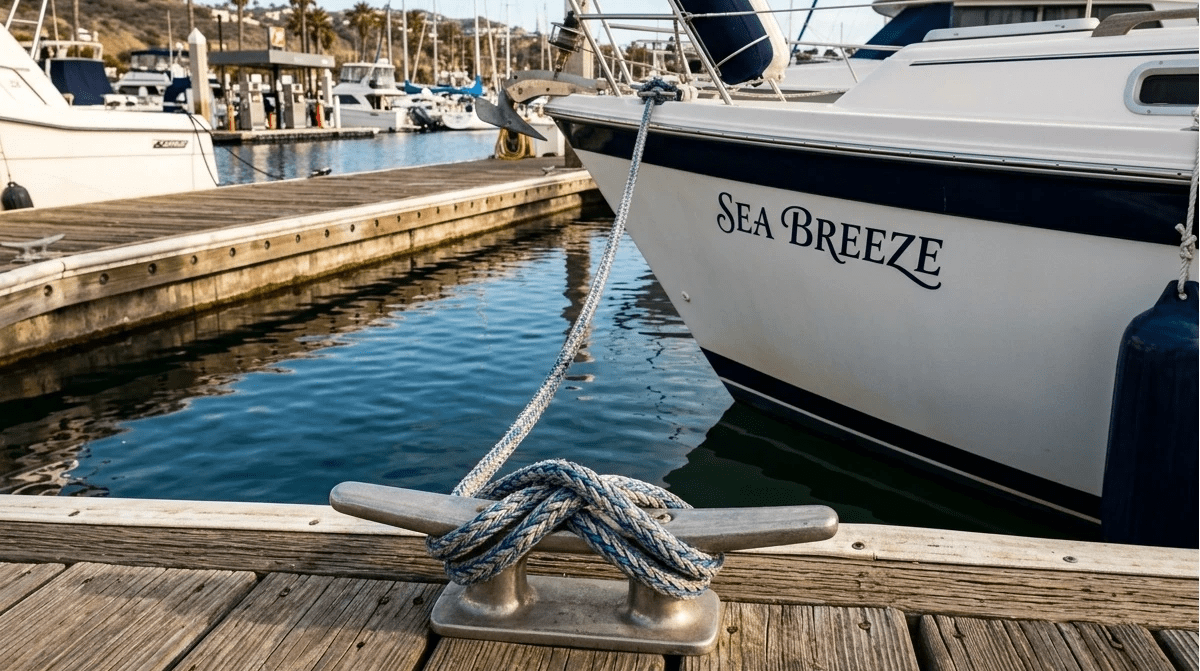
Key Takeaways for Choosing Boat Dock Lines
- Select Nylon for Elasticity: Use nylon rope for dock lines because its ability to stretch helps absorb shock loads, protecting your deck cleats and hardware from damage.
- Choose the Right Construction: Double-braid nylon is up to 35% stronger and easier to handle than 3-strand twisted line, while Mega Braid is specifically designed for boats 40 feet or larger.
- Utilize a Four-Line Setup: A standard "made fast" boat typically requires four dock lines: bow and stern lines to prevent side-to-side movement, and longer spring lines to stop forward and backward surging.
- Size According to Boat Length: Match the diameter of your line to your boat size, such as 3/8” for boats up to 20 feet and 5/8” for boats between 33 and 48 feet.
- Account for Environmental Conditions: Use longer lines in areas with large tidal ranges to allow for vertical movement as the boat rises and falls.
- Prevent Wear with Chafe Protection: Use snubbers to absorb extra tension and apply chafe guards or rub strakes in high-friction areas to extend the life of your lines and protect the boat’s finish.
- Perform Regular Maintenance: Inspect lines for UV damage, fraying, or cuts frequently and rinse them with fresh water to remove salt.
What Do I Need to Know About Dock Lines?
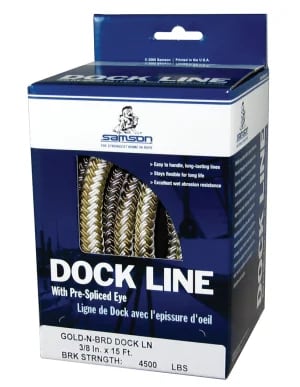
A dock line is what keeps your boat in place at the dock, so it needs to be strong and elastic (to absorb shock loads), as well as resistant to abrasion, UV rays, and
rot. This makes nylon rope, which has a good combination of all these qualities, an ideal choice. Investing in high-quality dock lines tailored to your specific boating conditions is crucial for ensuring peace of mind
Material and Construction
High strength and the ability to stretch without breaking allow nylon dock lines to absorb shock loads when wind and waves cause your boat to buck and surge at the dock. With a less elastic line, such as polyester dacron, those high shock
loads would be transmitted to your deck cleats or other deck hardware, potentially causing damage to your boat or even allowing the line to snap and the boat to break free. Nylon's resistance to rot and mildew also means it can be
stowed when wet, if necessary.
Fisheries Supply offers three main types of docklines:
-
Twisted Nylon, a simple 3-strand line with no cover. The three-strand lines are known for their durability and affordability.
-
Braid Nylon, where both the core and covering sheath are braided, rather than twisted.
-
Braid Nylon, where 12 sets of 3-strand line are constructed into one single braid.
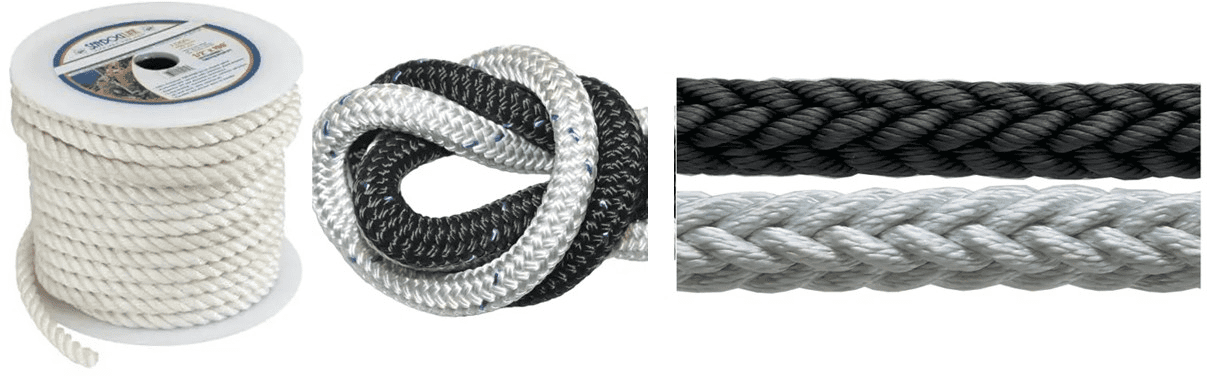
3-strand twisted dock lines are economical and have a traditional look, while double-braid nylon dock lines are softer, easier to handle, and don't harden over time, offering a certain aesthetic appeal. While a little more expensive, double
braid dock lines can be 25% to 35% stronger than 3-strand line of the same diameter. Mega braid is a strong line that offers good handling, resists kinking, and has excellent flexibility and UV protection. It is only meant for use
on boats 40 feet or larger.
Types and Functions
Boats are typically “made fast” (i.e. tied to the dock) with a set of 4 dock lines. , also known as mooring lines. Since the location of mooring cleats and pilings will vary from dock to dock. Since there is no such thing as "correct length",
it is usually prudent to have dock lines that are too long, rather than too short.
Bow and Stern Lines run from the ends of the boat to the dock, usually at an angle, keeping the boat from moving side to side, as well as fore and aft. They are typically equal to about three-quarters
of the boat's length.
Longer spring lines run forward from the stern and aft from the bow of the boat, or sometimes from amidships, to keep the boat from moving forward and backward along the dock. A boat should have two spring lines that are at least as long as the boat to keep it safely in place. The longer length provides extra stretch (or spring line) for extra motion dampening.
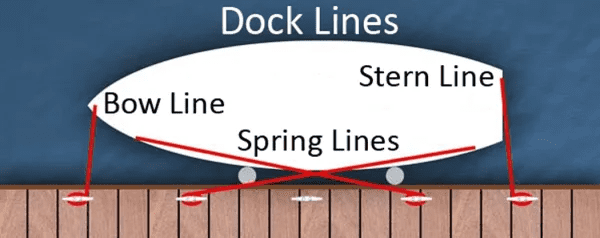
If you look at the diagram, you can see that all four of your dock lines work together, stretching and relaxing, to keep the boat more or less in place, despite the action of wind or waves jostling the boat. It's perfectly okay - even
good - for the boat to be able to move around a little – so make sure you don't cleat the lines off too tightly.
Environmental conditions also play a crucial role in selecting the appropriate docklines. If you're docking in areas prone to strong winds or heavy currents, investing in robust dock lines made from materials like nylon is essential for
durability. If your dock is located in an area with large tidal ranges, you should use longer lines for bow and stern dock lines to allow for the tide height differential, as the boat rises and falls. Spring lines are not as critical
since the longer length allows for vertical movement. Tying up to a floating dock solves the issue of tidal areas, but floating docks are not always available.
Finally, short “Breast Lines” lead from the bow or stern directly to the dock, and may be used to temporarily hold a boat close to the dock for boarding or loading, but these should be removed or slackened when the boat is left unattended,
leaving the longer bow, stern, and spring lines to keep the boat secure, yet still absorbing the forces of wind and waves.
Sizing
Dock lines should be strong enough to hold the boat and have enough bulk to resist chafe and abrasion, while not being so heavy as to lose their shock-absorbing characteristics.
Choosing the diameter of your dock lines is not an exact science, and depends on many variables such as exposure to waves, wind, and currents, as well as vessel displacement and windage – all of which should to be taken into account. That
said, thicker lines for a “typical” boat under “typical” conditions, are a good choice, the table below can provide some guidance in choosing an appropriate size.
| Dock Line Diameter |
Typical Boat Lengths |
| 3/8” (10 mm) |
Up to 20 ft |
| 1/2” (13 mm) |
20 ft – 32 ft |
| 5/8” (16 mm) |
33 ft – 48 ft |
| 3/4” (19 mm) |
49 ft – 65 ft |
In severe weather conditions, or for larger boats, some people choose to use dock lines of a larger diameter, or even “double up” some of the lines. But notice that while making them stronger, this may decrease their cushioning effect,
just when your dock and deck hardware need it the most. A better option may be to add additional dock lines secured to previously unused hardware and tie-off points. As always, good seamanship requires good judgment and analysis of
every situation. Increased attention to dock line chafing gear is always prudent in severe weather.
Dock Line Care and Maintenance
Inspection of your dock lines should be done regularly. Examine lines for chafe, fraying, cuts, discoloration, or UV damage before each outing. Pay special attention to areas where lines contact cleats, chocks, or dock hardware, as these
high-wear zones are most susceptible to failure. Replace lines immediately if you notice significant signs of wear, damaged splices, or reduced strength.
Clean your dock lines regularly with fresh water to remove salt, dirt, and marine growth that can weaken fibers over time. For synthetic lines, use a mild detergent and a soft brush. Then, rinse thoroughly and allow to air dry completely
before storage. Store lines in a dry, well-ventilated area away from direct sunlight.
Related Products
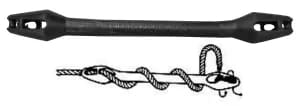
In addition to dock lines, it is also a good idea to add shock absorbers – called "snubbers" – to the lines that are under the highest load. Not only does
this take some of the stress off your dock lines, it also can relieve the tension on your hardware. The shock absorber will stretch first – taking the brunt of the force – which helps your dock lines last longer.
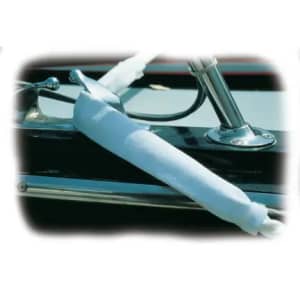
If you have areas on your boat where dock lines seem to rub a little more vigorously than elsewhere, it's a good idea to add chafe protection.
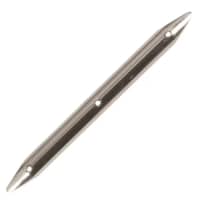 There are two options - you can either put the chafe gear directly over the dock line, directly over the spot where you expect the most abrasion, or you can add a smooth rub strake for the line to glide across. Chafe protection added
directly to the line means the chafe guard will wear – not your dock line - while a rub strake is better when a line is passing over something like a like a corner or fiberglass edge and you need help getting the line to cross the
area smoothly - protecting both your boat AND your dock line.
There are two options - you can either put the chafe gear directly over the dock line, directly over the spot where you expect the most abrasion, or you can add a smooth rub strake for the line to glide across. Chafe protection added
directly to the line means the chafe guard will wear – not your dock line - while a rub strake is better when a line is passing over something like a like a corner or fiberglass edge and you need help getting the line to cross the
area smoothly - protecting both your boat AND your dock line.
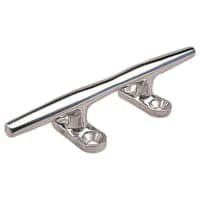 It's
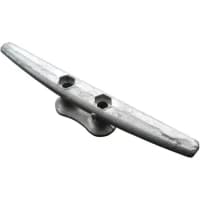
also critical that you have properly sized and installed boat cleats – preferably with a backing plate attached below deck. During storms or high winds,
your cleats on deck can be under tremendous pressure – so it's very important that you have the right size for your boat, and that it's been properly bedded with support from below so it doesn't just rip out under high load.
It's
also critical that you have properly sized and installed boat cleats – preferably with a backing plate attached below deck. During storms or high winds,
your cleats on deck can be under tremendous pressure – so it's very important that you have the right size for your boat, and that it's been properly bedded with support from below so it doesn't just rip out under high load.
 Obviously,
this is also true at the other end of the line, where it is tied to the dock. Dock cleats should be able to take the load of your boat. Marinas will provide you with a slip that has appropriately sized dock cleats, but if you stop at a transient dock or pier, that may not always be the case. Always check the sturdiness of those dock cleats before leaving the boat, even if it is for a short
while.
Obviously,
this is also true at the other end of the line, where it is tied to the dock. Dock cleats should be able to take the load of your boat. Marinas will provide you with a slip that has appropriately sized dock cleats, but if you stop at a transient dock or pier, that may not always be the case. Always check the sturdiness of those dock cleats before leaving the boat, even if it is for a short
while.
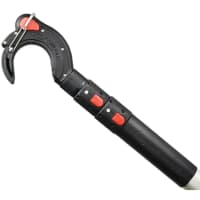 Lastly – it's often helpful to have a boat hook handy when docking to help grab the item you want to attach your dock line to. Modern boat hooks come
in a variety of styles and lengths – something for pretty much any boat size. There are now some designs that can even pass the dock line directly through the cleat without you leaving the boat - so make sure to check out our selection!
Lastly – it's often helpful to have a boat hook handy when docking to help grab the item you want to attach your dock line to. Modern boat hooks come
in a variety of styles and lengths – something for pretty much any boat size. There are now some designs that can even pass the dock line directly through the cleat without you leaving the boat - so make sure to check out our selection!
FAQs
How do you properly tie a boat dock line?
To properly tie a boat dock line, use a cleat hitch. Start by looping the line around the cleat, making a figure-eight pattern. Secure it by wrapping the line under and around the cleat's horns, then finish with a final wrap. This ensures
your boat is secure and stable at the dock.
What are common mistakes to avoid when using boat dock lines?
Common mistakes when using boat dock lines include using the wrong length, neglecting proper knots, and failing to regularly inspect for wear and tear. Additionally, overlooking factors like tide changes can lead to damage.
What’s the difference between transient and permanent dock lines?
Transient lines stay on the boat and are adjustable; permanent lines stay on the dock, cut to fixed length, and often include sewn-in chafe protection.
What are the laws regarding tying a boat to a public dock?
Many harbors and cities require a permit to moor or dock your vessel at public facilities. Some areas may also require display of the permit on your boat. There is often a maximum time allowed for tying up to a public dock—commonly 30
minutes to a few hours, depending on local regulations. In the event of hazardous weather or mechanical failure, you are generally allowed to use any dock (including private docks) under the “safe harbor” principle, but are expected
to leave the dock when safe.
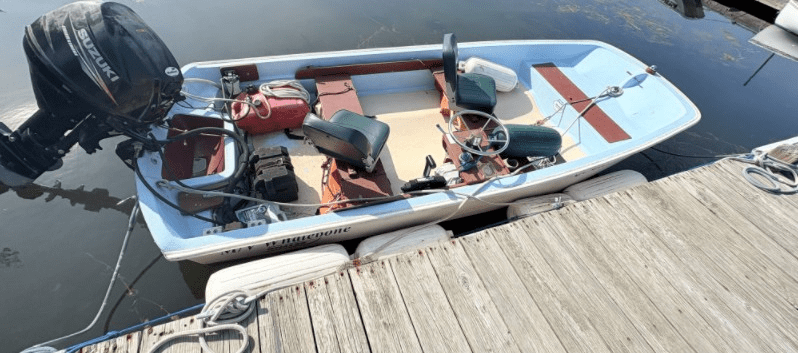
We hope this article has helped you learn the importance of protecting your investment with good gear at the dock. Fisheries Supply carries a variety of pre-spliced dock lines,
but we also offer splicing services if you want lines of a specific length or style not offered on our website. For further
help, feel free to contact our product experts at (800) 426-6930.