Choosing a Sacrificial Anode
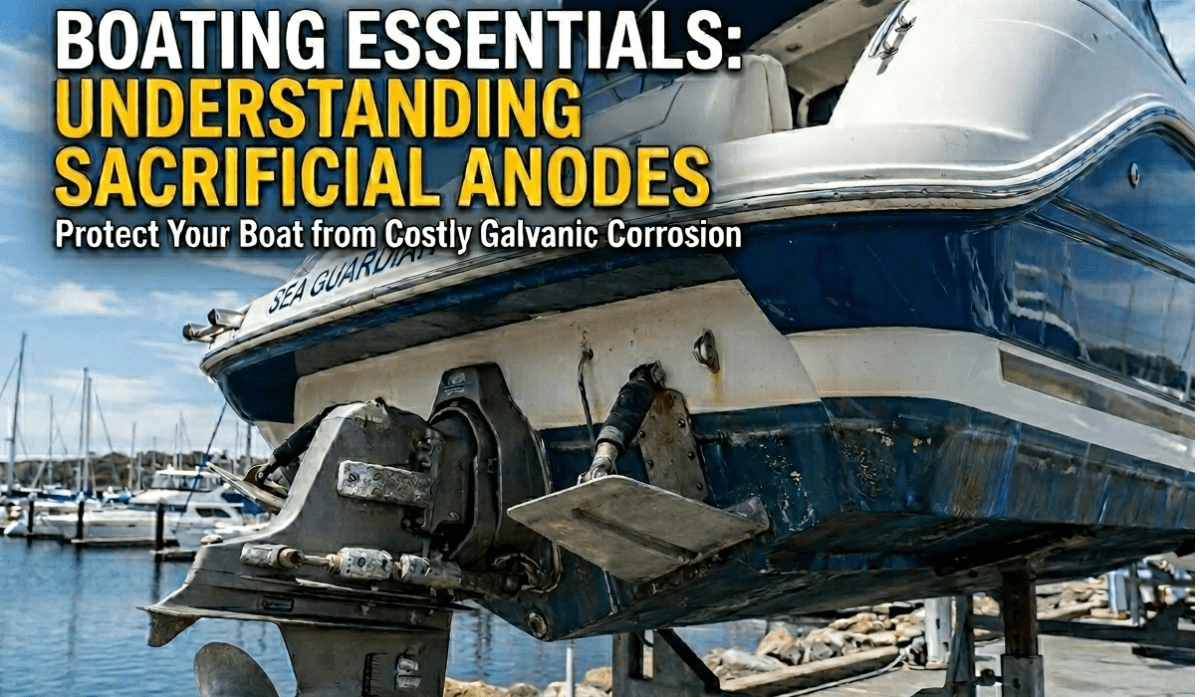
Key Takeaways for Choosing the Best Sacrificial Anodes
- Function of Anodes: Sacrificial anodes protect vital boat components by attracting corrosion away from them, effectively "sacrificing" themselves to prevent damage to propellers, shafts, and hulls.
- Galvanic Corrosion: This process occurs when two different metals are immersed in a conductive liquid like seawater.
- Maintenance Schedule: Anodes should be replaced when they reach roughly half their original size or annually, whichever comes first.
- Installation Essentials: To work correctly, anodes must have a clean, metal-to-metal connection; they should never be painted and different types of metal anodes should not be mixed on the same vessel.
- Signs of Failure: If an anode still looks brand new after months in the water, it is likely not making a proper electrical connection and is failing to protect the boat.
What is a sacrificial anode, and how does it work?
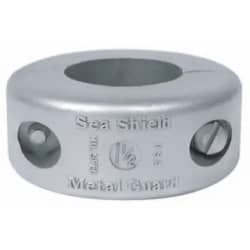
A sacrificial anode for
protection is a metal rod or electrode made from a material that is more easily corroded than the metal it is protecting. When the anode is connected to the metal object, it attracts corrosion away from the object, sacrificing itself in the process and extending the lifespan of
the protected metal. The current will flow from the newly introduced anode, and the protected metal becomes cathodic, creating a galvanic cell. The oxidation reactions are transferred from the metal surface to the galvanic anode
and will be sacrificed in favor of the protected metal structure. This process occurs via "galvanic corrosion".
Galvanic corrosion occurs when two metals with different levels of electrical activity, say a
bronze propeller and a stainless-steel prop shaft, are immersed in the same conductive liquid (like seawater). The liquid enables a weak
electric current (electrons) to flow from the more active metal (the anode) to the less active metal (the cathode). This is the same type of chemical reaction that occurs in a battery circuit. As the electric current flows, the
more active metal (the anode) gives up electrons to the other and slowly dissolves in the process – not good if the anode happens to be your propeller!
How does a sacrificial anode prevent corrosion?
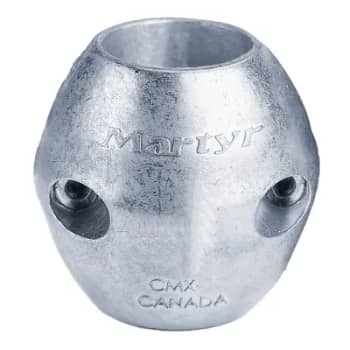
A sacrificial anode is a third type of metal, say aluminum or zinc, which is installed because it is even more electrically active than either of the two original metals. When electrically connected to them by seawater, it becomes the material that gives up electrons and dissolves – thus sacrificing itself while preserving the original two metals. As long as you keep replacing the sacrificial anode protection, such as an aluminum anode rod, before it has dissolved, the other less active metal components of your boat remain protected.
Sacrificial anodes are now commonly available in aluminum, magnesium, and zinc.
Often, non-zinc anodes are the better choice, depending on where your vessel is located. Here's a quick summary, followed by a more in-depth look at this topic:
- Zinc works well in saltwater and has long been the traditional anode metal, but it's also the heaviest option and is more toxic to the environment.
- Aluminum is lightweight and works in both salt AND brackish waters. In addition, aluminum anodes may last up to 50% longer in saltwater than their zinc counterparts.
- Magnesium is the best anode for freshwater but performs poorly in salt water.
The Metals
- Zinc is the "traditional" anode material because it was relatively easy to obtain in the old days. While zinc works adequately in saltwater, it will not protect your boat in fresh or brackish water. Not only is zinc toxic for the environment, but zinc anodes also contain extremely toxic cadmium metal as an activator. Zinc anodes are available for both recreational and commercial applications.
- Aluminum anodes are rapidly replacing zinc for use on ALL hull materials. With the recent advent of alloys developed by the US Navy, anode aluminum is very different
from the aluminum alloys used for boat hulls, outboards, and stern drives. These military-grade aluminum anodes are more electrically active, provide better protection than zinc, and have a longer lifespan! Aluminum has been used in the offshore industry for years to protect installations where long-term corrosion protection is essential. Aluminum anodes utilize a significantly less toxic activator, making them a more environmentally friendly option. Additionally, aluminum anodes are the only type that effectively works in both brackish and saltwater. Therefore, if you dock your boat in an area exposed to both types of water (such as at the mouth of a river that empties into the ocean), you should definitely be using aluminum. Aluminum has become the anode of choice for the US Navy, as well as for large commercial fleets. This is due to the money they save (aluminum anodes last longer, so ships go longer between replacements) and because aluminum is so much lighter that it can help provide better fuel economy in larger fleets. Aluminum anodes are available for both recreational and commercial applications.
- Magnesium anodes are the most active and are the only anodes that work well in freshwater's low conductivity. They are also relatively non-toxic to aquatic life. Because magnesium is so active, it doesn't last long in salt or brackish water and is not recommended for these waters. Magnesium anodes are only available for recreational applications.
Which Metal Should I Choose?
- Saltwater: Aluminum anodes are more active, protect better, and last longer than zinc anodes in saltwater – a win/win situation. Magnesium anodes are so active in this highly conductive liquid that they corrode entirely in only a few months, resulting in prohibitively high replacement costs. While zinc has been the traditional anode for use in saltwater, it doesn't provide as much protection or last as long as aluminum.
- Brackish Water: Aluminum anodes provide superior protection here. They do not suffer magnesium's fast corrosion rates and protect better than the less active zinc.
- Freshwater: Magnesium is the preferred choice for anodes in low-conductivity liquids. It provides superior protection compared to other options. Zinc anodes are not suitable for use in freshwater, as they develop a hard, dense coating over time, which decreases their effectiveness. While aluminum alloys can offer some protection in freshwater, they do not perform as well as magnesium. Therefore, aluminum anodes are only recommended if your boat is occasionally in freshwater.
Additional FAQs
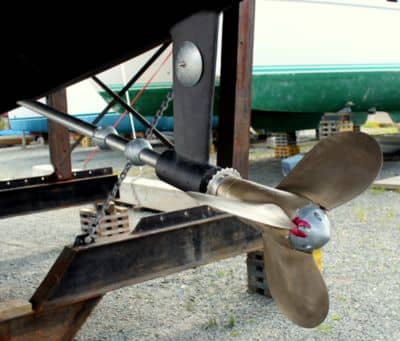
- How often should I replace my anodes? Adequate anodic protection is so important to the integrity of your vessel that you should err on the side of caution when scheduling anode replacements. A common rule of thumb is that an anode is approaching the end of its life when it appears to be half its original size, as its electrical connection has often degraded so much that it may no longer be providing adequate protection, even though it looks like a fair amount remains. Manufacturers recommend changing anodes yearly – even if they still look okay – it's cheap insurance.
- How do I install my anodes? It is critical to ensure good connectivity with the metal being protected. A sure sign of poor connectivity is an anode that still looks brand new after a few months in the water – so make sure there is nothing between your anode and the metal it's supposed to protect. Anodes are supposed to dissolve – if they aren't corroding, they aren't working! Additionally, you should never paint your anodes or mix anodes of different metals (only the most active one will work). Protect trim tabs individually, and do not bond them to the rest of the boat. Always using new fasteners when installing anodes is also a good idea.
- How many anodes should I use, and what shape? Anodes are available in various shapes, both generalized and specialized. Their size, placement, and quantity are often determined through a mix of scientific principles, artistic design, and experimentation. If you have concerns about the anodes on your boat, it's best to consult a marine corrosion specialist. Keep in mind that having more anodes is not always advantageous; it is indeed possible to overprotect your boat with too many anodes. This is particularly true for boats with wood or metal hulls.
- How do I protect my aluminum hull, outboard motor lower units, or I/O stern drive? Outboards and I/Os are made from aluminum alloys, which are particularly prone to corrosion. Zinc anodes have electrical activity levels barely above these aluminum parts, and while they do work, aluminum and magnesium anodes are better suited for this task. In fact, most manufacturers have switched to installing aluminum anodes on these units right in the factory. Remember – the military-spec aluminum anode alloy is much more electrically active than those used in aluminum hulls and outboards. Think of the difference between steel and stainless steel.
- Does aluminum corrode faster than zinc? While some people believe this - it's not actually true. Aluminum anodes usually last longer than their zinc counterparts. That said, aluminum is more active than zinc, so it more readily detects stray currents around the boat. If your aluminum anodes are corroding overly fast, you likely have a stray current problem on your boat (or on a boat nearby), which should be investigated.
- Why is there green corrosion on electrical connections? Green corrosion on electrical connections is often caused by the presence of moisture and the reaction between copper and oxygen in the air. This reaction forms copper oxide, which appears green. Proper insulation, regular maintenance, and sacrificial anodes can help prevent this corrosion.
- Aluminum or zinc boat anodes for saltwater? Aluminum and zinc anodes can both work in salt water, but they have pros and cons. Aluminum anodes are lighter, cheaper, and more eco-friendly but need regular cleaning to avoid passivation. Zinc anodes are heavier, more expensive, and more toxic, but more reliable in salt water.
Every boat is different, and while the above information is typical, with so many variables, it may not apply in all situations. When buying a new boat, it's important to keep in mind that what worked in the old marina might not be right for your boat's new home as needs can change from marina to marina (or even dock to dock!). To protect your investment, it may be best to consult with your local experts to make sure your current anode coverage is sufficient for the warranty of your water heater or other marine appliances.
Fisheries Supply is a sacrificial anode supplier and carries all types of sacrificial anodes from all the best manufacturers - including Martyr and Sea Shield - so we've got everything you need to protect your boat. We hope you've enjoyed this guide, but if you have any further questions, please don't hesitate to contact our product experts at ((800) 426-6930).